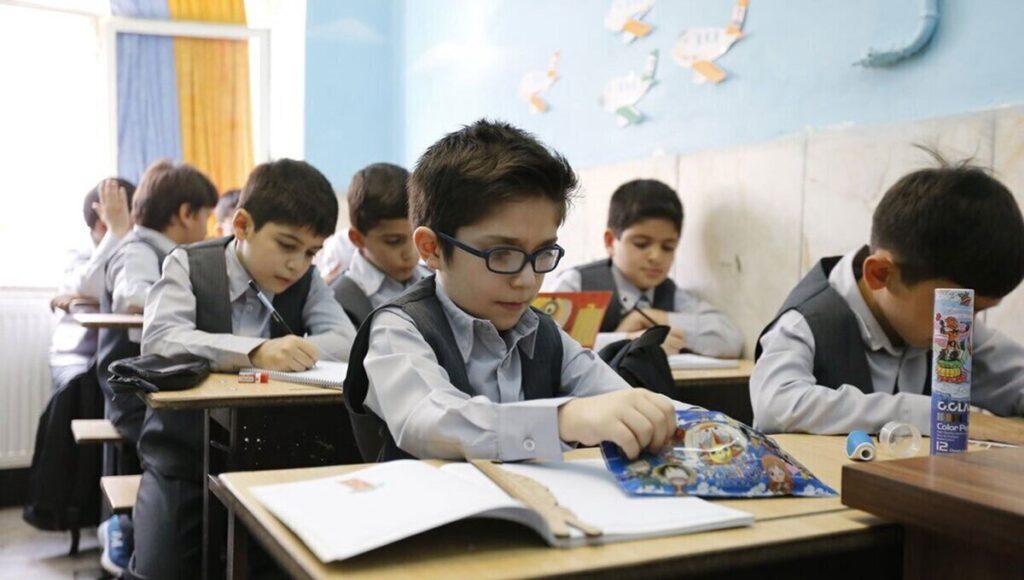
We are watching a nation redraw the boundaries of everyday life in real time. On April 16, 2026, Iran’s Ministry of Education confirmed that all schools across the country will shift to virtual learning starting April 21, a sweeping decision that touches millions of students and families. The announcement arrives at a moment of heightened regional tension, where safety concerns have begun to influence even the most routine aspects of life, including education.
A Nationwide Shift With Immediate Impact
The transition applies to every level of education, from primary schools to universities, and will remain in effect until further notice.
We often think of schools as anchors of stability. They represent structure, continuity, and a shared sense of purpose. In Iran today, that stability is being carefully reimagined through digital platforms as authorities attempt to balance education with security.
The decision signals urgency. It reflects a government responding to evolving risks while trying to ensure that learning does not come to a standstill. For families, however, the announcement brings a mix of relief and uncertainty. Relief that children may remain safer at home, and uncertainty about how effectively education can continue under such conditions.
Education Under the Shadow of Conflict
The move cannot be separated from the broader geopolitical climate. The ongoing conflict involving Iran and international actors has entered a prolonged phase, with daily life increasingly shaped by its ripple effects.
In recent weeks, concerns about the safety of public spaces have intensified. Schools, which are typically protected environments, have not been immune. Reports of attacks on educational facilities have raised alarms among international observers and local communities alike.
We are reminded that in times of conflict, education systems often become both vulnerable and vital. Vulnerable because of physical risks, and vital because they provide continuity for young people navigating uncertainty.
The Digital Classroom Becomes the New Normal
For millions of Iranian students, the classroom will now exist in a digital format. Lessons will be delivered through screens, assignments submitted online, and interactions conducted through messaging platforms.
This is not entirely new territory. Iran previously developed digital learning tools during earlier disruptions, including platforms designed to connect students and teachers remotely. Those systems are now expected to carry the weight of an entire national education system.
Yet, the transition is far from simple. The experience of virtual learning depends heavily on access to technology, internet connectivity, and digital literacy. These factors vary widely across the country, creating an uneven landscape of opportunity.
Barriers That Could Shape Learning Outcomes
- Limited internet access in rural or underserved areas
- Shared devices in households with multiple students
- Reduced engagement for younger learners
- Challenges in monitoring academic progress and assessments
These barriers do not negate the necessity of the decision, but they do shape its impact. We are likely to see a widening gap between students who can easily adapt to digital learning and those who struggle to access it.
The Internet Question Looms Large
One of the most pressing concerns surrounding the shift to online education is the state of internet connectivity in Iran. Connectivity challenges in several regions have made consistent online access difficult for many students, raising concerns about the effectiveness of virtual classrooms.
This creates a paradox. Education is moving online at a time when reliable internet access remains uncertain for many. For students, this could mean interrupted lessons, delayed assignments, and limited communication with teachers.
We cannot overlook the psychological impact of this uncertainty. A student attempting to attend a virtual class while struggling with connectivity issues faces not only academic challenges but also frustration and stress.
Teachers Adapting in Real Time
Educators are now at the center of this transformation. Many are being asked to redesign lesson plans, adopt new technologies, and maintain engagement without the benefit of physical presence.
This requires more than technical skills. It demands adaptability, creativity, and emotional resilience. Teachers must find ways to replicate the energy of a classroom through a screen, ensuring that students remain motivated and supported.
We often underestimate the role of teachers during such transitions. They are not just delivering content. They are providing reassurance, structure, and continuity in an environment that feels anything but stable.
Families Navigating a New Routine
For parents, the shift to virtual learning introduces a new layer of responsibility. Homes must now double as classrooms, with parents often stepping in to supervise learning, troubleshoot technical issues, and support their children emotionally.
We can picture households adjusting their daily rhythms. Morning routines now involve logging into platforms instead of commuting to school. Living rooms become study spaces. Conversations about homework are replaced by discussions about connectivity and screen time.
This transformation is not without strain. Balancing work, household responsibilities, and children’s education can be overwhelming, particularly for families with limited resources.
A Regional Trend Toward Remote Learning
Iran’s decision reflects a broader pattern across the region. In times of heightened tension, governments are increasingly turning to digital education as a way to maintain continuity while minimizing risk.
Other countries in the Middle East have also adopted temporary distance learning measures during periods of instability. These actions highlight a growing recognition that education systems must be flexible and resilient in the face of disruption.
What sets Iran apart is the scale of its decision. Moving an entire national education system online signals a level of urgency that goes beyond precaution. It speaks to the depth of the challenges currently facing the country.
The Long Term Impact on a Generation
While the immediate goal is safety, the long term effects of prolonged virtual learning remain uncertain. Previous global experiences have shown that online education can both empower and disadvantage students, depending on their circumstances.
Some students may develop stronger independent learning skills and digital literacy. Others may struggle with motivation, comprehension, and a sense of isolation.
We must also consider the social dimension. Schools are more than places of instruction. They are environments where friendships are formed, identities are shaped, and social skills are developed. The absence of physical interaction can leave a lasting impact, particularly on younger students.
Balancing Safety With Educational Continuity
The decision to move all schools online represents a careful balancing act. Authorities are prioritizing safety while striving to maintain educational progress. It is a response shaped by necessity rather than choice.
We are seeing how education systems adapt under pressure. Flexibility has become essential, and the ability to transition quickly between physical and digital learning environments is now a critical capability.
For policymakers, the coming weeks will be crucial. They will need to address gaps in access, support educators, and ensure that students do not fall behind despite the challenges.
A Quiet Determination to Keep Learning Alive
There is something deeply human in the effort to continue learning amid uncertainty. A student logging into a virtual class despite unstable internet. A teacher preparing lessons late into the night. A parent rearranging their schedule to support their child.
These moments tell a story of resilience. They remind us that education is not confined to buildings. It persists through effort, adaptation, and a shared commitment to the future.
As April 21 approaches, Iran stands at a turning point in its educational journey. The shift to virtual learning may be born out of crisis, but it also reflects a determination to ensure that even in difficult times, the pursuit of knowledge continues.