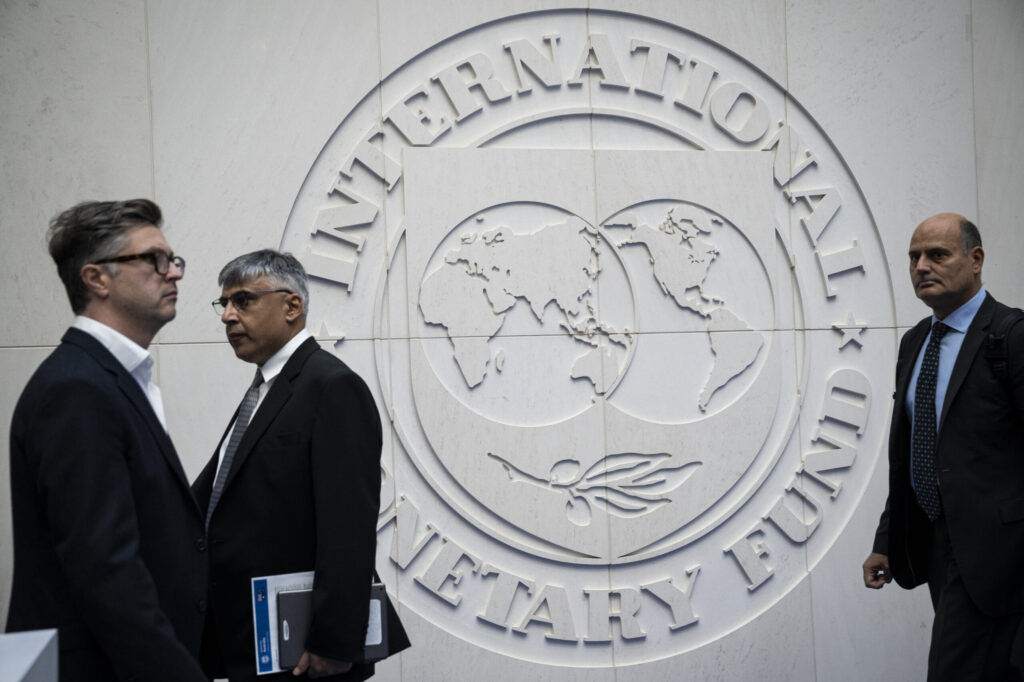
We are witnessing a pivotal moment in global economic diplomacy as the International Monetary Fund moves to resume formal dealings with Venezuela after years of suspension. Announced on April 16, 2026 during the IMF World Bank Spring Meetings, the decision signals a reopening of financial dialogue that could reshape Venezuela’s economic future and alter regional dynamics across Latin America.
The move comes after a prolonged pause that began in 2019, when political recognition disputes halted engagement between the IMF and the Venezuelan government. Now, with a majority of IMF member countries supporting renewed interaction, the institution is officially re engaging with Venezuela under its current administration, opening the door to technical cooperation, economic assessments, and potentially future financial assistance.
A Break From Years of Financial Isolation
For much of the past decade, Venezuela has existed largely outside the global financial system, cut off from major international lending institutions due to governance disputes and economic instability. The suspension of IMF dealings in 2019 effectively froze access to crucial financial tools, including special drawing rights and structured economic support.
The decision to resume engagement marks a clear departure from that period of isolation. It reflects a consensus among IMF member states that conditions have shifted enough to justify renewed cooperation, a process that often requires delicate political alignment as well as economic evaluation.
We are observing how international financial institutions respond not only to economic indicators, but also to evolving geopolitical realities that shape recognition and legitimacy on the global stage.
What the IMF Decision Actually Means
Resuming dealings does not immediately translate into loans or financial packages. Instead, it initiates a process of re engagement that begins with data collection, economic monitoring, and technical dialogue between IMF staff and Venezuelan authorities.
This step is essential because the IMF has not conducted a full economic assessment of Venezuela in many years. Without reliable data and updated macroeconomic analysis, any form of financial assistance would be difficult to structure responsibly.
According to reporting on the announcement, the renewed relationship may eventually allow Venezuela to access billions of dollars in financial resources, including previously frozen allocations.
We are looking at the early stages of what could become a longer term stabilization process, rather than an immediate financial intervention.
The Context Behind the Shift
The resumption of IMF dealings did not occur in isolation. It comes amid broader geopolitical developments that have reshaped Venezuela’s international standing. Changes in leadership recognition, evolving diplomatic alignments, and shifting economic priorities have all contributed to creating conditions for renewed engagement.
At the same time, global economic pressures are intensifying. Rising energy prices, inflation concerns, and financial stress across emerging markets have made institutions like the IMF more active in supporting vulnerable economies.
We are seeing how global instability often accelerates diplomatic decisions, particularly when economic fragility intersects with strategic regional importance.
Venezuela’s Economic Reality Remains Fragile
Despite this diplomatic breakthrough, Venezuela’s economic challenges remain severe. The country has faced years of hyperinflation, currency depreciation, and declining oil revenues, alongside widespread poverty and a prolonged humanitarian crisis.
Recent assessments have described the economic situation as fragile, with high debt levels and limited fiscal capacity constraining recovery efforts.
Resuming IMF engagement does not resolve these structural issues overnight. Instead, it provides a framework through which they can be addressed over time, with external guidance and potential financial support.
We are reminded that economic recovery at this scale is rarely immediate, often requiring sustained policy reform, institutional rebuilding, and international cooperation.
Potential Pathways Forward
The renewed relationship between Venezuela and the IMF opens several possible pathways for the country’s economic future. These include technical assistance programs, debt sustainability assessments, and eventually formal lending arrangements if conditions allow.
One of the most significant possibilities is the restructuring of Venezuela’s external debt, which is estimated to be among the highest in the region. Engagement with the IMF could provide a structured framework for negotiations with creditors and a roadmap for restoring financial stability.
In addition, access to international financial systems could help Venezuela stabilize its currency, rebuild investor confidence, and attract foreign investment in key sectors such as energy and infrastructure.
We are observing the early outlines of a recovery process that depends not only on financial support, but also on policy credibility and institutional reform.
Regional and Global Implications
The IMF’s decision carries implications beyond Venezuela’s borders. For Latin America, it signals a potential shift in regional economic dynamics, particularly if Venezuela begins to reintegrate into global markets.
Neighboring countries that have been affected by migration flows and economic spillover effects may also experience indirect impacts if Venezuela’s economy stabilizes. At a global level, the move reflects a broader willingness among financial institutions to re engage with previously isolated economies under evolving political conditions.
We are seeing how financial diplomacy can serve as both an economic tool and a geopolitical signal, influencing not only markets but also international relationships.
The Role of International Institutions
The IMF’s decision underscores the continuing importance of multilateral institutions in shaping economic outcomes for countries facing crisis. By resuming engagement, the IMF is positioning itself as a central player in Venezuela’s potential recovery, alongside other institutions such as the World Bank, which has also indicated renewed cooperation.
These institutions provide more than funding. They offer technical expertise, policy guidance, and a framework for accountability that can help countries rebuild economic systems after prolonged disruption.
We are reminded that global financial institutions remain deeply intertwined with both economic development and political realities, often operating at the intersection of the two.
Looking Ahead
The resumption of IMF dealings with Venezuela marks a turning point, but it is only the beginning of a complex process. The coming months will likely involve detailed economic assessments, policy discussions, and negotiations that will determine the scope and pace of future support.
For Venezuela, the opportunity is significant but challenging. Re engaging with the global financial system offers a path toward stabilization, yet it also requires navigating difficult reforms and rebuilding trust with international partners.
We are watching a moment where economic necessity and diplomatic change converge, creating a rare opening for a country that has spent years on the margins of the global financial system.