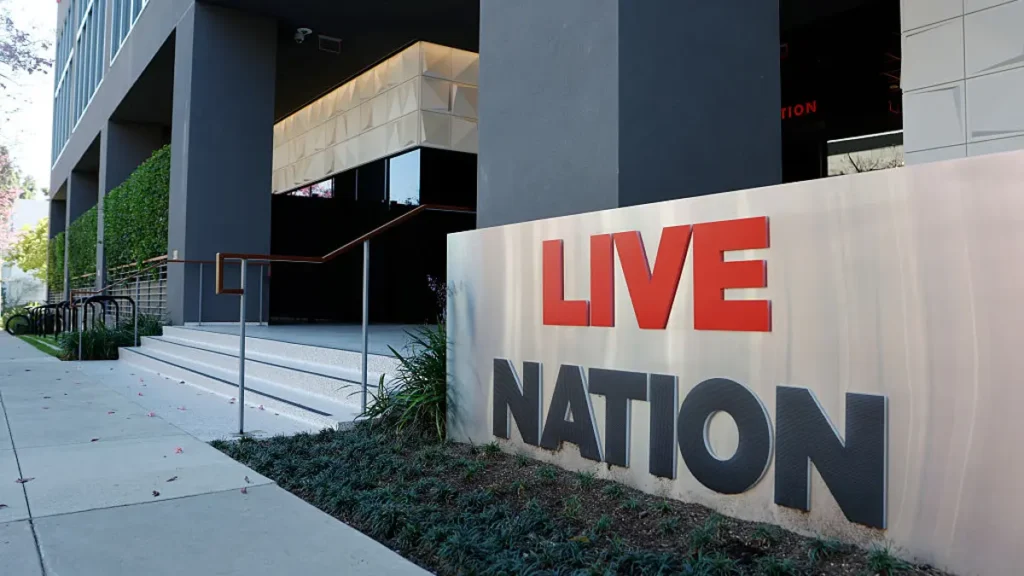
A landmark jury verdict on April 16, 2026 has found that Live Nation Entertainment and its subsidiary Ticketmaster operated as an illegal monopoly over major concert venues and ticketing infrastructure in the United States. The decision marks one of the most consequential antitrust rulings in the modern entertainment industry, raising the possibility of structural changes that could reshape how live music is promoted, sold, and experienced worldwide.
A Verdict That Targets the Core of the Live Music Economy
The jury concluded that Live Nation leveraged its control over venues, promotion, and ticketing services to suppress competition and inflate ticket prices for consumers. According to trial findings reported across multiple proceedings, fans were overcharged and competitors were systematically excluded from key parts of the live entertainment ecosystem.
We are looking at a ruling that does not simply challenge pricing practices, but questions the very structure of how the industry has operated since the 2010 merger between Live Nation and Ticketmaster. That merger, long criticized by artists and independent venues, placed ticketing, touring, and promotion under a single corporate umbrella.
Recent reporting indicates the jury agreed with arguments that this integration created market dominance so strong it functioned as an illegal monopoly under federal antitrust law United States Department of Justice filings.
How the Court Defined Market Power and Harm
At the center of the case was the claim that Live Nation controls a significant share of major concert venues and primary ticketing services in the United States. Plaintiffs argued that this dominance allowed the company to pressure venues into exclusive contracts, limit competition, and raise service fees without meaningful market restraint.
Evidence presented during the trial included testimony that consumers paid higher average ticket costs due to reduced competition, with some estimates citing an additional charge of around one dollar and seventy cents per ticket as a measurable impact of the alleged conduct.
We also saw arguments focusing on structural control rather than isolated pricing incidents. The prosecution maintained that the company’s business model created a closed loop where artists, venues, and fans had limited alternatives for large scale events.
Industry Reaction and Immediate Market Impact
The verdict immediately reverberated through financial markets and the entertainment industry. Live Nation shares experienced volatility following the announcement, reflecting investor uncertainty about potential penalties, structural remedies, and long term operational changes.
Beyond Wall Street, the ruling has intensified debate among artists, promoters, and venue operators. Independent venues have long argued that exclusive booking agreements and bundled services limited their ability to compete fairly in the live music ecosystem.
We are also seeing renewed calls from consumer advocacy groups and some state officials for deeper structural remedies, including potential divestiture of Ticketmaster or forced separation of business units.
What Comes Next for Live Nation and Ticketmaster
Although the jury has delivered its verdict, the legal process is far from over. The presiding judge will now determine remedies, which could include financial penalties, operational restrictions, or more aggressive structural reforms.
Legal analysts suggest several possible outcomes are now on the table:
- Mandatory separation of ticketing and promotion divisions
- Restrictions on exclusive venue contracts
- Limits on service fees and pricing structures
- Potential divestiture of key business units
Live Nation has indicated it will appeal the decision, arguing that it operates in a competitive environment that includes multiple ticketing platforms and event promoters. The company is expected to challenge both the jury’s interpretation of market definition and the evidence used to establish monopoly power.
A Case Built Over Years of Antitrust Scrutiny
This ruling did not emerge in isolation. It is the result of years of escalating scrutiny from regulators, artists, and state attorneys general who argue that consolidation in the live entertainment sector has reduced competition and harmed consumers.
The Department of Justice, along with a coalition of states, originally filed suit alleging violations of federal antitrust laws, including unlawful monopolization and exclusionary practices. The case gained momentum amid broader political attention on corporate consolidation across major industries.
We have also seen earlier regulatory settlements that attempted to address some concerns through fee caps and venue access rules, but critics argued those measures did not go far enough to restore competition.
Why This Ruling Matters Beyond Ticket Prices
At its core, this decision is not only about how much fans pay for concert tickets. It is about control over cultural access. When a single company influences which artists tour, where they perform, and how tickets are sold, it effectively shapes the live music experience itself.
For artists, especially mid tier and emerging performers, the structure of venue access and promotion contracts can determine whether a tour is financially viable. For fans, it influences availability, pricing transparency, and even the likelihood of securing tickets during high demand events.
We are likely to see this ruling referenced in future antitrust cases involving platform dominance in other sectors, particularly where distribution and infrastructure are tightly integrated under one corporate entity.
Possible Industry Restructuring Scenarios
If the court moves toward structural remedies, the live entertainment industry could undergo its most significant transformation in decades. Analysts are already outlining potential scenarios that range from moderate regulatory adjustments to full corporate separation.
One possibility involves breaking up ticketing and venue operations to restore independent competition. Another focuses on allowing rival ticketing platforms greater access to major venues currently tied to exclusive contracts.
We may also see increased regulatory oversight of dynamic pricing models and secondary ticket markets, areas that have long been controversial among fans and policymakers.
The Broader Debate Over Market Power in Entertainment
This case sits at the intersection of law, culture, and commerce. It reflects a growing global debate about how much control large platforms should have over essential cultural infrastructure.
We have seen similar concerns emerge in technology, streaming, and retail sectors, where consolidation raises questions about fairness and competition. The Live Nation ruling adds a powerful example from the entertainment world, where emotional and cultural value is deeply intertwined with market structure.
Industry observers note that while ticket demand is often driven by artists and fan enthusiasm, the systems that distribute access can significantly shape outcomes. That tension is now at the center of legal and policy discussions.
What This Means for Fans and the Future of Live Events
For concertgoers, the immediate impact may not be lower ticket prices or easier access. Legal experts caution that structural changes take time, and appeals could delay enforcement for years.
However, the long term implications could be substantial. If competition increases in ticketing and venue access, fans may eventually see more pricing transparency, improved platform reliability, and greater choice in how and where they buy tickets.
We are potentially witnessing a turning point in how live entertainment is governed. Whether this leads to meaningful structural change will depend on the next phase of judicial decisions and regulatory enforcement.
What is already clear is that the Live Nation ruling has opened a new chapter in the conversation about market power, cultural access, and the future of the global concert industry.