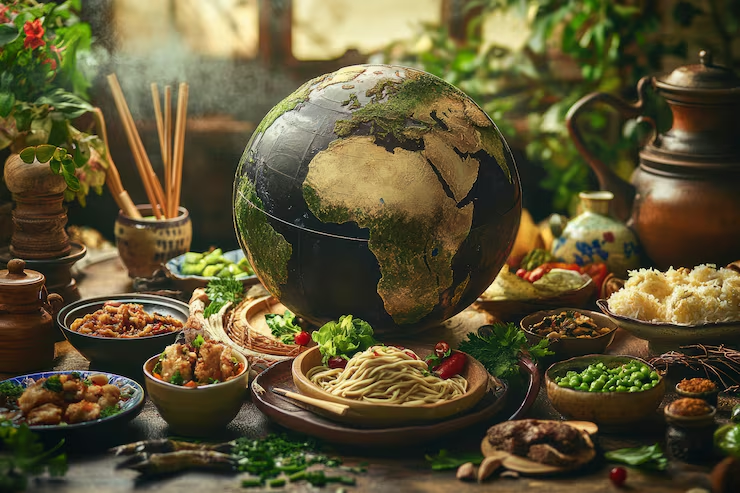
On April 17, 2026, I report on a powerful cultural milestone as the World Food Travel Association announces the launch of World Culinary Heritage Day, observed annually on April 18. The initiative arrives with urgency and purpose. Around 13 percent of traditional global food practices are now considered at risk of disappearing, raising alarm among cultural researchers, chefs, and food communities who see these traditions as living archives of human history.
As I reflect on this announcement, I am struck by a simple truth. What we eat is never only about nourishment. It is memory, identity, and inheritance. When a traditional dish fades away, an entire story of people, land, and knowledge risks fading with it.
A Growing Loss Hidden in Everyday Diets
The World Food Travel Association highlights a concerning global pattern. Based on comparative studies across dozens of countries, an estimated 13 percent of culinary traditions are already lost or at extreme risk of extinction. These include ancestral cooking techniques, indigenous ingredients, and regional food practices shaped over centuries.
This erosion is not always visible at first glance. It happens gradually as industrial food systems expand, urban lifestyles replace rural food practices, and younger generations become disconnected from ancestral cooking knowledge. What once defined regional identity slowly becomes rare, then symbolic, and eventually forgotten.
In conversations with culinary historians, a consistent concern emerges. The disappearance of traditional food practices is not just about taste. It is about the loss of agricultural knowledge, ecological balance, and cultural storytelling embedded in everyday meals.
The Meaning Behind World Culinary Heritage Day
World Culinary Heritage Day, launched by the World Food Travel Association, seeks to bring global attention to this accelerating cultural loss. The observance, held each April 18, encourages communities, governments, and culinary professionals to document, protect, and celebrate food traditions before they disappear.
The initiative builds on years of food tourism research showing that culinary traditions are among the strongest expressions of cultural identity. According to the World Food Travel Association, food is one of the most powerful ways people connect with place, memory, and community, a principle reflected in their global culinary programs and research efforts at World Food Travel Association.
The observance also reflects a broader shift in how heritage is defined. Culinary practices are increasingly recognized not as informal customs, but as essential elements of intangible cultural heritage that deserve protection and visibility.
Why Culinary Heritage Is Disappearing
Several interconnected forces are contributing to the decline of traditional food systems. Industrial agriculture has standardized crops and reduced biodiversity. Global supply chains have replaced local ingredients with mass produced alternatives. Urban migration has disrupted generational food knowledge transfer within families.
Climate change is also altering what can be grown and harvested in specific regions, forcing communities to adapt or abandon traditional ingredients. At the same time, fast food culture and processed diets are reshaping consumer expectations around convenience and uniformity.
What is often overlooked is how these changes affect cultural continuity. A traditional dish is rarely just a recipe. It is a reflection of seasonal cycles, community rituals, and shared labor practices that connect people to land and ancestry.
The Human Stories Behind Food Traditions
Behind every endangered food tradition are people who carry it forward. Farmers preserving heirloom seeds. Fishers maintaining centuries old harvesting techniques. Families who continue to cook ceremonial meals without written recipes, relying instead on memory and practice.
I have heard from elders who describe the emotional weight of being the last in their family who remembers how a dish is prepared. These are not just culinary techniques. They are living expressions of identity passed through generations, often without formal documentation.
When these practices disappear, communities lose more than food diversity. They lose rituals of togetherness, seasonal celebrations, and the sensory language that connects them to their past.
Global Efforts to Preserve Culinary Heritage
Across the world, preservation efforts are gaining momentum. Researchers are working to document oral cooking traditions before they are lost. Cultural institutions are creating digital archives of recipes and food practices. Some organizations are collaborating directly with indigenous and rural communities to record agricultural and culinary knowledge.
The United Nations Educational, Scientific and Cultural Organization has long emphasized the importance of safeguarding cultural expressions, including food traditions, as part of intangible heritage preservation. Their work highlights how culinary practices are inseparable from cultural identity and community resilience, as outlined by UNESCO Intangible Cultural Heritage.
World Culinary Heritage Day aligns with these efforts by encouraging both documentation and active participation. Rather than treating food traditions as static museum artifacts, the initiative promotes them as living practices that evolve while maintaining cultural roots.
Culinary Heritage and Environmental Resilience
The preservation of traditional food systems is also closely linked to environmental sustainability. Many heritage diets are based on seasonal ingredients, local biodiversity, and low waste cooking methods developed long before modern sustainability frameworks existed.
These systems often reflect a deep understanding of ecological balance. Crop rotation, seed preservation, and foraging practices have historically helped communities adapt to environmental changes while maintaining food security.
As global food systems face increasing pressure from climate change, revisiting these traditional approaches may offer valuable insight into building more resilient and diverse agricultural models.
Voices From the Culinary Community
Chefs and food scholars have responded to the launch of World Culinary Heritage Day with cautious optimism. Many see it as an opportunity to bring forgotten food traditions back into public awareness while encouraging responsible culinary innovation.
There is also growing recognition in professional kitchens that heritage ingredients and traditional techniques are not outdated concepts but essential resources for creativity and sustainability. Some chefs are now collaborating with local communities to integrate indigenous ingredients into modern menus while preserving their cultural significance.
At the same time, experts stress that preservation must be handled with care. Culinary traditions belong to the communities that created them. Any effort to revive or reinterpret them must respect their cultural context and avoid reducing them to aesthetic trends.
A Shared Responsibility for the Future of Food
World Culinary Heritage Day is not only a celebration. It is a reminder of responsibility. Protecting culinary heritage requires cooperation between governments, educators, chefs, researchers, and everyday households.
Simple actions can make a meaningful difference. Cooking traditional meals at home. Recording family recipes. Supporting local food producers. Teaching younger generations the stories behind the dishes they eat. Each of these steps helps keep culinary knowledge alive.
As I reflect on this global initiative, one idea stands out. Food is one of the most accessible forms of cultural memory we have. It is shared at tables, passed through hands, and remembered through taste. If we lose it, we lose far more than flavor. We lose the language of place itself.
World Culinary Heritage Day asks a timely question. What will we choose to preserve, and what will we allow to fade quietly into history. The answer will shape not only our plates, but our collective identity for generations to come.
::contentReference[oaicite:0]{index=0}
On April 17, 2026, I report on a powerful cultural milestone as the World Food Travel Association announces the launch of World Culinary Heritage Day, observed annually on April 18. The initiative arrives with urgency and purpose. Around 13 percent of traditional global food practices are now considered at risk of disappearing, raising alarm among cultural researchers, chefs, and food communities who see these traditions as living archives of human history.
As I reflect on this announcement, I am struck by a simple truth. What we eat is never only about nourishment. It is memory, identity, and inheritance. When a traditional dish fades away, an entire story of people, land, and knowledge risks fading with it.
A Growing Loss Hidden in Everyday Diets
The World Food Travel Association highlights a concerning global pattern. Based on comparative studies across dozens of countries, an estimated 13 percent of culinary traditions are already lost or at extreme risk of extinction. These include ancestral cooking techniques, indigenous ingredients, and regional food practices shaped over centuries.
This erosion is not always visible at first glance. It happens gradually as industrial food systems expand, urban lifestyles replace rural food practices, and younger generations become disconnected from ancestral cooking knowledge. What once defined regional identity slowly becomes rare, then symbolic, and eventually forgotten.
In conversations with culinary historians, a consistent concern emerges. The disappearance of traditional food practices is not just about taste. It is about the loss of agricultural knowledge, ecological balance, and cultural storytelling embedded in everyday meals.
The Meaning Behind World Culinary Heritage Day
World Culinary Heritage Day, launched by the World Food Travel Association, seeks to bring global attention to this accelerating cultural loss. The observance, held each April 18, encourages communities, governments, and culinary professionals to document, protect, and celebrate food traditions before they disappear.
The initiative builds on years of food tourism research showing that culinary traditions are among the strongest expressions of cultural identity. According to the World Food Travel Association, food is one of the most powerful ways people connect with place, memory, and community, a principle reflected in their global culinary programs and research efforts at World Food Travel Association.
The observance also reflects a broader shift in how heritage is defined. Culinary practices are increasingly recognized not as informal customs, but as essential elements of intangible cultural heritage that deserve protection and visibility.
Why Culinary Heritage Is Disappearing
Several interconnected forces are contributing to the decline of traditional food systems. Industrial agriculture has standardized crops and reduced biodiversity. Global supply chains have replaced local ingredients with mass produced alternatives. Urban migration has disrupted generational food knowledge transfer within families.
Climate change is also altering what can be grown and harvested in specific regions, forcing communities to adapt or abandon traditional ingredients. At the same time, fast food culture and processed diets are reshaping consumer expectations around convenience and uniformity.
What is often overlooked is how these changes affect cultural continuity. A traditional dish is rarely just a recipe. It is a reflection of seasonal cycles, community rituals, and shared labor practices that connect people to land and ancestry.
The Human Stories Behind Food Traditions
Behind every endangered food tradition are people who carry it forward. Farmers preserving heirloom seeds. Fishers maintaining centuries old harvesting techniques. Families who continue to cook ceremonial meals without written recipes, relying instead on memory and practice.
I have heard from elders who describe the emotional weight of being the last in their family who remembers how a dish is prepared. These are not just culinary techniques. They are living expressions of identity passed through generations, often without formal documentation.
When these practices disappear, communities lose more than food diversity. They lose rituals of togetherness, seasonal celebrations, and the sensory language that connects them to their past.
Global Efforts to Preserve Culinary Heritage
Across the world, preservation efforts are gaining momentum. Researchers are working to document oral cooking traditions before they are lost. Cultural institutions are creating digital archives of recipes and food practices. Some organizations are collaborating directly with indigenous and rural communities to record agricultural and culinary knowledge.
The United Nations Educational, Scientific and Cultural Organization has long emphasized the importance of safeguarding cultural expressions, including food traditions, as part of intangible heritage preservation. Their work highlights how culinary practices are inseparable from cultural identity and community resilience, as outlined by UNESCO Intangible Cultural Heritage.
World Culinary Heritage Day aligns with these efforts by encouraging both documentation and active participation. Rather than treating food traditions as static museum artifacts, the initiative promotes them as living practices that evolve while maintaining cultural roots.
Culinary Heritage and Environmental Resilience
The preservation of traditional food systems is also closely linked to environmental sustainability. Many heritage diets are based on seasonal ingredients, local biodiversity, and low waste cooking methods developed long before modern sustainability frameworks existed.
These systems often reflect a deep understanding of ecological balance. Crop rotation, seed preservation, and foraging practices have historically helped communities adapt to environmental changes while maintaining food security.
As global food systems face increasing pressure from climate change, revisiting these traditional approaches may offer valuable insight into building more resilient and diverse agricultural models.
Voices From the Culinary Community
Chefs and food scholars have responded to the launch of World Culinary Heritage Day with cautious optimism. Many see it as an opportunity to bring forgotten food traditions back into public awareness while encouraging responsible culinary innovation.
There is also growing recognition in professional kitchens that heritage ingredients and traditional techniques are not outdated concepts but essential resources for creativity and sustainability. Some chefs are now collaborating with local communities to integrate indigenous ingredients into modern menus while preserving their cultural significance.
At the same time, experts stress that preservation must be handled with care. Culinary traditions belong to the communities that created them. Any effort to revive or reinterpret them must respect their cultural context and avoid reducing them to aesthetic trends.
A Shared Responsibility for the Future of Food
World Culinary Heritage Day is not only a celebration. It is a reminder of responsibility. Protecting culinary heritage requires cooperation between governments, educators, chefs, researchers, and everyday households.
Simple actions can make a meaningful difference. Cooking traditional meals at home. Recording family recipes. Supporting local food producers. Teaching younger generations the stories behind the dishes they eat. Each of these steps helps keep culinary knowledge alive.
As I reflect on this global initiative, one idea stands out. Food is one of the most accessible forms of cultural memory we have. It is shared at tables, passed through hands, and remembered through taste. If we lose it, we lose far more than flavor. We lose the language of place itself.
World Culinary Heritage Day asks a timely question. What will we choose to preserve, and what will we allow to fade quietly into history. The answer will shape not only our plates, but our collective identity for generations to come.