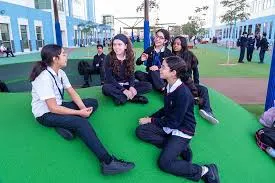
On April 20, 2026, the sound of school bells once again echoed across the United Arab Emirates, signaling more than just the start of a school day. We witnessed a powerful return to routine, resilience, and human connection as students stepped back into classrooms after nearly 50 days of remote learning. This reopening marks a turning point for families, educators, and communities who navigated weeks of uncertainty shaped by regional geopolitical tensions.
A long pause ends with an emotional return
For weeks, homes had doubled as classrooms, and screens replaced desks. That chapter closed today as more than a million students returned to campuses nationwide, restoring a sense of normalcy that many had deeply missed.
The atmosphere across schools was anything but routine. Parents accompanied children with visible relief, teachers greeted students with warmth, and hallways filled with laughter and chatter that had been absent for too long. In many campuses, students arrived carrying flowers and small gifts, symbolic gestures reflecting gratitude and excitement.
Reports from schools described scenes of joy and reconnection. Friends reunited after weeks apart, and teachers observed a renewed enthusiasm for learning that only physical classrooms can inspire.
Why schools closed and why reopening matters now
The extended period of distance learning was not a routine academic adjustment. It was a response to escalating regional tensions that disrupted daily life across the Gulf. Authorities prioritized safety, shifting education online while monitoring evolving security conditions.
This decision aligned with broader national measures, including remote work policies and temporary closures of public spaces. The education system adapted quickly, ensuring continuity through digital platforms, structured schedules, and coordinated support for families.
Now, with conditions stabilizing and a fragile calm returning, the reopening of schools represents more than an operational shift. It signals confidence, recovery, and a collective step toward rebuilding daily life.
Inside the reopening strategy
We observed that the return to in person learning was carefully planned rather than abrupt. Authorities and school administrations implemented a layered approach designed to balance normalcy with precaution.
Key measures introduced across campuses
- Designated safe zones within school premises
- Temporary suspension of outdoor activities and physical education
- Closure of canteens in some institutions during the initial phase
- Emergency preparedness drills for students and staff
- Enhanced supervision and structured movement within campuses
These steps were not merely procedural. They were designed to reassure families and create an environment where students could transition back with confidence.
A hybrid future still in motion
Even as classrooms reopened, the UAE education system has retained flexibility. Many institutions continue to offer hybrid learning options, allowing students who are unable or hesitant to return to participate remotely.
This dual approach reflects lessons learned during the disruption. Schools are no longer viewing online education as a temporary fix but as a complementary model that can support diverse needs.
Some families remain abroad or cautious due to recent events, and authorities have acknowledged this reality by maintaining adaptable learning pathways.
Logistics return to life
The reopening extended beyond classrooms. School buses returned to the roads, restoring daily rhythms that structure family life. Transportation networks, traffic management plans, and safety enforcement were reactivated to support the transition.
This logistical revival is significant. It reflects the broader reopening of systems that underpin education, from commuting routines to school operations.
The human side of reopening
Beyond policies and planning, the most compelling aspect of today’s reopening lies in the emotional landscape. Students expressed relief at seeing friends and teachers again, often describing in person learning as more engaging and fulfilling than online classes.
Teachers, too, experienced a renewed sense of purpose. Many noted that while digital platforms enabled continuity, they could not replicate the immediacy and connection of face to face interaction.
Parents, who had balanced work with supervising remote education, welcomed the return to structured schooling. For many households, this shift brings stability after weeks of adjustment and uncertainty.
A cautious return to normal life
The reopening of schools is part of a broader pattern unfolding across the UAE. Offices are gradually filling, public services are resuming, and expatriate families who temporarily left are beginning to return.
Yet, this return is measured. The recent crisis has reshaped how communities approach risk, preparedness, and daily routines. Families are more attentive to contingency planning, and institutions are maintaining readiness for potential disruptions.
Accounts from residents suggest a blend of relief and lingering caution. While life is moving forward, the experience has left a lasting awareness of how quickly circumstances can change.
Education resilience in focus
One of the defining themes of this period is resilience within the education sector. Schools adapted rapidly to distance learning, teachers redesigned lesson delivery, and students demonstrated flexibility in unfamiliar conditions.
This resilience is now shaping the future of education in the UAE. The integration of digital tools, hybrid models, and crisis preparedness strategies will likely remain part of the system long after this episode fades.
For those seeking a broader understanding of how global education systems adapt during disruptions, resources from UNESCO education programs provide valuable insight. Meanwhile, evolving regional developments can be followed through Khaleej Times UAE coverage.
What comes next
The coming weeks will be critical in determining how smoothly this transition holds. Schools will continue refining safety measures, monitoring attendance patterns, and supporting students as they readjust to classroom environments.
There is also a strong focus on student well being. Educators are prioritizing emotional support alongside academic recovery, recognizing that the past 50 days were not just an educational disruption but a psychological one as well.
A moment of renewal
As we reflect on this reopening, it becomes clear that the return to classrooms is about more than resuming lessons. It is about restoring connection, rebuilding confidence, and reaffirming the role of education as a cornerstone of society.
We are witnessing a moment of renewal, shaped by resilience and guided by cautious optimism. The classrooms of the UAE are once again alive with voices, ideas, and ambition, reminding us that even after disruption, learning finds its way forward.