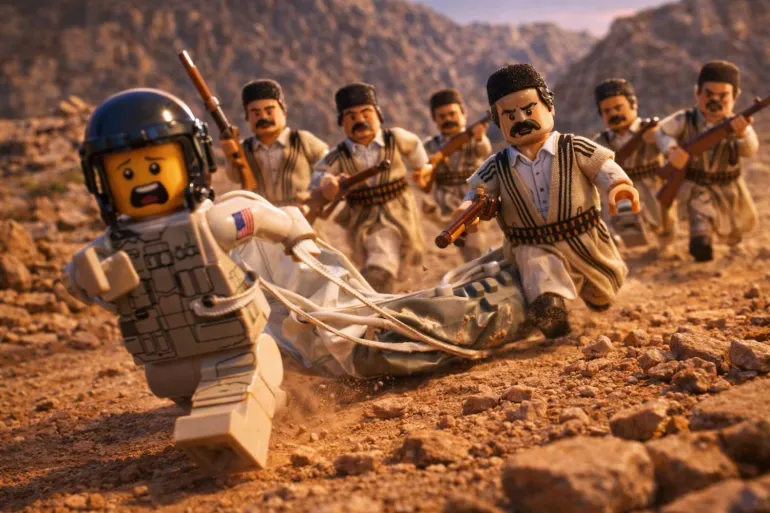
On April 20, 2026, a new front in geopolitical conflict has captured global attention, not through missiles or diplomacy, but through colorful, fast paced animations that resemble children’s toys. Across social media platforms, Lego style videos produced in Iran are gaining millions of views, reshaping how audiences engage with war narratives and challenging the traditional dominance of Western messaging. We are witnessing a striking shift where storytelling, satire, and digital creativity collide with geopolitics in ways that feel both unexpected and deeply consequential.
A digital battlefield takes shape
These viral animations are not random internet trends. They are part of a broader communication strategy emerging from Iran’s evolving media ecosystem. While conventional warfare continues in the background, a parallel contest is unfolding online, where perception, emotion, and narrative carry enormous weight.
Short, visually engaging, and often dialogue free, these clips rely on universal imagery rather than language. Toy like characters represent world leaders, military actions, and symbolic events. This simplicity allows them to cross cultural and linguistic boundaries with remarkable speed. According to reporting on the phenomenon, the videos are deliberately designed for global audiences, making them highly shareable across platforms such as X and Meta owned networks.
The results are difficult to ignore. Within days of release, several of these animations have reached millions of viewers, sparking debate, criticism, and fascination in equal measure.
The rise of low cost high impact storytelling
One of the most notable aspects of these videos is how inexpensive they are to produce compared to traditional media campaigns. Using artificial intelligence tools and small creative teams, Iranian content creators have built a pipeline of rapid production that rivals large scale media operations.
Analysts point out that this approach allows Iran to compete with far better funded Western communication systems. By leveraging creativity over cost, these videos demonstrate how digital tools can level the playing field in global information campaigns.
We see here a powerful lesson about modern influence. The barrier to entry for shaping global opinion has dropped significantly. A small team with technical skill and narrative clarity can now reach audiences that once required massive institutional backing.
Satire, symbolism, and emotional appeal
At the heart of these videos lies a blend of satire and symbolism. Characters modeled after political figures are often portrayed in exaggerated, sometimes controversial scenarios. In one widely circulated clip, toy versions of world leaders appear in scenes that reinterpret real events through a distinctly Iranian perspective.
The use of toy like imagery creates a contrast that is both disarming and provocative. Bright colors and familiar shapes soften the presentation, while the underlying message remains sharply political. This contrast enhances emotional engagement, drawing viewers into content that might otherwise feel distant or complex.
We are seeing a deliberate effort to humanize one side of the conflict while critiquing the other, often through storytelling that emphasizes loss, resilience, and perceived injustice.
Who is behind the viral content
While some creators initially presented themselves as independent artists, investigations suggest deeper connections between certain production groups and state aligned institutions. Reports indicate that entities such as Explosive Media have produced a steady stream of these animations, with at least some acknowledgment that government clients are involved.
This connection highlights the strategic dimension of the content. These are not just creative experiments but coordinated efforts within a broader narrative campaign.
At the same time, the involvement of young digital artists and AI tools reflects a generational shift in how messaging is created and distributed. This blend of state direction and grassroots creativity gives the content a unique tone that feels both official and organic.
Why these videos resonate globally
The viral success of these animations is not accidental. Several factors contribute to their widespread appeal:
- Visual storytelling that requires no translation
- Short format suited to modern attention spans
- Humor and satire that invite sharing and discussion
- Timely references to current events
In addition, the use of a globally recognizable toy aesthetic creates an immediate sense of familiarity. Viewers who might ignore traditional political messaging are more likely to engage with content that feels playful, even when the subject matter is serious.
This approach has allowed Iranian creators to reach audiences far beyond their domestic sphere, influencing conversations in Western countries and across the Middle East.
The broader context of narrative warfare
The emergence of these videos underscores a larger transformation in how conflicts are communicated. Wars are no longer fought solely on physical battlefields. They are also fought in digital spaces where narratives compete for attention and legitimacy.
Recent coverage highlights how artificial intelligence generated content is increasingly being used as a tool to shape public perception during conflicts, raising concerns about misinformation and the manipulation of audiences.
In this environment, viral content can influence how events are understood, debated, and remembered. The line between information and persuasion becomes increasingly blurred.
A surprising cultural crossover
There is an unexpected irony in the choice of Lego style visuals. The aesthetic originates from a Western brand associated with creativity, play, and childhood imagination. Yet it is now being used to communicate political messages that challenge Western policies.
This crossover illustrates how global culture can be repurposed in unexpected ways. Even in moments of tension, shared cultural symbols continue to connect audiences across divides.
Criticism and ethical concerns
The popularity of these videos has not come without controversy. Critics argue that the animations oversimplify complex issues, presenting one sided narratives that may distort public understanding. Others raise concerns about the use of emotionally charged imagery to influence viewers.
There are also questions about platform responsibility. Some reports suggest that certain videos have been removed or restricted, fueling debates about censorship, free expression, and the role of tech companies in moderating political content.
These concerns reflect a broader challenge facing digital platforms. As content becomes more sophisticated and persuasive, distinguishing between information, opinion, and propaganda becomes increasingly difficult.
The future of digital influence campaigns
Looking ahead, the rise of Lego style propaganda videos may signal a new phase in global communication. The combination of artificial intelligence, creative storytelling, and social media distribution creates a powerful toolkit for influencing public opinion.
Other nations and groups are likely to adopt similar strategies, leading to a more crowded and competitive information environment. The ability to create compelling narratives quickly and at low cost will become a critical factor in shaping global discourse.
For readers seeking deeper insight into how digital media shapes public perception, resources from the Brookings Institution and ongoing analysis by The Guardian global coverage provide valuable context.
A new language of conflict
As we reflect on this phenomenon, it becomes clear that these videos represent more than a viral trend. They are part of a broader evolution in how stories are told during times of conflict. The language of war now includes animation, memes, and algorithm driven visibility.
We are witnessing a moment where creativity and strategy intersect in powerful ways. A toy inspired visual style has become a vehicle for serious political messaging, reminding us that influence often travels through unexpected channels.
The global narrative battle is no longer confined to speeches and headlines. It unfolds in feeds, timelines, and short videos that capture attention in seconds yet leave lasting impressions. In this new landscape, even the smallest building blocks can carry the weight of geopolitics.