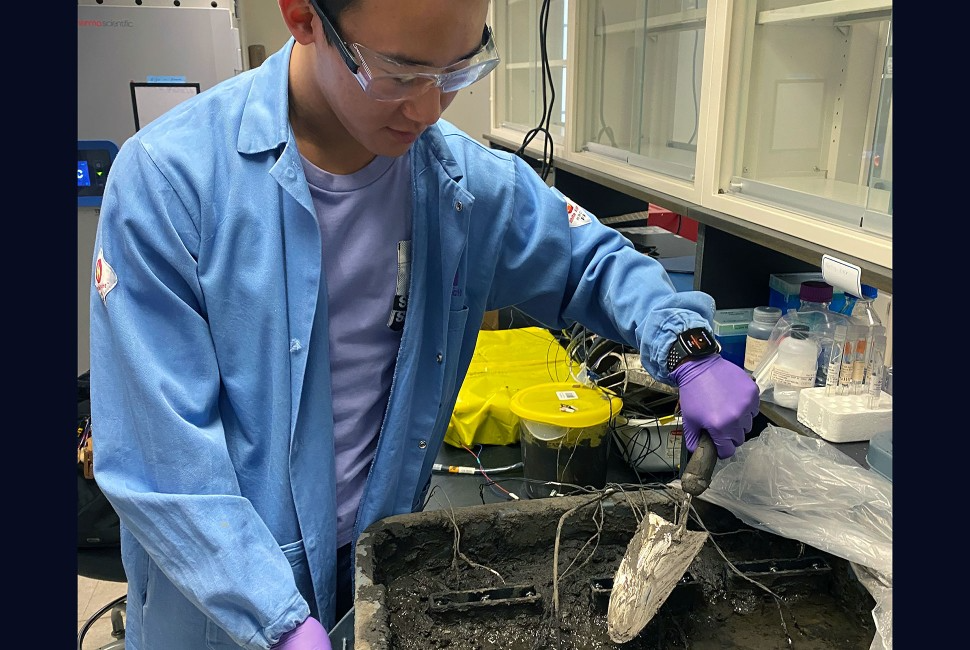
A hidden energy system beneath the ground
The innovation centers on soil microbial fuel cells, a technology that captures the energy released by microorganisms as they break down organic matter. These microbes, already present in soil across the planet, naturally release electrons during their metabolic processes. Scientists have designed a system that collects those electrons and converts them into usable electricity.
The device itself is surprisingly modest in size, roughly comparable to a paperback book. Yet within that compact form lies a system capable of powering sensors buried underground, operating continuously without the need for external energy inputs.
We are witnessing a shift in how we think about energy sources. Instead of extracting fuel from distant locations or relying on manufactured batteries, this approach taps into a living ecosystem that already exists beneath us.
How the technology works in simple terms
At its core, the system functions similarly to a traditional battery, with an anode, a cathode, and an electrolyte. The difference lies in what drives the reaction. Instead of chemical compounds being depleted, the fuel cell relies on ongoing biological activity.
Microbes in the soil consume organic carbon and release electrons as a byproduct. These electrons flow through the device, creating a small but steady electric current.
To improve performance, researchers redesigned the structure of the cell. The anode is placed deeper in the soil where moisture is retained, while the cathode extends upward to access oxygen from the air. This vertical arrangement solves a long standing challenge of maintaining both moisture and oxygen, which are essential for the system to function effectively.
Powering the future of smart sensing
The immediate application of this technology lies in low power devices, particularly sensors used in agriculture and environmental monitoring. These sensors track conditions such as soil moisture, temperature, and even movement from wildlife.
In testing, the fuel cell produced far more energy than required for these sensors, generating about 68 times the necessary power for operation. This surplus suggests a level of reliability that earlier versions of microbial fuel cells struggled to achieve.
The implications are significant. Farms, forests, and wetlands could host networks of sensors that operate continuously without human intervention, providing real time data while eliminating the need for battery replacement.
Why traditional power sources fall short
To understand the importance of this breakthrough, we need to consider the limitations of existing solutions. Batteries, while widely used, come with several drawbacks. They contain toxic materials, require periodic replacement, and contribute to growing electronic waste.
Solar panels, often seen as a clean alternative, face their own challenges. They depend on sunlight, can become obstructed by dirt or debris, and are not always practical in dense or underground environments.
For large scale deployments such as precision agriculture, maintaining thousands of devices powered by batteries or solar systems becomes both costly and labor intensive.
The soil based fuel cell offers a different approach. It turns the environment itself into a continuous energy source, reducing maintenance and environmental impact at the same time.
A step toward sustainable energy ecosystems
Beyond practical applications, this technology represents a broader shift toward sustainable energy systems. By using naturally occurring processes, it avoids the need for mining, manufacturing, and transporting traditional energy components.
Researchers emphasize that the system can potentially operate indefinitely, as long as there is organic material in the soil for microbes to consume.This concept of near continuous energy generation challenges conventional ideas about energy storage and depletion.
For those exploring the science behind microbial energy systems, insights from the ScienceDaily research release provide a deeper look into the study, while broader renewable energy perspectives can be found through International Energy Agency resources.
Expanding possibilities across industries
While agriculture is the most immediate use case, the potential applications extend far beyond farming. Environmental monitoring systems in remote regions could benefit from self powered sensors that track pollution, soil health, or climate conditions.
In conservation efforts, the ability to detect animal movement without intrusive equipment could support wildlife protection. Infrastructure monitoring, such as detecting vibrations or structural changes, could also be enhanced by networks of low power sensors.
Studies in related fields suggest that soil microbial fuel cells can even contribute to environmental cleanup by aiding in the breakdown of pollutants while generating electricity. This dual function highlights the versatility of the technology.
The role of the Internet of Things
The rise of connected devices has created a growing demand for decentralized energy solutions. The number of sensors in the global Internet of Things continues to expand, raising concerns about sustainability and resource use.
Traditional approaches rely heavily on lithium based batteries, which are not only resource intensive but also difficult to recycle at scale. The soil powered fuel cell offers a pathway toward more sustainable infrastructure by enabling devices to operate independently of centralized power systems.
This shift could redefine how we deploy technology in remote or sensitive environments, making it possible to gather data without leaving a significant environmental footprint.
Challenges that remain
Despite its promise, the technology is not without limitations. The amount of electricity generated is relatively small, making it unsuitable for high power applications such as running large devices or powering homes.
Performance can also vary depending on soil conditions, including moisture levels, organic content, and microbial activity. While the new design improves reliability, further research is needed to optimize efficiency across different environments.
Scaling the technology and integrating it into existing systems will require continued innovation, as well as collaboration between scientists, engineers, and industry stakeholders.
A glimpse into the future of energy
What makes this development compelling is not just its technical achievement but its philosophical implications. It invites us to rethink our relationship with energy, shifting from extraction to integration.
We are beginning to see a future where energy is not always something we store or transport, but something that quietly emerges from the ecosystems around us. The soil beneath our feet, often overlooked, becomes a partner in powering the technologies that shape our world.
As this research evolves, it may inspire a new generation of innovations that draw from nature’s processes rather than working against them. The idea that dirt can power devices may sound simple, even poetic, but it reflects a deeper truth about the potential of sustainable design.
A small spark with global implications
The electricity generated by these fuel cells is modest, yet its significance is profound. It represents a step toward cleaner, more resilient energy systems that align with the natural world rather than depleting it.
We are at the beginning of a journey where even the smallest sources of energy can contribute to a larger transformation. From underground sensors to global sustainability goals, the impact of this technology may grow far beyond its humble origins in the soil.
The story of dirt powered fuel cells reminds us that innovation often starts in unexpected places. Sometimes, the future of energy is not found in distant frontiers but right beneath our feet, waiting to be understood and harnessed.