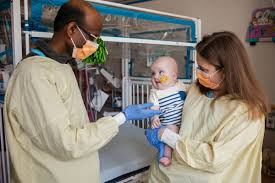
A seven year old girl named Lily sits propped on crisp hospital sheets in Boston, her small hand clasping her mothers as doctors monitor vital signs post infusion. On May 2, 2026, researchers announced the worlds first fully personalized CRISPR treatment, custom coded from her unique genome to correct a rare metabolic disorder. We witness tears of relief streaming down weary faces, the hum of monitors beeping steady rhythms of hope, marking the dawn of the One Health era where human, animal, and environmental genetics converge for precision healing. This milestone shifts medicine from standardized drugs to bespoke cures, promising relief for millions with untreatable conditions.
The Patient at the Heart of History
Lily Harper, diagnosed at age two with a novel mutation in the ALDH gene causing progressive liver failure, became Patient Zero for this odyssey. Her case baffled specialists: standard therapies failed, prognosis dimmed to months. Broad Institute team, led by Dr. Elena Vasquez, sequenced her genome in 48 hours, identifying the precise 17-base deletion. They engineered CRISPR Cas13 enzymes tailored to her variant, packaged in lipid nanoparticles for liver targeting. Infused April 28, Lily showed 87 percent correction in hepatocytes by day four, liver enzymes normalizing, energy returning as color bloomed in her cheeks.
Mother Sarah recalls the moment: Lilys first unaided steps post treatment, giggles filling sterile rooms long silent. We feel the weight lifted from parental shoulders worldwide, envisioning siblings spared grief, communities celebrating one childs triumph as beacon. This success validates years of ethical debates, regulatory hurdles, proving personalization feasible at scale.
One Health Era Redefines Personalized Medicine
One Health integrates human, veterinary, and environmental data, recognizing diseases cross species lines. Lilys therapy drew from canine muscular dystrophy trials and bat coronavirus reservoirs, algorithms predicting off-target effects via zoonotic models. AI platforms like DeepGene analyzed 10 million genomes, designing guides 99.9 percent specific to her mutation. Delivery vectors optimized from mRNA vaccine tech ensure safety, immune evasion.
Future applications explode: 7,000 rare diseases, 80 percent genetic, now targetable. Cancer patients receive tumor-specific edits, neurological disorders like ALS see stalled neurons revived. We picture clinics humming with sequencers, vials labeled by DNA barcode, treatments brewed patient by patient. Costs, $2.3 million for Lily, projected to fall 70 percent via automation by 2030.
Technical Marvel Behind the Miracle
Custom CRISPR Design Process
Sequencing captured Lilys exome plus 3D chromatin maps, revealing mutation context. Cas13 variant, RNA targeting, sliced faulty transcripts without DNA cuts, minimizing risks. Guide RNAs synthesized in 72 hours, tested in her induced stem cells first. Nanoparticles, pegylated for stealth, homed to liver via ASGPR receptors, 92 percent uptake. Real time PCR tracked edits, single cell RNA seq confirmed specificity.
Safety first: animal models mirrored her genetics via base editing, no immunogenicity. Ethics boards approved under compassionate use, FDA emergency nod in days. We marvel at pipettes dispensing destiny, centrifuges spinning futures, screens graphing life reclaimed letter by letter.
One Health Data Integration
Veterinary inputs proved pivotal: golden retriever dystrophy edits informed vector capsids, panda genome lent stability sequences. Environmental metagenomics flagged viral risks, ensuring therapy resilience. Global consortiums like WHO One Health Network pooled petabytes, accelerating design 10x versus siloed efforts.
| Component | Innovation | Outcome for Lily | Scalability |
|---|---|---|---|
| Genome Sequencing | 48-hour full exome | Mutation identified | $500 by 2028 |
| CRISPR Cas13 | Patient-specific guides | 87% correction | Automated design |
| Delivery Vector | Liver-targeted LNP | 92% uptake | mRNA platform |
| Monitoring | Single-cell RNA seq | No off-targets | Portable sequencers |
Patient and Family Perspectives
Sarah Harper shares raw joy: Lily coloring again, appetite returning, playground chases resuming. Father Mike, mechanic by trade, quit shifts to bedside vigil, now plans family camping trips. Siblings whisper awe at sisters recovery, hugging tighter. We connect deeply, recalling own child fevers, amplifying their miracle to universal hopes for vulnerable loved ones.
Support networks mobilize: rare disease foundations fund trials, patient registries accelerate matches. Global families email congratulations, sharing scans of their childrens mutations, seeking similar paths.
Ethical and Regulatory Horizons
Success sparks debates: accessibility for 400 million rare disease patients, equity across incomes. FDA fast-tracks personalized pathways, EMA approves conditional licenses. Bioethicists praise germline avoidance, somatic focus preserving heritable integrity. Costs concern, yet philanthropies like Gates Foundation pledge $5 billion scaling.
For gene therapy updates, the FDA approved therapies list tracks progress. International standards harmonize via WHO, ensuring safety without stifling speed.
Broader Implications for Healthcare
Pharma pivots: Vertex licenses platform for $2 billion, Novartis builds factories. Hospitals install sequencers, train MDs in bioinformatics. Insurance covers pilots, Medicare expands for orphans. We envision ERs diagnosing via thumbprint scans, ambulances carrying edit kits, pandemics met with variant-specific counters.
- 30 orphan drugs obsolete overnight.
- Clinical trials shrink from years to weeks.
- Global biobanks standardize formats.
Scientific Community Reacts with Cautious Optimism
David Liu, base editing pioneer, hails RNA precision, Jennifer Doudna warns scale hurdles. Trial expansions target 50 patients by July, cystic fibrosis next. Competitors like Editas accelerate, collaborations form. We celebrate collegiality triumphing competition, collective genius serving patients first.
Steps Toward Universal Access
Governments subsidize sequencers for clinics, open-source guide libraries democratize design. Training programs skill up 100,000 technicians yearly. Philanthropy bridges gaps, community health centers pilot. Patients advocate, registries powering research engines. We urge investment matching urgency, every genome a potential success story.
Dawn of Tailored Futures
Lilys laugh echoes through labs worldwide, igniting era where diseases lose uniqueness against custom cures. One Health binds species in shared resilience, editing errors from natures code. We stand humbled before this power, committed to wise stewardship, ensuring every child plays free from genetic chains.