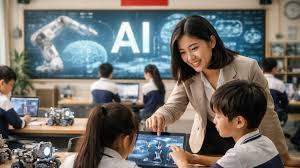
The China-Bangladesh Education Cooperation Forum 2026 launched on May 9, 2026, with a bold commitment to reshape university curricula around science, artificial intelligence, and practical skills that match global industry needs. Participants from both nations gathered to address the widening gap between academic training and the demands of a fast moving job market, promising a partnership that could redefine opportunities for young people in Bangladesh and beyond.
A partnership built on shared ambition
We see this forum as more than a meeting of educators. It represents a moment when two nations, each navigating its own path toward prosperity, recognize the power of collaboration in education. Bangladesh, with its youthful population and growing economy, stands at a crossroads. Its universities produce graduates eager to contribute, yet many struggle to align their skills with what employers seek in fields like technology and engineering. China brings proven expertise in scaling scientific education and integrating AI into everyday learning, offering a blueprint that feels both aspirational and achievable.
Picture a lecture hall in Dhaka where students once memorized textbooks now experiment with AI models that predict crop yields or optimize urban traffic. That vision, discussed vividly at the forum, carries emotional weight for families who have invested dreams in their children’s degrees. It acknowledges the quiet frustration of graduates facing mismatched job prospects and channels it into concrete action.
Modernizing curricula for the real world
At the heart of the forum is a push to update traditional curricula. Long standing programs focused on rote learning and theoretical knowledge now face scrutiny. Leaders called for embedding scientific methods and AI centered evaluations that test problem solving over memorization. This shift aims to equip students with tools they can apply immediately, from coding algorithms to analyzing data sets that drive business decisions.
The discussions highlighted practical examples. Faculty from Chinese institutions shared how their universities partner with tech firms to co design courses, ensuring graduates enter the workforce ready to innovate. Bangladeshi educators responded with enthusiasm, outlining plans to pilot similar models in engineering and computer science departments. The goal is clear: create programs that bridge the classroom and the factory floor, the lab and the startup office.
Closing the university-industry divide
One of the forum’s most pressing themes was the disconnect between universities and global industries. Employers often describe a skills gap where academic credentials do not guarantee competence in emerging technologies. The China-Bangladesh initiative tackles this head on by promoting internships, joint research projects, and industry advisory boards that shape degree requirements.
We heard stories from participants that brought this to life. A Bangladeshi professor recounted a recent graduate who excelled in exams but faltered in a software development role due to lack of hands on AI experience. A Chinese delegate described their success in linking students directly to companies like those in Shenzhen’s tech hubs, where apprenticeships turn novices into professionals within months. These exchanges foster hope, reminding us that education reform succeeds when it listens to the marketplace.
Key proposals from the forum
- Develop AI integrated modules for core subjects like mathematics and physics.
- Establish exchange programs for faculty and students between Chinese and Bangladeshi institutions.
- Create certification tracks validated by international tech firms.
- Launch joint research centers focused on sustainable technologies and data science.
Science and AI as engines of opportunity
Science and artificial intelligence emerged as the forum’s twin pillars. Scientific training builds critical thinking and experimentation skills essential for any modern economy. AI adds a layer of relevance, teaching students to harness tools that automate routine tasks and unlock new possibilities in healthcare, agriculture, and manufacturing.
For Bangladesh, where agriculture employs millions and urbanization accelerates, these fields hold transformative potential. Imagine farmers using AI apps to detect crop diseases early or city planners simulating traffic flows to reduce congestion. The forum stressed that curricula must prioritize such applications, blending theory with local challenges to make learning feel urgent and personal.
Challenges and paths forward
No reform comes without hurdles. Updating curricula requires teacher training, infrastructure upgrades, and funding that public budgets alone may not cover. Rural universities in Bangladesh face additional barriers in accessing high speed internet or advanced computing resources. Forum speakers addressed these openly, proposing solutions like shared digital platforms and phased rollouts starting with urban centers.
China’s role here feels genuine and supportive. Its institutions offered to provide open source AI tools and training workshops, easing the entry point for partners with limited resources. This approach builds trust, showing that cooperation thrives on mutual benefit rather than one sided aid.
What this means for students and families
At its core, the forum speaks to people. For a student in Chittagong dreaming of a tech career, it promises degrees that open doors worldwide. For parents saving every taka for tuition, it offers reassurance that their sacrifice will yield jobs with dignity and growth. We feel the empathy in these goals, the recognition that education is not just about knowledge but about futures built on solid ground.
The emotional pull is strongest in the stories shared. One young delegate described her village, where power outages once limited study time, now lit by solar tech enabled by basic scientific education. Scaling that impact through AI could change lives on a national level, turning potential into achievement.
Global ripples from a regional partnership
This China-Bangladesh effort extends beyond borders. As South Asia integrates deeper into global supply chains, a workforce skilled in science and AI strengthens the entire region. It also models how developing nations can collaborate on education without waiting for external mandates.
Investors and industries will notice. Companies seeking talent in data analytics or robotics may find new hubs in Dhaka or Guangzhou. Governments elsewhere could adapt these strategies, proving that targeted reforms yield measurable results in employment and innovation.
A call to sustained action
The forum ends with commitments, but real progress demands follow through. We urge universities to publish timelines for curriculum changes, track graduate outcomes, and invite industry feedback annually. Students should engage by joining pilot programs and voicing their needs.
China and Bangladesh have laid a foundation. By focusing on science, AI, and industry alignment, they aim for a world class citizenry capable of leading in a competitive era. The excitement in the room on May 9 was palpable, a shared belief that education can be the great equalizer.
Those interested in higher education trends can explore resources from the World Bank’s education overview and the UNESCO Institute for Statistics higher education data.