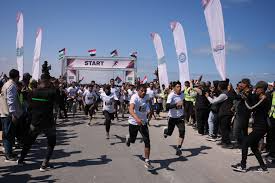
After a two year absence, the Palestine International Marathon has roared back to life, filling the streets of Bethlehem and Gaza with the rhythm of racing feet, cheers, and flags, as over 13,000 runners from around the world crossed the starting line on May 9, 2026. The event’s return is more than a sports result; it is a declaration of endurance, community, and the simple, powerful act of moving forward, even when the ground beneath feels unstable. For participants and spectators alike, the marathon became a shared language of hope, written in sweat, steps, and solidarity.
The return of a marathon in a region of rupture
The two year hiatus was not a gentle pause. It came on the heels of periods of heightened conflict, closures, and deep uncertainty for Palestinians, for residents of the occupied territories, and for the international visitors who once came to run. During that time, many of the roads that now carried runners sat empty or restricted, their pavements quiet except for the sounds of checkpoints, patrols, and everyday survival.
When the organizers announced that the Palestine International Marathon would resume, the reaction was immediate and emotional. For local athletes, many of whom had continued to train despite the disruptions, the news felt like a reopening of a door that had been slammed shut. The return of the marathon suggested that life, in its most visible, public form, could still find a way to assert itself, even in a place where normalcy is fragile and contested.
Bethlehem’s streets as a stage of unity
The Bethlehem course, winding through the historic heart of the city and its surrounding hills, offered a mix of beauty and tension. Runners passed ancient churches, stone facades, olive tree lined streets, and the towering Israeli separation barrier, which cuts through the landscape like a scar. The visual contrast was impossible to ignore: the wall stood as a reminder of control and restriction, while the runners, in their bright kits and determination, embodied movement and choice.
For many local spectators, the marathon was a rare chance to see their city celebrated on a global stage. Families leaned out of windows, shopkeepers opened their doors, and children waved flags and signs written in Arabic, English, and Hebrew. The air carried the scent of fresh bread from local bakeries, the sound of Palestinian music, and the steady clapping of hands that accompanied each passing group of athletes. The energy felt less like a commercial spectacle and more like a neighborhood embracing a long overdue family reunion.
Gaza’s distance and presence
The Gaza route, while not as widely accessible to international runners due to ongoing restrictions and security concerns, remained a central part of the marathon’s identity. Organizers deliberately kept Gaza in the narrative, broadcasting excerpts from Gaza based participants, and highlighting the stories of runners who had trained under difficult conditions, often without access to proper tracks, open spaces, or consistent water.
For those watching from away, the image of the Palestine International Marathon stitched the two territories together in a way that politics often fails to do. The idea that the same event could be held, even if in different forms, in both Bethlehem and Gaza, turned the race into a shared symbol of continuity. The 13,000 runners were not just individuals; they were part of a larger community that spans checkpoints, borders, and political divides.
The global field of athletes
The marathon’s draw extends far beyond the region. In 2026, participants came from dozens of countries, including long distance runners, charity fundraisers, and first timers, all drawn by the chance to experience a race that carries the weight of history and culture. Many carried their emotions on their sleeves, wearing shirts with messages in support of human rights, freedom of movement, and the right to live in safety and dignity.
For international runners, the experience is both competitive and contemplative. The pace of the race is punctuated by moments of reflection: the uneven pavement, the sight of posters honoring those who have been lost, the quiet gazes of residents watching from balconies and doorways. The marathon becomes less about a personal best and more about participating in a collective moment that feels larger than sport.
What the runners hope to achieve
For some, the goal is simply to finish, to experience the sense of completion that comes from covering 42 kilometers through a landscape that is both beautiful and painful. For others, the marathon is a platform for advocacy, a way to raise funds for Palestinian health, education, or human rights organizations. The organizers have long framed the event as more than a footrace, and the 2026 edition reinforced that mission.
Partner organizations and NGOs use the marathon as a backdrop for storytelling, inviting runners and visitors to learn about local initiatives, resilience projects, and community led responses to displacement and occupation. The race then becomes a bridge between physical endurance and sustained attention, between the short term of a single day and the long term of ongoing struggle.
The emotional weight of the 13,000 figure
Twelve thousand, three hundred runners is a number that can feel abstract, but it also carries emotional heft. Each runner represents a story of commitment, of training, of travel, and often of sacrifice. For Palestinian athletes, many of whom have to navigate permits, residency restrictions, and the psychological toll of living under prolonged conflict, the act of racing is a form of quiet resistance.
For international participants, the figure is a sign that the world has not turned away. The decision to come and run in a place that is often portrayed in the news as a site of violence and despair is a conscious choice to witness, to engage, and to stand alongside local communities. The collective presence of 13,000 people on the streets of Bethlehem and Gaza sends a message that isolation has not won, that connection is still possible.
Sports, identity, and the politics of movement
The Palestine International Marathon has always existed at the intersection of sport and politics, not in a way that fetishizes conflict, but in a way that acknowledges reality. Running is an act of movement, and in a place where movement is routinely restricted, that act becomes charged with meaning. Checkpoints, walls, and curfews are not just background features; they are part of the lived experience of the athletes and the communities they run through.
Organizers have long resisted the idea that the marathon should be a purely apolitical event. They frame it as a celebration of Palestinian culture, resilience, and the right to public space. At the same time, they invite participants from around the world to respect the context in which the race takes place, to understand that every step taken on the course is a small affirmation of agency.
The role of the spectators and the local community
While the runners may be the ones wearing the bibs, the real heart of the marathon beats with the spectators. Village elders, schoolchildren, shopkeepers, and families lean out of windows, bang drums, and hold aloft signs that mix encouragement with political slogans. The sound of Arabic chants, the clatter of drums, and the hum of conversation create a sonic tapestry that is both joyful and urgent.
For local residents, the marathon is a chance to reclaim public space, even if only for a day. The streets that often echo with the sounds of sirens and restrictions fill with the rhythms of encouragement and shared humanity. The event becomes a temporary inversion of the usual order, where the people, not the barriers, set the pace.
Challenges that remain even on race day
The return of the marathon does not erase the underlying difficulties faced by Palestinians, nor does it solve the issues of access, movement, or security that shape life in the region. For many participants and residents, the joy of the race exists alongside the awareness that the next day may bring closures, checkpoints, or renewed tensions.
Organizers have had to navigate logistical hurdles, including coordination with authorities, securing routes, and ensuring that the event does not become a flashpoint. The 13,000 runners are a testament to the organizers’ ability to create a space that feels safe, inclusive, and meaningful, even within a context of uncertainty. The marathon is not a solution to the larger political questions, but it is a demonstration that resilience can coexist with vulnerability.
What the marathon means for the global sporting imagination
For the international sporting world, the Palestine International Marathon offers a different kind of narrative. Instead of stories of elite athletes and record breaking times, the event foregrounds endurance, community, and the slow, steady work of building relationships through shared effort. The marathon becomes a reminder that sports can be a space for healing, for dialogue, and for the kind of quiet diplomacy that does not make headlines but can still shape attitudes.
Media coverage, both local and international, often highlights the striking images of the race: the contrast between ancient stone and modern runners, the presence of the barrier, the faces of children watching in wonder. These images become part of a broader conversation about how sports can be used to tell stories that go beyond the scoreboard.
A message of hope, not reconciliation
The marathon is not a magic cure for the region’s deep seated divisions, nor does it pretend to offer a simple path to peace. The organizers are clear that the event is about resilience, not resolution. The hope that the runners carry is not a naive optimism, but a stubborn belief that the human capacity to endure, to connect, and to move forward can outlast the forces that seek to keep people apart.
For those who participated, the 2026 edition of the Palestine International Marathon may be remembered as the year the race came back, not as a perfect solution, but as a powerful reminder that even in the most difficult of places, people can still choose to run, to stand together, and to keep moving.
Those interested in the broader context of sports and community resilience can explore the Olympic Charter’s principles on sport and peace and the World Health Organization’s work on physical activity and mental well-being.