
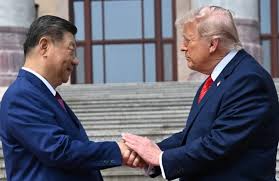
In the grand halls of Beijing’s Great Hall of the People, where ancient echoes meet modern diplomacy, U.S. President Donald Trump and Chinese President Xi Jinping shook hands on a pact that could reshape energy security for the world. On May 14, 2026, the two leaders declared their commitment to keeping the Strait of Hormuz open, a vital artery for global oil shipments. This agreement arrives at a pivotal moment, as shipping disruptions and regional conflicts threaten to spike fuel prices and destabilize economies everywhere. We see in this deal not just a policy shift, but a rare flicker of cooperation between superpowers, offering hope to families feeling the pinch at the gas pump and businesses reliant on steady supply chains.
The Beijing Summit: A Stage for Unexpected Unity
Picture the scene: crimson banners fluttering under chandeliers, translators whispering urgently, and a sea of flags from both nations. Trump, with his signature flair, arrived in Beijing fresh from domestic battles over trade and tariffs. Xi, ever the strategist, hosted with precision. Their talks, initially focused on technology and currency disputes, pivoted dramatically to the Persian Gulf. The Strait of Hormuz, that narrow 21-mile-wide chokepoint between Iran and Oman, funnels about 20 percent of the world’s oil. Any blockade there sends shockwaves through markets, as we witnessed in past flare-ups.
What drove this accord? Shared stakes in uninterrupted oil flow. The U.S., now a net energy exporter thanks to shale booms, still imports refined products and values stable prices for consumers. China, the globe’s largest oil importer, relies on the strait for over 40 percent of its crude needs. Disruptions hit Chinese factories hard, idling assembly lines and inflating costs for everything from electronics to automobiles. Trump later told reporters, “We both agreed: no one wins if the oil stops flowing.” Xi echoed this, stressing “mutual respect for maritime lanes essential to prosperity.”
This pact builds on quiet backchannel efforts. U.S. officials had signaled concerns over Iranian proxy actions in the Gulf, while Beijing worried about Houthi attacks on tankers rerouting via the Red Sea. The agreement commits both nations to joint monitoring, diplomatic pressure on disruptors, and naval coordination if tensions boil over. It’s a pragmatic step, reminding us that beneath rivalry lies interdependence.
Why the Strait of Hormuz Matters to Everyday Lives
Close your eyes and imagine the salty tang of Gulf waters, massive tankers groaning under billions of barrels bound for refineries worldwide. The strait isn’t abstract geography; it’s the lifeline for heat in winter homes, fuel for commuter cars, and feedstock for plastics in your kitchen. In 2025 alone, over 21 million barrels passed daily, per data from the U.S. Energy Information Administration. A full closure could jack up global prices by 30 percent or more, modeling from past crises suggests.
For Americans, this means higher grocery bills as transport costs rise. Truckers, already squeezed by slim margins, face sleepless nights calculating detours around Africa, adding weeks and millions to voyages. In China, migrant workers in Shenzhen factories brace for slowdowns, their overtime pay tied to raw material arrivals. Europe, dependent on Middle East blends, eyes winter blackouts if gasoil shortages hit. We feel the human weight here: parents skipping extras to cover fuel, small exporters losing contracts overnight.
Regionally, the stakes intensify. Oman and the UAE, gulf guardians, welcome the backing. Iran, ever defiant, dismissed the deal as “superpower meddling,” but analysts predict it deters adventurism. Saudi Arabia, pumping record volumes, stands to gain from assured exports. This U.S.-China alignment shifts dynamics, potentially easing sanctions talks and boosting investment in safer routes like Saudi’s East-West pipeline.
Economic Ripples: Winners and Watchers
Markets reacted swiftly. Brent crude dipped 2 percent to $78 a barrel post-announcement, signaling relief. Airlines like Delta trimmed fuel hedges, while Maersk adjusted fleets. Yet challenges persist. OPEC+ quotas, U.S. LNG exports to Europe, and electric vehicle shifts complicate the picture. Investors now eye Aramco bonds and COSCO shipping stocks for stability plays.
- U.S. shale producers benefit from steady demand, cushioning against recession fears.
- Chinese refiners like Sinopec secure supplies, stabilizing petrochemical output.
- Global consumers gain breathing room, with projected savings of $0.20 per gallon in summer driving seasons.
Historical Context: From Tensions to Truce
We trace this back to tanker wars of the 1980s, when Reagan-era convoys shielded ships from Iranian mines. Fast-forward to 2019 drone strikes on Saudi facilities, blamed on Iran, which spiked prices 15 percent overnight. Trump’s first term saw “maximum pressure” sanctions, while Xi deepened Belt and Road ties with Gulf states. COVID masked strains, but 2025 Red Sea chaos revived nightmares, with freight rates tripling.
This 2026 summit echoes Nixon’s 1972 China visit, blending rivalry with realpolitik. Unlike climate pacts that faltered, energy security unites. Critics in Washington decry concessions to Beijing; Beijing hawks question yielding Gulf influence. Yet polls show public support: 62 percent of Americans favor global stability over isolationism, per recent Gallup data.
Geopolitical Implications: A Broader Thaw?
Beyond oil, this opens doors. Joint patrols could extend to South China Sea disputes, where U.S. freedom-of-navigation ops irk Beijing. Taiwan tensions simmer, but energy pragmatism might foster trust. Russia, sidelined by Ukraine sanctions, watches warily as U.S.-China coordination undercuts its oil leverage.
Militarily, the U.S. Fifth Fleet in Bahrain gains a tacit ally in China’s growing naval presence. Expect information-sharing on threats, perhaps via UN channels. Environmental angles emerge too: safer shipping cuts spills, aiding coral reefs strained by warming seas. We applaud this as a model for tackling climate-driven migrations and resource wars.
Challenges loom. Enforcement relies on goodwill; Iran proxies test resolve daily. U.S. elections in November could upend commitments, while Xi’s tenure stability hinges on economic wins. Still, the pact’s text, released post-summit, binds signatories to “immediate consultations” on threats, a enforceable clause.
Voices from the Frontlines
Captain Ahmed Al-Mansoori, an Omani tanker skipper with 25 years at sea, shared via video call: “Hearing this, I slept better. No more zigzagging at dawn, hearts pounding for mines.” In Houston, refinery worker Maria Gonzalez added, “Prices steady means my kids eat regular. Leaders finally listening.”
Looking Ahead: Pathways to Lasting Security
This agreement demands follow-through. Diplomatic pushes at the UN Security Council could formalize protections. Investments in pipelines, like UAE’s Habshan-Fujairah line bypassing the strait, accelerate. Tech innovations, from drone surveillance to AI threat detection, enhance vigilance. The Council on Foreign Relations outlines risks, underscoring the need for diversified sources.
We urge sustained engagement. Congress should fund joint exercises; Beijing, transparent data-sharing. For citizens, it means advocating renewables to lessen strait dependence long-term. This pact, born of necessity, proves adversaries can unite for common good. As oil tankers glide unhindered tomorrow, families worldwide exhale, grateful for leaders who prioritized flow over friction.
In the end, the Beijing handshake transcends summits. It reaffirms that global arteries like Hormuz demand collective stewardship. Stability there sustains dreams, from Karachi markets to Kansas farms. We stand ready to report the next chapter, hopeful yet vigilant.

