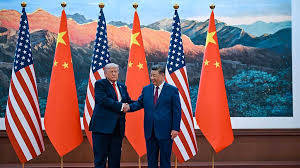
After two days of high level meetings in Beijing the summits between President Donald Trump and President Xi Jinping concluded on May 15 2026 with measured diplomatic gains and one headline grabbing commercial commitment that may reshape parts of the aerospace market. While negotiators did not announce sweeping trade accords the agreement for China to purchase 200 Boeing jets stands out as a tangible step toward rebuilding business ties and reducing immediate tensions between the two largest economies.
What happened over two days in Beijing
The summit convened a carefully choreographed program of bilateral talks visits to cultural sites and working dinners designed to rebuild lines of communication after a period of strained relations. Delegations focused on regional security issues trade policy supply chain resilience and mechanisms for crisis communication. Senior officials described discussions as frank and pragmatic with both sides seeking to manage competition and avoid miscalculation particularly in the Indo Pacific theater.
Security conversations carried weight
Security was a central theme. Officials from both capitals reiterated public commitments to preventing conflict and agreed to strengthen hotlines and incident de escalation protocols for military encounters. Participants emphasized a shared interest in stability across the Taiwan Strait maritime domains and the Korean Peninsula. Those conversations included concrete proposals for more frequent staff level contacts and a new working group to address naval and air safety incidents in contested waters and skies.
The Boeing transaction and what it means
The most newsworthy commercial outcome was the reported agreement by China to buy 200 Boeing jets. That purchase signals a willingness to compartmentalize aviation commerce from broader geopolitical friction. For Boeing the deal offers immediate market validation and potential revenue that could help the company recover lost market share. For China the order supports fleet modernization for several carriers and may be construed domestically as securing high quality Western technology while diversifying suppliers.
Analysts caution that the headlines mask layers of complexity. Final contract terms delivery schedules certification hurdles and financing arrangements must be negotiated in follow up talks. Export controls intellectual property practices and regulatory approvals remain sensitive points that could slow or alter the shape of any final deliveries. Nevertheless the reported commitment represents a pragmatic commercial breakthrough that both governments can present as progress to domestic audiences.
Economic and supply chain implications
The order could ripple through supplier networks across the United States and allied countries restoring production lines and sustaining jobs in aerospace manufacturing and parts industries. It may also encourage more transactional commercial engagement even as political competition continues. Companies in related sectors will watch closely for subsequent procurement decisions moves by Chinese airlines and any reciprocal steps by US firms operating in China.
Why neither side declared sweeping victories
Both delegations framed the summit as a step in a long process not as an endpoint. The lack of broad trade breakthroughs reflects multiple realities: complex interdependencies in technology and semiconductors unresolved disputes over market access and subsidies and domestic political pressures in both capitals. Each leader faced incentives to show progress without conceding politically sensitive ground. The resulting readout emphasizes mechanisms for dialogue risk mitigation and pilot agreements rather than a comprehensive grand bargain.
Domestic politics shaped the outcome
Political audiences in Washington and Beijing will parse the summit through very different prisms. In the United States members of Congress demanded safeguards for sensitive technologies and stronger guarantees on reciprocity. In China domestic stakeholders viewed the meeting through the lens of national dignity and technological self reliance. Both leaders thus sought visible accomplishments while protecting core strategic interests.
Voices from the delegations and experts
US officials described the talks as constructive and professional noting the technical working groups established to follow up on aviation cybersecurity and supply chain resilience. Chinese sources framed the summit as a reaffirmation of mutual respect and enhanced communication channels. Independent analysts praised the reopening of direct contact while urging caution that agreements on process must be backed by enforceable mechanisms to produce durable results.
Foreign policy experts point to the significance of risk reduction mechanisms. Enhanced crisis communication and practical military to military channels reduce the probability that local incidents escalate into broader confrontations. At the same time trade and investment frictions will require sustained negotiation and oversight before businesses see predictable policy environments.
What to expect next
Follow up will matter more than headlines. Expect negotiating teams to finalize the Boeing contractual details and to hold working level sessions on supply chain security semiconductor trade and enforcement of intellectual property commitments. Multilateral forums will also factor into the next phase as both countries seek to manage regional partnerships and alliance responses to any bilateral shifts.
Near term indicators to watch include delivery schedules for the aircraft financing packages airline purchase confirmations and specific implementation timelines for the crisis management arrangements announced in Beijing. Markets will monitor these signals for implications to global air travel manufacturing and the broader commercial rhythm between the two nations.
Practical takeaways for businesses and policymakers
- Companies reliant on cross border supply chains should reaffirm contingency plans while engaging diplomacy driven forums and industry associations to clarify new procurement pathways.
- Policymakers should focus on translating process agreements into enforceable standards with measurable benchmarks to ensure compliance and predictability.
- Airlines and aerospace suppliers should prepare for phased deliveries and certification timelines and anticipate secondary effects on component demand and maintenance networks.
Context within a broader relationship
The summit is one chapter in a long competition between strategic rivals with deep economic ties. Moments of détente on specific issues have historically alternated with periods of confrontation. What distinguishes this meeting is the pairing of tangible commercial movement with explicit risk reduction measures. That combination offers a guardedly optimistic signal that both capitals can choose managed cooperation on select issues without resolving every dispute.
How other nations will respond
Regional partners and allied capitals will watch whether the summit translates into predictable behavior especially in maritime security and trade policy. Some governments will welcome reduced tensions while others will seek assurances that their security concerns are not sidelined by bilateral commerce. Multilateral institutions and markets will also update risk assessments as follow up actions clarify intent and capability.
Where to find primary documents and further reading
Readers seeking official statements can consult the joint press materials published by the two governments and coverage by major outlets. For context on aviation markets and the aerospace industry the International Air Transport Association provides market analysis and Boeing offers corporate updates and investor materials. The White House and the Ministry of Foreign Affairs of the People Republic of China published initial readouts that detail the agreements on crisis communication and working groups.
For deeper analysis on the intersection of commerce and security scholars at the Council on Foreign Relations produce accessible policy briefs and risk assessments.
The summit closed without grand bargains but with actionable steps that could reduce the chance of conflict and restore selected business flows. The coming weeks will test whether those steps become durable patterns or temporary respites in a contest that will shape global economics and security for years to come.