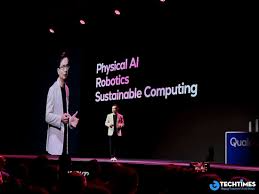
COMPUTEX 2026 began on June 1 in Taipei with a clear message from organizers and exhibitors: artificial intelligence is leaving the exclusive domain of hyperscale clouds and arriving at the edge, the factory floor, and the devices we use every day. The show floor felt both familiar and new, with 1,500 exhibitors packed into halls where the air smelled of hot coffee, solder flux, and fresh catalogues. Conversations ranged from low latency inference in robotics to ruggedized servers for offshore energy projects, signaling a practical pivot in how companies are building and shipping AI systems.
From Cloud Only to AI Together: What the Theme Means
The phrase AI Together captured a practical aspiration. It described a future in which models, sensors, and infrastructure cooperate across layers of compute rather than concentrating capability in distant data centers. Engineers at several booths told me this is not rhetoric. It is driven by a set of hard constraints: bandwidth costs for continuous streaming, regulatory requirements for data locality, and real time latency needs for safety critical machinery. For many firms the answer is a hybrid architecture that pushes optimized inference and control to edge nodes while reserving centralized training and long term model tuning for larger clusters.
That change alters procurement, software stacks, and staffing. Companies that built their businesses around cloud APIs now face questions about distributed orchestration, secure model updates over unreliable links, and the economics of running inference on constrained hardware. For device makers and industrial integrators, the opportunity is to bake intelligence directly into products so outcomes are faster, more private, and often less costly over the long run.
What I Saw on the Floor
Walking through the exhibition areas, several trends stood out. One section showcased tiny AI accelerators no larger than a postage stamp, designed to run specific vision and audio models inside surveillance cameras and consumer appliances. Nearby, startups demonstrated compact servers for retail stores that handle checkout and inventory recognition without sending images to remote clouds. At another pavilion, a consortium of robotics companies showed plug and play modules for coordination in warehouses that rely on real time local models for collision avoidance.
There was a tactile quality to many demos. I heard the whirr of robotic arms, felt vibration from rugged compute enclosures, and watched displays switch from idle to full throughput as engineers toggled workloads. These were not abstract research demos. They were prototypes built with production connectors, metal housings, and vendor support contracts in mind.
Key Technical Themes
Several technical motifs threaded through presentations and panels. First, model efficiency is the currency of edge deployment. Techniques such as quantization, pruning, and structured sparsity allow larger capabilities to run on smaller chips with acceptable latency and energy use. Second, federated learning and secure aggregation drew steady interest as mechanisms for updating models while keeping raw data local. Third, real time orchestration frameworks that coordinate inference across multiple devices were a recurring theme, as exhibitors showed how to split workloads between tiny accelerators and nearby micro data centers.
Hardware vendors highlighted improvements in low power matrix math, dedicated vision pipelines, and thermal designs suitable for outdoor and industrial conditions. Software providers emphasized tool chains that let engineers profile, compile, and deploy models across heterogeneous fleets without rewriting major components. The result is a growing ecosystem where an emphasis on portability and manageability is as important as peak performance numbers.
Industry Panels and Policy Conversations
Panels reflected the same pragmatic focus. Speakers from manufacturing, healthcare, and transportation discussed use cases where latency and data governance determine architecture. A hospital CIO described pilot programs running diagnostic models within imaging suites to reduce the time between scan and clinical decision. A rail systems integrator outlined edge based monitoring that can detect component wear in real time and route maintenance crews before failures occur.
Policymakers and privacy experts were present and vocal. They raised questions about certification standards, auditability of models deployed in public infrastructure, and the need for clearer procedures for updating deployed systems safely. Those discussions underscored that AI Together must be accompanied by governance that fits distributed deployments, including software bill of materials, provenance tracking, and standardized testing for safety critical contexts.
Startups, Scaleups, and the Role of Hyperscalers
Startups dominated the innovation showcase, presenting niche solutions that solve specific edge problems such as sensor fusion for construction sites or low latency speech recognition for call centers. Scaleups displayed products that bridge device fleets and central management, offering subscription based software for orchestration and security. Hyperscalers appeared less as headline makers and more as partners, offering cloud services that integrate with edge platforms and provide long running model training and analytics.
The partnership model is practical. Many exhibitors said they prefer to train and store large models on centralized clusters while using the cloud for model auditing and rollback. The edge then becomes the place for hardened, validated models that meet local privacy and latency needs. This collaboration between on premise and cloud is what AI Together advocates: not a replacement of one by the other but a coordinated system that leverages the strengths of both.
Supply Chain and Manufacturing Realities
Another recurring topic was supply chain resilience. Edge deployments require a steady supply of specialized chips, connectors, and rugged enclosures. Recent disruptions have convinced many buyers to diversify suppliers and invest in longer lived hardware that can tolerate spare part lags. Several Taiwan based manufacturers at COMPUTEX highlighted local capacities to assemble and test products rapidly, a capability that matters for enterprises choosing deployment partners with low logistical risk.
Practical Takeaways for Organizations
For executives and technical leaders attending the show the implications are immediate. First, they should inventory workloads to decide which should remain in the cloud and which must move to the edge for latency, privacy, or cost reasons. Second, investing in model efficiency can pay dividends because smaller, faster models reduce hardware and energy costs. Third, governance frameworks for distributed deployments are not optional. Organizations must plan for model provenance, secure update channels, and field testing before large scale rollouts.
COMPUTEX 2026 suggested also that partnerships will matter more than ever. Companies that combine device expertise with cloud management and security practices will have a competitive advantage. Procurement teams should ask suppliers about life cycle support, software update policies, and third party audit mechanisms when evaluating edge AI solutions.
What Comes Next
COMPUTEX affirmed a turning point where AI is becoming woven into the physical world in ways that require hardware, software, and governance to work together. Over the coming year, I expect more product announcements focused on turnkey edge stacks, additional efforts to standardize testing and certification, and new commercial arrangements that blend capital equipment with ongoing software revenue.
For practitioners the challenge is to move thoughtfully. Deploying AI at the edge can deliver tangible benefits but also raises operational complexity and responsibility. The promise of AI Together is real, yet its success will rely on careful engineering, vigilant oversight, and a willingness to coordinate across suppliers, integrators, and regulators.
Those interested in a broad view of trends discussed at COMPUTEX can find reporting and technical briefings on major technology news sites and official exhibitor pages. For deeper dives into edge computing architectures and federated learning research the proceedings and white papers released during the show provide useful technical context and implementation details. COMPUTEX and selected research repositories host materials that attendees and remote readers can consult to follow the momentum toward distributed, practical AI deployments.