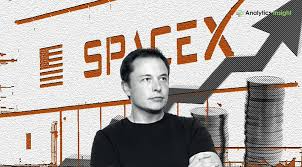
Market anticipation accelerated on June 4 and 5, 2026, as SpaceX moved through a series of corporate steps that signalled an initial public offering could value Elon Musk s company near 1.77 trillion dollars. Investors and industry observers read the moves as the clearest indication yet that the private rocket and satellite company is preparing to transition part of its business to public markets. The prospect of a blockbuster listing prompted conversations about national security, capital markets appetite for space infrastructure, and the human stories behind a company that has long blurred the lines between aerospace firm and technology platform.
What changed and why markets paid attention
In recent days SpaceX filed paperwork and adjusted internal governance and share structures in ways consistent with IPO readiness. While precise prospectus details remain private, the company s actions included appointing seasoned capital markets advisors, updating equity plans, and clarifying the corporate units that would be carved out for public investment. Those steps suggested a staged approach where some business lines could be floated while others remain under majority private control.
Wall Street pricing conversations quickly converged on a headline valuation figure near 1.77 trillion dollars. That number reflects aggregation of expected value across SpaceX s most commercially visible businesses including Starlink broadband services, reusable launch operations, and emerging satellite based data services. The implied valuation places SpaceX among the very largest public companies and creates fresh expectations about capital flows into space infrastructure and related supply chains.
How the valuation is being constructed
SpaceX s multi strand business model complicates valuation. Public market analysts are modelling revenue streams from Starlink subscriber growth, launch cadence for commercial and government customers, government contracts including national security missions, and anticipated margins as reuse and scale reduce unit costs. Each arm carries different growth profiles and risk factors: Starlink is capital intensive but has recurring revenue potential, launch services are exposed to cyclical demand and competitive pressures, and research operations such as orbital logistics or in orbit servicing are speculative longer term bets.
Analysts also factor in the company s demonstrated cost declines from rocket reusability and a backlog of committed launches. Investors price in significant optionality for new revenue verticals such as satellite internet for mobility sectors, earth observation analytics, and government partnerships that could include secure communications and space domain awareness services.
Market appetite and investor considerations
Institutional demand for a SpaceX equity offering would likely be robust, but investors must balance enthusiasm with structural concerns. A valuation near 1.77 trillion dollars implies high expectations for secular growth and margin expansion. That creates sensitivity to execution risk, regulatory developments, and macroeconomic conditions that affect capital costs and government spending. Public investors will examine path to profitability for capital intensive units and the transparency of financial disclosures that historically did not exist while the company was private.
Governance arrangements will also matter. SpaceX s leadership structure, founder control provisions, insider lock ups, and potential dual class share structures could shape investor appetite and pricing. Large institutional allocators often seek clear alignment between management incentives and minority shareholder protections before committing significant capital to a single issuer at such a scale.
National security and regulatory questions
The prospect of a publicly traded SpaceX raises national security and export control considerations. Starlink s communications network and certain satellite technologies touch on sensitive defence capabilities. Regulators will weigh how to allow public investment while protecting technologies subject to export controls and classified contracts. The company may need to define which assets and subsidiaries remain private for national security reasons and which can be offered publicly without exposing critical capabilities.
Lawmakers and defence officials are already framing questions about oversight, control, and access to sensitive data streams. Any IPO will require coordination with regulatory agencies and likely bespoke arrangements to isolate classified programs from public disclosure while providing investors with sufficient, audited financial information.
Human stories behind the valuation headlines
Beyond numbers the potential listing brings human consequences for employees, early investors, and communities tied to SpaceX facilities. For thousands of engineers, technicians, and mission specialists an IPO could create tangible wealth and change career trajectories. At launch sites and manufacturing plants towns that hosted rapid expansion over the past decade may see renewed investment in housing and services as liquidity events shift spending patterns.
For company founders, the move from private stewardship to public accountability invites different pressures: quarterly reporting cadence, broader stakeholder scrutiny, and investor relations obligations. For program teams focused on missions to Mars or new propulsion systems the cultural shift could be profound as research timelines and risk tolerances interact with market expectations.
Competitors and the broader aerospace ecosystem
A public SpaceX at a trillion plus valuation would reshape competitive dynamics. Rivals in launch and satellite services from established aerospace firms to new space startups may face greater pressure to consolidate, seek strategic partnerships, or accelerate innovation to remain competitive. Suppliers across propulsion, avionics, and composite manufacturing could see increased demand and pressure to scale capacity rapidly.
At the same time a highly valued public SpaceX could catalyse financing for adjacent sectors such as space based manufacturing, in orbit servicing, and satellite analytics. Venture capital flows may redirect toward companies that offer complementary capabilities to the emerging public champion, altering the innovation ecosystem and talent flows within aerospace.
Risks and contingencies investors should weigh
Key risks include execution failures, technical setbacks in Starship or other launch vehicles, regulatory constraints, and geopolitical events that affect supply chains or government contracts. Starlink subscriber growth could slow if competition intensifies or if regulatory barriers impede international expansion. Project timelines for next generation propulsion and orbital infrastructure inherently carry schedule risk that can affect cash flow projections.
Investors will watch for clarity on capital allocation priorities: how much will be reinvested in R and D and infrastructure versus returned to shareholders. The balance between aggressive expansion and prudent capital management will inform future market confidence.
What to watch next
Near term signals that will sharpen the picture include any prospectus filings, disclosure of carve out financials for units such as Starlink, and details of governance structures for public shareholders. Market reception will also depend on anchoring investors and the breadth of allocation across mutual funds, sovereign wealth funds, and retail windows. Regulatory notices and committee reviews related to export control or national security carve outs could influence timing and structure of the offering.
For the public and observers the IPO will be a moment of reckoning: an assessment of whether one of the most transformational private companies of the century can sustain the expectations baked into a near 1.77 trillion dollar valuation while operating in sectors where technical uncertainty and policy friction remain high.
Further reading and official sources
Readers seeking official filings and regulatory statements should monitor securities filings and agency notices as the process unfolds. For contextual analysis of market structure and aerospace industry data consult reports from major financial institutions and industry groups. The Federal Aviation Administration maintains safety and licensing information for launch operations, and financial regulators publish prospectus requirements that will govern how SpaceX presents its business to potential investors.
For background on space policy and commercialization visit resources at FAA and industry analysis from leading financial research firms that cover aerospace and defence markets.