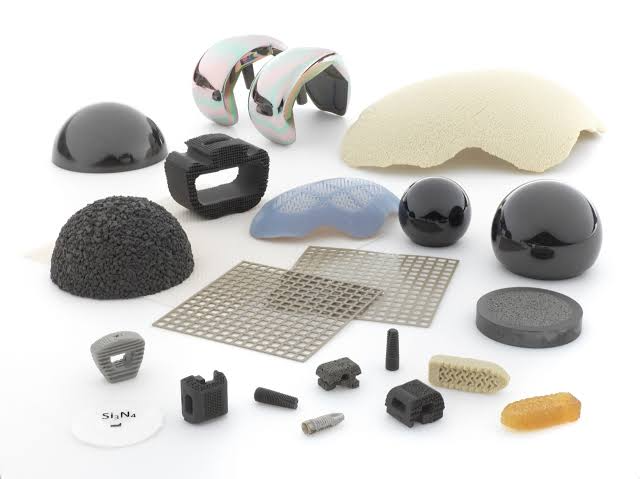
On June 22, 2026 Sintx Technologies announced a cluster of international manufacturing orders valued at more than 3.2 million, a pickup that underlines growing industrial reliance on advanced silicon nitride and medical grade ceramics. I will examine what these orders mean for manufacturers, supply chains, and patients who depend on high durability thermal and chemical resistant components, and explain why engineered ceramics are suddenly moving from niche to mainstream use across heavy industry and health care.
What the new orders signify for Sintx and its customers
Sintx designs and produces silicon nitride and other advanced ceramic components that tolerate extreme temperatures chemical exposure and mechanical wear. The recent contract cluster spans several sectors including precision machining for aerospace, thermal management elements for semiconductor fabs and implantable biomaterial components for medical device makers. The total value of more than 3.2 million is not a one time windfall so much as a signal that buyers are prioritizing materials with longer lifecycle performance and predictable failure modes.
For Sintx the orders represent a near term revenue boost and practical validation of its process controls and quality systems. For customers the appeal is straightforward. Ceramic components often outlast metal parts in corrosive or high temperature environments reducing downtime and maintenance costs. In medical applications ceramics can offer biocompatibility and wear resistance that extend implant lifetime and reduce revision surgeries which benefits patients and clinicians alike.
Why silicon nitride and specialty ceramics are attracting investment
Several technical and economic trends are driving demand. First there is an industry wide push to improve thermal management as power densities rise across electric vehicles and data centers. Silicon nitride offers high thermal conductivity combined with low thermal expansion which makes it attractive for heat spreaders and high temperature bearings. Second semiconductor manufacturing increasingly requires materials that can withstand aggressive chemical processes and repeated high temperature cycles. Third medical device makers are seeking materials that combine mechanical strength with biocompatibility for orthopedic and dental implants.
Supply chain thinking has shifted as well. Manufacturers now evaluate total cost of ownership which includes longer mean time between failures and lower lifecycle emissions from fewer replacements. That calculus favors specialty ceramics when reliability is mission critical. The orders Sintx secured suggest procurement teams are moving from theoretical assessments to concrete sourcing decisions.
Operational challenges and manufacturing realities
Producing advanced ceramics at scale requires strict process control and precise sintering capabilities. Yield management is a central challenge since small defects can render a part unusable. Sintx and its peers invest heavily in quality assurance methods that include nondestructive evaluation imaging and rigorous mechanical testing to ensure batch consistency. These investments raise capital intensity but are critical to winning contracts with aerospace and medical customers who demand traceability and regulatory documentation.
Another operational hurdle is lead time. Ceramic manufacturing often involves multiple thermal cycles and post processing steps that extend production timelines compared with conventional metal machining. Buyers that seek to shorten supply chains need transparent production schedules and flexible capacity planning. Sintx will have to balance existing production commitments with the new order cluster to maintain delivery performance.
Implications for medical devices and patient outcomes
When ceramics move into medical implants the implications are tangible. Ceramic bearings and articulating surfaces can produce lower wear particles than metal on polyethylene implants which reduces inflammation and can delay revision surgeries. For patients that means fewer hospital stays and less cumulative risk from repeated procedures. However regulatory pathways remain exacting. Manufacturers must demonstrate long term biocompatibility mechanical safety and consistent manufacturing that meets medical device standards.
Clinicians and hospitals can benefit from clearer evidence on implant longevity and real world performance metrics. Postmarket surveillance and registry data will be essential to quantify outcomes and to reassure payers and surgical teams that the upfront cost of ceramic components yields net clinical value.
Supply chain and market dynamics to watch
The cluster of orders to Sintx underscores a broader shift toward materials diversification. Two dynamics will define how this market evolves. First capacity expansion among ceramic manufacturers will determine whether price premia compress or hold steady as demand rises. Second access to specialty powders and high purity feedstocks could become a constraining factor if suppliers do not scale in lockstep with component makers.
Geopolitical and logistics factors matter too. Many advanced materials supply chains concentrate upstream processing in a handful of regions which raises exposure to trade disruption. Buyers and producers are increasingly exploring geographic diversification and inventory buffers to insulate production schedules from single point failures.
Economic and strategic impact for regional manufacturing
For regional economies that host ceramic manufacturing plants the new orders bring jobs and opportunities for specialized technician roles. Scaling production creates demand for furnace operators materials scientists and quality engineers. Those positions often require vocational training or partnerships with local universities which can strengthen regional industrial ecosystems. Sintx may need to expand its workforce and training programs to meet repeatable production targets while preserving high quality standards.
Long term strategic benefits include attracting suppliers and downstream partners who depend on local access to engineered components. Industrial clusters often form around materials expertise and that concentration can accelerate innovation when firms collaborate on processing techniques and new material formulations.
Environmental and lifecycle considerations
Advanced ceramics offer potential environmental advantages by extending part lifetimes and reducing frequency of replacement. That can lower cumulative resource use and waste. However ceramics manufacturing consumes energy particularly in sintering steps and requires careful management of process emissions and effluents. Sustainable production will depend on improving furnace efficiency recycling offcuts and sourcing lower carbon energy for high temperature operations.
Companies that demonstrate measurable lifecycle benefits through external verification can gain market preference from customers that include sustainability criteria in procurement decisions.
Where industry watchers should look next
Monitoring Sintx production announcements and delivery timelines will show whether the company can convert the order cluster into sustained growth. Observers should also track upstream feedstock availability and pricing trends for silicon nitride powders which will influence margin dynamics. For the medical device sector it will be important to review regulatory filings and published clinical registries that document long term implant performance.
For technical readers the National Institute of Standards and Technology publishes materials data that can contextualize performance metrics for silicon nitride and other ceramics and industry trade groups provide market reports on advanced ceramics demand. Relevant resources include the NIST material properties database at https://www.nist.gov and sector trade publications that cover materials science and manufacturing trends.
I will continue to follow Sintx as it fulfills these orders and watch how broader industrial buyers incorporate advanced ceramics into durable goods and medical devices that reach patients and critical infrastructure alike.