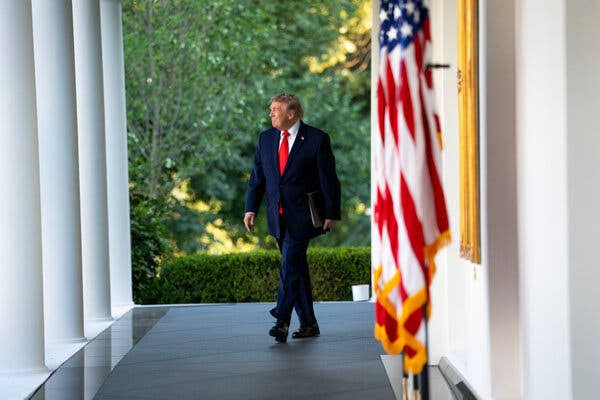
Newly filed financial disclosures show President Donald Trump earned more than $2 billion after returning to office, a scale of private gain that immediately intensified debate over conflicts of interest, public trust and the blurred line between business and government power. The filings have prompted a fresh round of scrutiny in Washington and abroad, where critics say the numbers raise hard questions about who benefits when a sitting president remains deeply tied to a sprawling commercial empire.
[reuters](https://www.reuters.com/business/trump-financial-disclosures-everyones-profiting-because-stock-market-is-up-2026-07-01/)
What the filings show
The annual disclosure, filed with the U.S. Office of Government Ethics, covers Trump’s 2025 earnings and reports at least $2.24 billion in revenue based on the assets and income he disclosed. Reporting from Reuters and CNBC says roughly $1.4 billion of that total came from cryptocurrency related activity, including income tied to World Liberty Financial and token sales connected to Trump affiliated ventures. Other reported income came from royalties, golf properties, branded merchandise and settlement payments, creating a picture of a president whose finances remain closely linked to private enterprise.
[cnbc](https://www.cnbc.com/2026/07/01/trump-money-financial-disclosure-crypto-billions.html)
The sheer scale is striking even by the standards of presidential finance disclosure. The report is not a tax return and does not show net profit, but it does reveal a dramatic jump from the year before, when disclosures put his reported revenue far lower. That contrast is one reason the filing has landed so forcefully, because it suggests not a routine annual update but a rapid expansion of wealth while Trump was back in the White House.
[nytimes](https://www.nytimes.com/2026/06/30/us/politics/trump-financial-disclosure-crypto-windfall.html)
Why the conflict debate is intensifying
For critics, the central issue is not simply that Trump is wealthy. It is that the sources of that wealth overlap with sectors affected by federal policy, including digital assets, media, real estate and regulated business interests. When a president profits from industries shaped by government decisions, every policy move can look politically compromised, even if no formal violation is proven. That perception alone can weaken public confidence in the neutrality of the office.
[nytimes](https://www.nytimes.com/2026/07/01/us/politics/trump-finances-government-conflicts.html)
The White House has rejected the conflict allegations. Reuters reported Trump said he had nothing to do with his personal finances and that outside funds manage his money, while the administration insisted neither he nor his family has engaged in conflicts of interest. That defense may satisfy supporters, but it does not erase the optics of a president whose business empire appears to be generating extraordinary returns at the same time that his administration is setting the rules of the road for major economic sectors.
[cnbc](https://www.cnbc.com/2026/07/01/trump-money-financial-disclosure-crypto-billions.html)
The role of crypto
Cryptocurrency is the most important piece of the disclosure story. CNBC reported that Trump’s 2025 filing showed about $1.2 billion in cryptocurrency related income, much of it connected to World Liberty Financial and related token activity. Reuters similarly said his companies received nearly $800 million from the crypto venture he co founded with family members, including income from token sales and sale of interests in the business.
[reuters](https://www.reuters.com/business/trump-financial-disclosures-everyones-profiting-because-stock-market-is-up-2026-07-01/)
That matters because crypto remains one of the most politically sensitive corners of the financial world. Supporters see it as an engine of innovation and market competition, while critics worry about speculation, weak disclosure norms and the risk of insider advantage. When a president is publicly associated with the sector and financially benefits from it on this scale, the policy stakes become impossible to ignore.
[cnbc](https://www.cnbc.com/2026/07/01/trump-money-financial-disclosure-crypto-billions.html)
What the numbers say about power
These disclosures also reveal something larger than one man’s earnings. They show how modern political power can intersect with private capital in ways that are harder to separate than ever before. The president’s holdings reportedly include not only digital assets but also golf properties, branded goods, media settlements and other income streams that continue to generate cash while he occupies public office.
[usatoday](https://www.usatoday.com/story/opinion/columnist/2026/07/02/trump-billions-wealth-crypto-schemes-executive-order/90767503007/)
That combination gives Trump an unusual financial footprint. Unlike a politician whose wealth is concentrated in passive investments, he appears to retain exposure to businesses whose value depends on public attention, regulatory conditions and policy climate. For opponents, this is not just a governance issue but a structural one. They argue that even strong ethics assurances cannot fully resolve a system in which the president’s fortunes may rise or fall with decisions made from the Oval Office.
[nytimes](https://www.nytimes.com/2026/07/01/us/politics/trump-finances-government-conflicts.html)
Public trust and political fallout
The political consequences could be significant. Presidential disclosures are designed to give the public a basic view of assets, income and potential conflicts, but the scale of Trump’s reported earnings has turned a routine filing into a major public trust test. In practical terms, voters are being asked to judge whether a president so deeply intertwined with private markets can credibly police those same markets in the public interest.
[reuters](https://www.reuters.com/legal/government/trump-ethics-filing-reveals-thousands-trades-tied-us-corporate-securities-2026-05-14/)
International observers are watching as well. In capitals from Brussels to Beijing, the disclosures are likely to feed a familiar narrative that American politics remains inseparable from money and media power. That perception may not be new, but the numbers now attached to it are large enough to dominate diplomatic and financial conversations far beyond Washington.
[nytimes](https://www.nytimes.com/2026/06/30/us/politics/trump-financial-disclosure-crypto-windfall.html)
What happens next
The next phase will likely focus on oversight, not just outrage. Ethics watchdogs, lawmakers and campaign finance critics are expected to keep pressing for more detail on how Trump’s holdings are managed and whether additional guardrails are needed. The broader question is whether current disclosure rules are adequate for a president whose business interests span highly visible and politically sensitive sectors.
[reuters](https://www.reuters.com/legal/government/trump-ethics-filing-reveals-thousands-trades-tied-us-corporate-securities-2026-05-14/)
For readers trying to make sense of the filings, two official resources are worth following: the U.S. Office of Government Ethics for disclosure rules and the White House for public statements on ethics policy. The disclosures themselves may be public paperwork, but their meaning reaches much further. They cut to the heart of what Americans expect when business wealth and political authority sit in the same office.
[reuters](https://www.reuters.com/business/trump-financial-disclosures-everyones-profiting-because-stock-market-is-up-2026-07-01/)
Bottom line for readers
The new filings do not just show that Trump earned a lot of money. They show that the financial ecosystem surrounding the presidency has become a source of global debate, legal scrutiny and political suspicion. Whether one sees the disclosures as proof of entrepreneurial success or evidence of a troubling conflict, the central fact remains the same: the president’s private earnings are now too large, too visible and too intertwined with public policy to be treated as background noise.
[nytimes](https://www.nytimes.com/2026/06/30/us/politics/trump-financial-disclosure-crypto-windfall.html)