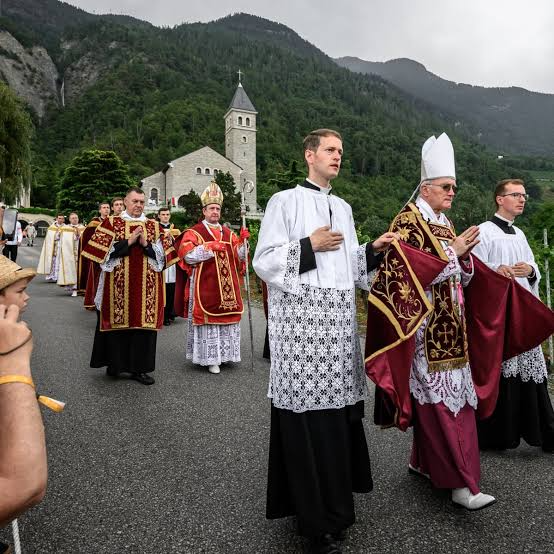
The Vatican has issued a historic canonical decree declaring the automatic excommunication of all bishops belonging to the ultra conservative SSPX society, a dramatic move that deepens one of the Catholic Church’s most painful internal rifts. The decision follows years of appeals from the pope for unity and marks a sharp turn in a long struggle over authority, tradition and obedience inside global Catholic life.
What the decree means
Excommunication is among the most serious penalties in Catholic canon law. It does not erase baptism or permanent membership in the Church, but it does bar those affected from receiving the sacraments and from exercising ecclesiastical authority. In practical terms, the Vatican’s decision signals that the bishops of the SSPX have placed themselves outside full communion with Rome by continuing to ignore repeated calls to reconcile with papal authority.
For many Catholics, the legal language may sound distant, but the human stakes are unmistakable. This is not a dispute over paperwork or a minor doctrinal disagreement. It is a conflict about who has the right to speak for the Church, who may lead in its name and how far a religious movement can resist central authority before it crosses a line that cannot easily be crossed back.
Why the SSPX has been a flashpoint
The Society of Saint Pius X, widely known as SSPX, emerged as a traditionalist movement resisting reforms associated with the Second Vatican Council. Its supporters have long argued that the modern Church drifted too far from older liturgical and theological forms. Its critics have said the society’s resistance has hardened into open defiance, creating a parallel religious identity that claims Catholic legitimacy while resisting Catholic discipline.
That tension has never been only theological. It has also been emotional and cultural. For some faithful, the SSPX represents continuity, reverence and a longing for stability in a rapidly changing Church. For others, it represents schism in spirit if not always in formal language, a refusal to accept the authority of the pope and the council that shaped modern Catholic practice. The Vatican’s decree now places that tension at the center of public view again.
Why the Vatican acted now
The Holy See said the move came after repeated pleas for unity were ignored. That detail matters because it suggests the decree was not impulsive, but the result of a long and increasingly exhausted effort to restore communion. In Catholic governance, appeals to unity are not mere diplomatic gestures. They are invitations to remain within a shared sacramental and institutional life. When those invitations fail, canonical penalties become the Church’s way of drawing a boundary.
The timing also reflects a broader reality facing religious institutions across the world. Movements built around identity and resistance can become difficult to reintegrate once they develop their own habits of authority. In that sense, the Vatican’s action is not only about punishment. It is also about preventing ambiguity. The Church is saying, in effect, that one cannot simultaneously reject central authority and expect to retain its full privileges.
The canonical significance
Canon law is often misunderstood as a technical system disconnected from ordinary life, but it is one of the main ways the Catholic Church turns doctrine into governance. The automatic nature of the excommunication suggests that the bishops’ actions triggered a penalty already embedded in church law rather than a purely symbolic rebuke. That gives the decree weight not just as a statement of displeasure, but as a formal legal outcome with immediate consequences.
For clergy and lay Catholics watching from the outside, this can feel both severe and sorrowful. Severe because it draws a line across a contested boundary. Sorrowful because the Church rarely speaks this way unless dialogue has broken down. The language of canon law can sound cold, yet at its core it reflects a deeply pastoral concern: the preservation of communion, order and sacramental life.
How Catholics may respond
Responses are likely to vary widely. Traditionalist Catholics who sympathize with SSPX may view the decree as further proof that Rome has become intolerant of dissenting liturgical preferences. Many other Catholics will see it as a necessary act of discipline, a reminder that unity in the Church cannot be optional. Some will simply feel sadness that a dispute over tradition has reached such a public and painful threshold.
Parishes and dioceses may now face the practical task of explaining what excommunication means and what it does not mean. Confusion is common in moments like this, especially when the term is used in the public square as though it were a total banishment from faith. In reality, Catholic teaching treats excommunication as a medicinal penalty, intended to provoke reflection and eventual reconciliation, not final exclusion forever.
Why this matters beyond theology
The decree is also a reminder that the Catholic Church is one of the world’s largest and oldest transnational institutions, and internal conflict within it carries global significance. A dispute over bishops and authority in Rome can influence communities far beyond Europe, touching parishes in Africa, Latin America, North America and Asia where traditionalist and reform minded Catholics already coexist uneasily.
In a broader sense, the story reflects a familiar modern pattern: institutions struggling to maintain unity in the face of identity based fragmentation. What makes the Catholic case unusual is the scale of its moral and sacramental claims. The Church does not simply manage membership. It claims to guard a spiritual inheritance. That is why disputes over authority become so charged and why canonical action can feel, to believers, like a matter of conscience rather than administration.
What happens next
The immediate future will likely be shaped by whether the SSPX responds with defiance, silence or some gesture toward dialogue. Much will depend on whether bishops and senior clergy within the society believe they can preserve their movement’s identity without full reconciliation or whether the weight of canonical exclusion forces a reconsideration. The Vatican, for its part, will need to decide whether this decree closes a chapter or opens a new pastoral strategy for those caught around the margins.
There is also the question of the faithful who attend SSPX ministries. They may now face renewed uncertainty about sacramental participation and ecclesial standing. Pastors and bishops elsewhere will likely be called upon to clarify boundaries with compassion, especially for ordinary Catholics who have found themselves drawn into this conflict for reasons that are less ideological than devotional or familial.
A wound that remains open
For all its legal precision, the Vatican’s action reveals something deeply human: the pain of division inside a community built around unity. The Church has chosen discipline because repeated appeals failed, but the wound behind the decree remains. It is a wound about memory, tradition, obedience and the fear of losing something sacred in the process of change.
Whether the decree becomes a step toward eventual reconciliation or a deepening of separation will depend on what comes next. For now, the message from Rome is unmistakable. The boundaries of communion still matter, and for those who ignore them, the Church is prepared to act with the full force of its law and its authority.