Christopher Nolan’s adaptation of The Odyssey is already being described as one of the most ambitious productions of his career, and new behind the scenes details make clear why. The film was shot across six countries, a scale that gives this ancient tale a physical, windswept realism that no studio set could fully imitate, and it signals once again that Nolan is betting on spectacle, immersion, and practical filmmaking on a global canvas.
[nytimes](https://www.nytimes.com/2026/06/25/movies/odyssey-christopher-nolan.html)
A journey built on real places
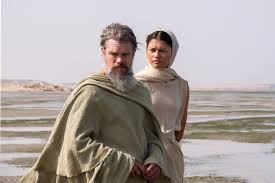
What stands out most about this production is not just the size of the budget or the star power, but the choice to move the crew from one country to another in service of the story. Reports indicate that principal photography took Nolan and his cast to Greece, Morocco, Italy, Iceland, Scotland, and one additional location used to complete the film’s international sweep. That kind of itinerary is not a vanity move. It is a storytelling decision that uses geography as texture, making the sea, rock, light, and weather feel like characters in their own right.
[travelpirates](https://www.travelpirates.com/captains-log/where-was-the-odyssey-filmed-christopher-nolan-locations)
For a film drawn from Homer’s epic poem, that choice makes artistic sense. Odysseus is defined by passage, endurance, disorientation, and return. A production that constantly changes terrain mirrors that journey in a way that a single soundstage never could. From salt heavy coastlines to rough island interiors and colder northern light, the visual variety gives the audience a chance to feel the scale of the voyage before a word of dialogue is spoken.
[britannica](https://www.britannica.com/topic/The-Odyssey-film-by-Nolan)
Why Nolan went global
Nolan has long favored practical effects and large format filmmaking, but The Odyssey appears to push that philosophy further than ever. He has described the shoot as a demanding experience, and one report from the production framed it as a nightmare in the best possible way, a line that fits the director’s reputation for chasing difficult logistics in service of cinematic intensity. Filming across six countries likely allowed the team to capture authentic landscapes that match the poem’s shifting mood, from peril to wonder to exhaustion.
[motionpictures](https://www.motionpictures.org/2026/04/cinemacon-2026-christopher-nolan-unveils-epic-the-odyssey-footage-shot-entirely-in-imax/)
That method also reflects a larger trend in prestige filmmaking. Audiences are increasingly drawn to movies that feel physically inhabited rather than digitally assembled, especially when the source material carries the weight of myth. In that sense, Nolan is not only adapting a classic text. He is trying to restore the sense that epic cinema should feel dangerous, tactile, and expensive in the most literal way possible.
The scale of the production
Details around the project point to a film that aims to be as technically bold as it is narratively ambitious. Industry reporting has described The Odyssey as being shot entirely on IMAX cameras, a rare distinction that gives the movie extraordinary visual scope and a format built for vast horizons and close human detail. That choice will matter to moviegoers in theaters because the format magnifies both landscapes and expressions, which is exactly what a story like this requires.
[motionpictures](https://www.motionpictures.org/2026/04/cinemacon-2026-christopher-nolan-unveils-epic-the-odyssey-footage-shot-entirely-in-imax/)
The production was also notable for its international coordination. Moving cast, crew, equipment, and post production workflows across multiple countries requires precision, local partnerships, and a willingness to adapt to terrain and weather. The result, if Nolan’s past work is any guide, will likely be a film where the logistics themselves help shape the final image. For viewers, that usually translates into a sense that every frame has been physically earned.
What the locations add to the story
The locations reported for the film suggest a visual language rooted in ancient seafaring and modern cinematic grandeur. Greece brings immediate mythic resonance because it anchors the story in the cultural memory of Homer’s world. Italy, Morocco, Iceland, and Scotland each contribute a different texture, whether that means sun bleached rock, open water, volcanic starkness, or cold coastal drama. Together, they create a route that feels less like a checklist of filming sites and more like a cinematic map of Odysseus’s long homecoming.
[imdb](https://www.imdb.com/title/tt33764258/)
There is also a practical reason to spread a production this way. Different locations can stand in for distinct emotional states in the story. One country may evoke the temptation of an island encounter, another the isolation of a storm, another the resilience of a homecoming. In a film driven by ordeal and survival, geography becomes emotional language.
What this means for audiences
For movie fans, the six country shoot raises expectations and questions in equal measure. Will the film stay faithful to Homer’s structure, or will Nolan reshape it into something leaner and more modern in its pacing? Will the practical scale make the myth feel more intimate, or will the scope dominate the human story at the center of it? These are the kinds of questions that build anticipation rather than diminish it, because they remind us that a great adaptation must do more than reproduce the plot. It must find a new way to make the old story breathe.
There is also a broader audience appeal here. Nolan’s films often pull in viewers who may not regularly seek out classical literature on screen, and that crossover matters. When a director with his reputation stages a story like The Odyssey across oceans and continents, he gives a new generation a reason to approach a foundational text with fresh curiosity. For many viewers, that may be the most meaningful result of all.
The business of epic filmmaking
Films of this scale are not just artistic statements. They are bets on theatrical cinema itself. A production shot across six countries and on IMAX is designed to remind audiences that some movies still belong in the largest possible venue, where the image feels almost architectural in size. That matters for studios too, because epic event films remain among the few releases capable of drawing broad audiences into premium formats.
[motionpictures](https://www.motionpictures.org/2026/04/cinemacon-2026-christopher-nolan-unveils-epic-the-odyssey-footage-shot-entirely-in-imax/)
The economic footprint is significant as well. International filming creates work for local crews, vendors, and support industries, while also requiring partnerships with regional authorities and production managers. In that sense, a movie like The Odyssey becomes more than entertainment. It becomes a temporary international enterprise with cultural and commercial impact that reaches far beyond the screen.
Why this film already feels important
Even before release, The Odyssey carries a rare kind of anticipation because it combines a canonical story, a major auteur, and a production model that refuses to play small. Behind the scenes reports about the six country shoot only deepen that sense of scale. They suggest a film that is serious about place, serious about image, and serious about the emotional burden of a journey that has survived for centuries because it still speaks to fear, loyalty, temptation, and home.
[britannica](https://www.britannica.com/topic/The-Odyssey-film-by-Nolan)
That is why the project matters now. In a movie market crowded with franchise repetition, Nolan is offering something that sounds older and stranger: an epic that trusts landscape, movement, and human endurance to carry the drama. If the finished film delivers on even part of that promise, it could stand as one of the defining theatrical events of the decade.
For readers who want further context on the film’s formal release information and cast, the most useful reference points remain the IMDb listing for The Odyssey and the Motion Picture Association coverage of Nolan’s IMAX presentation.
[imdb](https://www.imdb.com/title/tt33764258/)