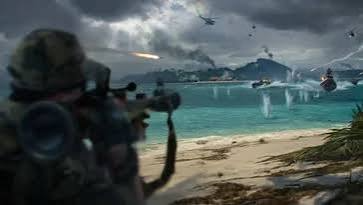
Developers have officially set the date for the next major chapter in Battlefield 6. Season 4, titled Naval Warfare, arrives on July 21, 2026 and promises the franchise largest map ever along with dynamic water systems and tactical sea vehicles that reshape how battles unfold. The announcement on July 14, 2026 marks the start of a countdown for players who have been waiting for a true combined arms experience that puts ships, aircraft, and ground forces on equal footing.
What Naval Warfare brings to the battlefield
The centerpiece is scale. The new map stretches across a sprawling archipelago where coastlines, harbors, and inland valleys create multiple fronts in a single match. Dynamic water systems react to player actions and environmental conditions, with wave height, currents, and weather affecting vehicle handling and visibility. That means a landing craft approach can turn treacherous in a sudden squall and that naval gunfire must account for rolling decks and spray.
Tactical sea vehicles expand the toolbox for squads. Players can pilot fast attack craft for flanking maneuvers, command larger patrol boats for area denial, and deploy amphibious transports to move troops between islands under fire. The design intent is to make water a contested space rather than a barrier, encouraging teams to coordinate air cover, naval support, and ground assaults in real time.
Key features at a glance
- Largest map in franchise history with multiple islands, ports, and inland objectives
- Dynamic water physics that influence vehicle handling, line of sight, and landing strategies
- New sea vehicles including fast attack craft, patrol boats, and amphibious transports
- Weather systems that shift during matches and force adaptive tactics
Why this update matters for players
Battlefield has long been defined by sandbox chaos where plans collide with reality. Naval Warfare leans into that identity by adding a whole new dimension that demands communication and role specialization. Squads that ignore the sea risk being outflanked or cut off from reinforcements. Teams that master naval routes can control supply lines, reposition quickly, and dictate the tempo of the fight.
The update also addresses a common critique from earlier seasons that maps felt too compact or linear. The new scale rewards patience and map knowledge. Players who learn choke points, high ground, and safe anchorages will gain an edge. The learning curve is part of the appeal, offering a fresh skill ceiling for veterans and a reason for lapsed players to return.
How to prepare for launch day
Practical preparation can turn a chaotic first match into a productive session. Players should review the patch notes for vehicle stats, spawn rules, and objective changes so they know what to expect. Squad leaders can assign roles ahead of time, designating drivers, gunners, and medics who understand naval movement and rescue protocols. Voice chat discipline becomes more important when coordinating across water and air.
Settings tweaks can improve performance and awareness. Adjusting field of view, motion blur, and audio cues helps spot incoming craft and hear engine direction. Key bindings for vehicle controls should be tested in training modes to avoid fumbling during landings. A short warm up in a low stakes mode can calibrate aim and movement before jumping into ranked play.
What developers are aiming to achieve
The team has signaled that Naval Warfare is a test of systems as much as content. Dynamic water and large scale vehicle combat require server stability and netcode that can handle complex interactions without lag or desync. The launch window will reveal whether the infrastructure holds under load and whether the balance between ships, aircraft, and infantry feels fair. Early feedback will guide rapid adjustments to spawn protection, vehicle health, and objective placement.
Long term, the season sets the stage for future maps that could refine these mechanics. If players embrace the naval focus, we may see more archipelago battles, river crossings, and coastal sieges that build on the foundation. If certain elements prove frustrating, the studio can dial back complexity or provide clearer tutorials. The goal is a living ecosystem where each season evolves the formula without losing the core Battlefield feel.
Community expectations and potential pitfalls
Excitement is high but so is scrutiny. Players want the map to feel purposeful, not just big. Objectives must be spaced to encourage movement without forcing endless treks under fire. Vehicles need to be powerful yet vulnerable, with clear counters that prevent any single platform from dominating. Spawn logic must protect squads from being overwhelmed the moment they land, while still allowing for comeback mechanics that keep matches competitive.
Balance patches will be inevitable. The first week will surface issues around weapon effectiveness on boats, anti vehicle tooling, and the value of air support over water. The studio response time and transparency will shape trust. Regular developer updates, data driven adjustments, and community testing sessions can turn a rocky launch into a durable success.
Resources for staying informed
Players who want detailed patch notes, developer diaries, and official release timing should follow the game website and verified social channels. For independent analysis, guides, and early impressions from content creators, the IGN Battlefield section provides timely coverage and expert breakdowns of new seasons and balance changes.
A final note on the stakes
Season 4 is more than a content drop. It is a statement about what Battlefield 6 can be when it leans into its strengths. A massive map, dynamic seas, and tactical vehicles offer the kind of emergent stories that define the franchise. The test is execution. If the systems hold and the battles feel fair yet wild, Naval Warfare could become the season that players reference for years. If not, it will be a lesson in ambition outpacing polish. On July 21, the servers will decide. The rest of us will be watching the horizon for the first wave of landing craft and the chaos that follows.