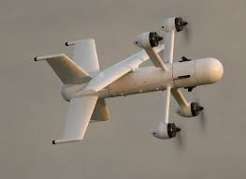
Lockheed Martin has introduced MORFIUS, an X rotor counter drone defense system built to engage swarms with lower cost and greater flexibility. The announcement lands at a moment when aerial threats are becoming faster, cheaper, and more difficult to stop, and it gives military planners a new option for defending bases, convoys, and critical infrastructure without relying on a single sensor type or a single interception method.
Why MORFIUS matters
The modern drone threat is no longer limited to one aircraft drifting over a fence line. Adversaries now use swarms, decoys, and low cost platforms that can overwhelm traditional defenses by sheer volume. That changes the economics of air defense. When the target is a small and expendable drone, firing an expensive missile at every threat can become a losing proposition.
MORFIUS is being pitched as a response to that problem. By focusing on low cost aerial engagement, Lockheed Martin is aiming at the same battlefield logic that has pushed armies worldwide to rethink how they protect themselves. The value of a counter drone system is not only that it can stop an incoming threat. It is that it can do so in a way that is sustainable over time, especially when attacks come in waves.
What sensor agnostic means
One of the most important details in the announcement is that MORFIUS is sensor agnostic. In practical terms, that means the system is designed to work across different sensing inputs rather than depending on one narrow detection setup. That kind of flexibility matters because no battlefield looks exactly the same. Conditions change, clutter changes, and adversaries often try to confuse or jam a defense network.
A sensor agnostic system can be easier to integrate into existing defense architectures, which is a major selling point for military customers who already operate a mix of radar, optical, and electronic systems. It also suggests a move toward modular defense, where the intercept layer can adapt more quickly to the sensor layer already in place. For commanders, that can mean less friction and faster deployment.
How the threat has changed
Drone warfare has altered the feel of modern conflict. The hum of a small rotorcraft can now carry as much danger as the roar of a larger aircraft, especially when multiple drones arrive together or when they are used to probe defenses before a larger strike. This is why counter drone technology has become a priority across land, sea, and air operations.
What makes the challenge harder is scale. A handful of drones can disrupt a runway, force a shelter in place order, or tie up expensive defenses. A swarm can do much more, turning speed and quantity into a tactical weapon. Systems like MORFIUS are designed to meet that challenge by providing a more economical response than traditional interceptors in situations where ammunition cost and reload speed matter as much as kill probability.
Why cost is central
In defense procurement, cost is not only about the price tag on the hardware. It is about what happens during the second, tenth, or fiftieth intercept. A system that can defeat a threat cheaply may be far more useful than one that performs brilliantly but drains budgets and magazines at the wrong rate. That economic reality is shaping a new generation of air defense thinking.
Low cost engagement also matters for logistics. If a military can field a counter drone system that is simpler to move, easier to sustain, and cheaper to operate, it gains flexibility across more locations. That can be especially valuable at forward operating bases, ports, depots, and other sites where the threat may be sudden but the defensive footprint must stay compact.
What Lockheed is signaling
The MORFIUS unveiling fits a broader shift in defense technology toward layered solutions. Rather than relying on one perfect shield, militaries are building systems that combine detection, electronic warfare, kinetic interception, and rapid response. MORFIUS appears to be one layer in that structure, aimed at the final moments when a drone swarm must be stopped before it reaches its target.
For Lockheed Martin, the announcement also shows how major defense contractors are positioning themselves in the counter unmanned aircraft market. This space has become increasingly competitive as governments search for defenses that are both effective and affordable. Companies that can prove they understand swarm tactics and system integration will likely have a strong advantage in future procurement rounds.
Operational questions ahead
Even with a promising concept, the real test will be performance in the field. Military buyers will want to know how MORFIUS behaves under electronic interference, how it performs in bad weather, how quickly it can be deployed, and how well it fits into existing command and control systems. They will also want to see how it handles mixed threats, since drone swarms rarely arrive in a clean laboratory scenario.
Another important question is whether the system can scale from a specialized asset to a widely deployable tool. If it can, it may become attractive not just for elite units but for a broader range of defense users. If not, it could still have a role, but a narrower one tied to high value sites or specialized missions.
Broader defense context
The unveiling comes as military planners around the world are reassessing how they defend against inexpensive aerial systems. The challenge is especially visible in regions where drones are used for reconnaissance, disruption, or direct attack. Those conflicts have shown that air defense is no longer just about jets and missiles. It is about spotting tiny, moving threats quickly enough to respond before they do damage.
That shift has made counter drone innovation a serious priority. Modern defense systems must balance speed, precision, and affordability, all while operating in congested electromagnetic environments. MORFIUS enters that arena as part of the next wave of tools designed to keep pace with a changing battlefield.
Why the public should care
This is not only a story about military procurement. The same kinds of drone threats that concern defense planners also affect airports, power facilities, public events, and emergency response sites. As drones become cheaper and more widespread, the need for reliable protection grows beyond the battlefield. That is one reason counter drone technology receives so much attention whenever a new system is unveiled.
For civilians, the relevance lies in the larger pattern. The tools developed for military protection often shape how societies think about secure airspace, critical infrastructure, and rapid response. A system like MORFIUS may eventually influence not only defense policy but also how governments design layered protection for sensitive locations at home.
What comes next
The next step will be testing, integration, and procurement interest. If MORFIUS can prove that it is dependable, adaptable, and affordable, it may become a meaningful player in the counter swarm market. If it struggles in realistic conditions, it will join a long list of concepts that looked strong on paper but could not match the speed of the threat they were built to defeat.
For now, the announcement points to a clear reality: the race between drones and defenses is accelerating. Systems that can detect, track, and engage swarms without exhausting resources will shape the next chapter of air defense. Lockheed Martin is signaling that MORFIUS is meant to be one of those systems, and that alone makes it worth close attention.
Readers tracking defense policy and unmanned aircraft trends can follow broader context through the U.S. Department of Defense and the NATO defense and security resources.