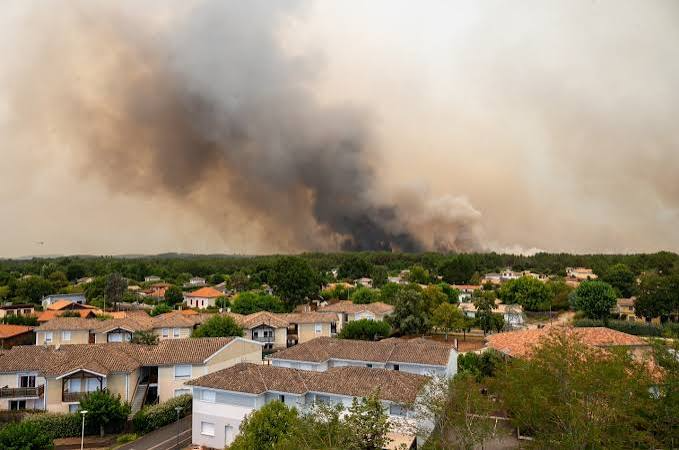
French authorities have evacuated more than 20,000 holidaymakers and residents near Bordeaux as raging forest fires swept across the region under punishing summer conditions. The scene is one of smoke darkening the afternoon sky, roads filling with cars and coaches, and families trying to move quickly without panic as firefighters battle to contain a fast moving emergency.
How the evacuation unfolded
The fires were reported near Bordeaux, a part of southwestern France known for its vineyards, pine forests, and summer tourism. As flames advanced through dry vegetation, officials moved quickly to clear campsites, vacation areas, and nearby residential zones, prioritizing the safety of both visitors and local residents. The scale of the evacuation underscores how rapidly a wildfire can turn a holiday destination into a crisis zone when heat, wind, and drought line up in the wrong way.
For many tourists, the disruption likely came with little warning. A morning that begins with packed beach bags, breakfast on a terrace, or a planned drive through the countryside can end with sirens, traffic detours, and an abrupt search for shelter. That sharp change in tempo is one of the most unsettling parts of a wildfire emergency, because it forces ordinary people to make fast decisions in conditions shaped by smoke, heat, and uncertainty.
Extreme summer conditions
The broader weather backdrop is a major part of the story. Southern Europe has faced intense summer heat in recent years, and conditions like these dry out forests and make them easier to ignite and harder to control. Once a fire starts in such terrain, it can move through brush and woodland with frightening speed, especially if wind shifts or access roads are limited.
Forest fires near Bordeaux are especially concerning because the region combines dense woodland with populated areas and tourist infrastructure. That creates a difficult tactical problem for fire crews. They must protect people first, hold back the flames where they can, and try to stop embers from jumping into new areas. In these moments, the line between a contained incident and a wider regional emergency can be thin indeed.
What tourists and residents face
For the more than 20,000 people forced to leave, the immediate challenge is not just evacuation. It is the uncertainty that follows. People want to know whether they can return to their hotel, retrieve belongings, continue travel plans, or simply call family and say they are safe. Evacuation centers and temporary shelters often become places of waiting, where relief and anxiety sit side by side.
Holidaymakers are especially vulnerable because many are unfamiliar with the area and may not speak the language well enough to follow instructions instantly. They may also be traveling with children, older relatives, or pets, which makes the logistics more complicated. A wildfire evacuation is never only about distance. It is about keeping people calm, organized, and accounted for while smoke and heat continue to build pressure on the ground.
Why Bordeaux matters
The Bordeaux region is more than a tourist destination. It is a place tied to agriculture, local livelihoods, and a summer economy that depends heavily on seasonal visitors. A major wildfire can ripple through that economy quickly, affecting hotels, rental properties, vineyards, restaurants, and transport services. Even after the flames are out, the financial and emotional costs can linger for weeks or longer.
That wider impact is one reason fire authorities and municipal leaders treat these events as more than temporary disruptions. A fast moving blaze does not simply threaten trees. It can cut off road access, strain emergency services, and interrupt the routines of entire towns. When thousands of tourists are evacuated at once, the local infrastructure itself becomes part of the emergency response.
The fire response
Fire crews in such conditions usually work on multiple fronts at once. Some teams focus on direct suppression, while others protect homes and public buildings, and still others manage evacuations and road closures. The sound of water pumps, radios, and helicopter traffic often becomes the background music of a crisis that feels anything but ordinary to the people living through it.
Officials also have to think about containment lines, wind direction, and the possibility of spot fires. A single ember carried by hot air can ignite a new patch of dry ground far from the original burn zone. That is why wildfire responses often look slower than the public expects. Every movement is weighed against the risk of sending people or equipment into a more dangerous position.
What this says about fire risk in Europe
The French evacuation reflects a broader trend across Europe, where hotter and drier summers are making wildfire risk more severe in places that once felt less exposed. Climate patterns are changing the rhythm of the season, extending periods of danger and shrinking the margin for error. Forests that used to recover after a dry spell now face repeated stress, and emergency planners are having to adapt quickly.
Travelers and local residents alike are being reminded that summer in Europe can now carry a real fire threat well beyond the Mediterranean coast. A holiday region may look peaceful in the morning and become a hazard zone by afternoon. That does not mean travel should stop, but it does mean visitors need to pay closer attention to weather warnings, evacuation notices, and local emergency guidance.
What people should do in wildfire zones
When a wildfire breaks out near tourist areas, the safest approach is to follow official instructions immediately and avoid the temptation to wait and see. People in affected zones should keep phones charged, documents ready, and vehicles fueled whenever conditions are elevated. Small steps like these can make a major difference when an evacuation order comes suddenly.
Travelers should also know the local emergency numbers and keep a simple exit plan in mind, especially if they are staying in rural lodging, campsites, or forest edge properties. In fast moving fire conditions, hesitation can cost time that families do not have. Preparation cannot remove the danger, but it can reduce confusion when every minute matters.
Why the human story matters
Behind the headline are real people who left behind bags half packed, meals untouched, and plans suspended in the summer heat. There is something deeply unsettling about being told to leave quickly in a place you came to for rest. Yet that is the reality of wildfire season in a warming climate. Safety comes first, even when it means walking away from comfort and routine.
For the residents of the Bordeaux area, the event is also a reminder of how fragile summer life can be when nature turns hostile. A region known for wine, countryside scenery, and warm weather now finds itself confronting the same hard question facing many fire prone places around the world: how do you protect people, property, and livelihoods when the landscape itself has become more combustible?
What comes next
The immediate focus will remain on firefighting, containment, and the safe return of evacuees once conditions allow. But the larger conversation will not disappear after the smoke clears. Local and national authorities will likely face renewed pressure to strengthen prevention, improve early warning systems, and prepare tourist areas for faster evacuations in future heat driven emergencies.
For now, the picture near Bordeaux is one of urgency and solidarity. Crews are working to hold the line, families are waiting for news, and a summer holiday has been interrupted by the force of a fire that no one planned for. It is a difficult reminder that the hottest days of the year can also be the most unforgiving.
For readers seeking broader background on wildfire preparedness and emergency response, the French Ministry for Ecological Transition and the International Federation of Red Cross and Red Crescent Societies provide useful public resources on fire safety and disaster response.