Commercial real estate is once again being forced to adjust to a harder rate environment. With U.S. Treasury yields surging above 5.2%, institutional investors are shifting their strategies toward prime industrial assets and logistics connected hubs, a sign that capital is becoming more selective even as deal activity continues.
The message from the market is not subtle. Higher yields are raising borrowing costs, widening the gap between debt and property income, and pushing investors to focus on locations where cash flow looks durable. In a sector that depends heavily on financing confidence, every move in the bond market now lands quickly on pricing, underwriting, and portfolio strategy.
Why yields matter so much
For commercial property owners and investors, Treasury yields are more than a macroeconomic headline. They are the reference point for nearly every major financing decision. When the long end of the curve moves higher, cap rates, refinancing terms, and valuation assumptions all come under pressure. That is especially true when investors believe central banks will remain hawkish longer than previously expected.
Recent market moves have reinforced that reality. With long term Treasury yields holding near levels not seen in many years, lenders are demanding stronger returns, and buyers are becoming more disciplined about what they will pay. The result is a market where the best assets still attract serious capital, while weaker properties face more scrutiny and longer selling timelines.
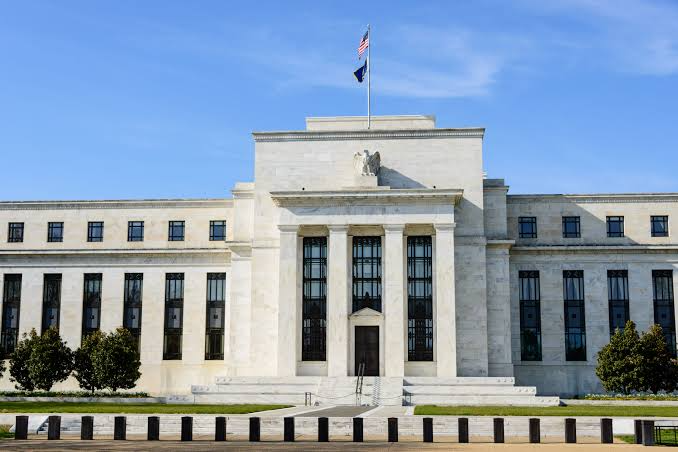
The Federal Reserve and Treasury market backdrop can be tracked through the U.S. Department of the Treasury’s daily rates, while the broader policy picture continues to be shaped by the Federal Reserve. For real estate investors, those signals are no longer abstract. They are part of the daily cost of doing business.
Industrial remains the favored lane
Even in a tougher financing environment, not every property type is being treated equally. Industrial assets, especially those tied to logistics, distribution, ports, highways, and regional supply chains, continue to draw attention from institutional investors. The logic is straightforward. These properties tend to offer stronger structural demand, more stable tenant profiles, and clearer links to the flow of goods that keeps modern commerce running.
That makes prime industrial hubs especially attractive when credit conditions tighten. Investors are looking for buildings that can support long term leases, sit near major transportation corridors, and withstand slower economic growth better than more cyclical property types. In a market where uncertainty has become the norm, logistical connectivity has become a form of insulation.
We are also seeing a preference for locations where supply is limited and tenant demand is broad. Industrial properties near ports, rail lines, interstate networks, and densely populated consumption centers offer something rare in CRE today: visibility. That visibility is helping capital concentrate in a smaller number of markets rather than spreading evenly across the country.
What investors are prioritizing
- Assets with stable tenants and long lease duration.
- Industrial properties linked to ports, highways, and last mile distribution.
- Prime locations with limited replacement supply.
- Markets with resilient population and employment growth.
- Deals that can still clear underwriting hurdles despite higher debt costs.
Mixed signals are creating a more selective market
The current environment is not simply bearish. It is selective. Some investors are pulling back from marginal assets, but others are leaning in where the numbers make sense. That means pricing is not moving in one clean direction. In certain segments, higher yields are leading to lower valuations. In others, especially those backed by strong rent growth or strategic location, capital remains available.
This kind of market often produces a split screen. Prime assets can still trade with solid demand, while weaker offices, older retail properties, and less connected industrial sites struggle to find comparable interest. For owners, that means the ability to tell a convincing story about tenant quality, infrastructure access, and long term demand is more important than ever.
It also means that timing matters. A seller who can move a good property into the market while liquidity is still available may fare far better than one who waits and hopes rates soften. On the buyer side, patient capital may find opportunities, but only if it is willing to accept that financing and exit assumptions are no longer as forgiving as they were during the low rate era.
Borrowing costs are reshaping underwriting
Higher Treasury yields do not just affect headlines. They reach directly into the underwriting spreadsheet. Debt service costs rise, loan to value ratios are reassessed, and deals that once penciled out comfortably can become much harder to close. For developers and sponsors, that can mean rethinking project timelines, capital stacks, and even whether to proceed at all.
Refinancing is another pressure point. Owners with loans coming due are facing a far less generous market than the one they borrowed in. If income has not grown enough to offset higher rates, refinancing may require fresh equity, lower leverage, or a sale at a more conservative price. That is why many market participants are now paying close attention to maturity schedules and tenant rollover risk.
There is still liquidity in the system, but it is not being distributed evenly. Lenders are more willing to support assets they view as durable and more cautious with buildings where operating performance is uncertain. That shift is pushing borrowers to present cleaner business plans and more conservative assumptions.
What hawkish signals mean for the next phase
The word hawkish matters because it changes expectations. When central banks signal that rates may stay higher for longer, capital markets begin to adjust not just to current borrowing costs but to the possibility that easy money will not return quickly. That alters everything from acquisition pricing to development starts.
For commercial real estate, this can be uncomfortable, but it is not necessarily destructive. Periods of rate pressure often reward the most disciplined investors. Those who buy well, use moderate leverage, and focus on real income rather than speculative upside can still build durable portfolios. The market is simply less forgiving of weak underwriting and optimistic assumptions.
It is also worth remembering that commercial property is not a single trade. Office, industrial, retail, multifamily, and specialty assets all respond differently to higher yields. Yet the current rotation toward industrial hubs suggests that when confidence narrows, capital gravitates toward assets that feel essential rather than discretionary.
Where the opportunity may lie
Even in a restrictive environment, there are opportunities for investors and operators who understand the new rules. Industrial assets with logistics adjacency remain attractive. Build to suit developments with anchored demand can still work. Well located properties with room for lease up or mark to market growth may also draw interest, especially if they are supported by strong local fundamentals.
For institutional investors, the challenge is to balance caution with conviction. They need enough discipline to avoid overpaying in a volatile market, but enough confidence to act when a prime asset appears. The best investors will likely be those who can separate temporary noise from structural demand.
For readers looking for broader market data, the CBRE Insights platform offers useful analysis on commercial real estate trends, while the GlobeSt market coverage remains a strong source for ongoing CRE financing and valuation shifts.
A market learning to live with higher rates
The commercial real estate sector has spent much of the past few years adjusting to a world that no longer resembles the era of near zero interest rates. The latest surge in Treasury yields is another reminder that capital is more expensive, underwriting must be sharper, and location quality matters more than ever.
That does not mean the market is broken. It means the market is maturing under pressure. Investors are becoming more precise, lenders more selective, and owners more disciplined. Industrial and logistics connected hubs are benefiting because they offer something the current cycle rewards: tangible utility, steady demand, and a clear place in the flow of the economy.
In the end, the new CRE story is less about panic than adaptation. The strongest capital is still moving. It is simply moving with a narrower lens, a firmer grip on risk, and a clearer preference for assets that can perform even when the bond market refuses to cooperate.