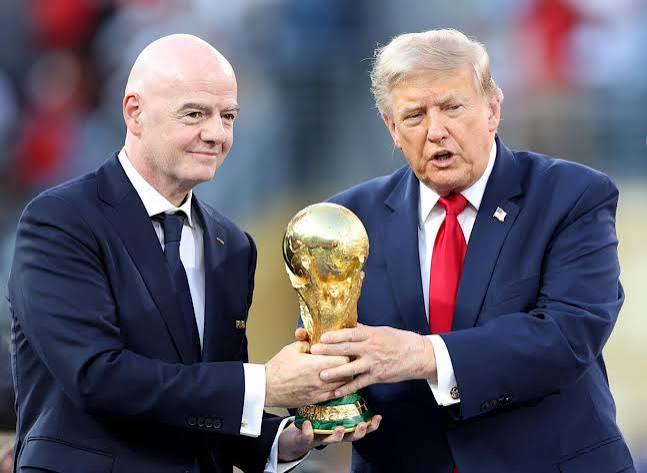
FIFA has set off one of the sharpest debates in modern soccer by proposing a private equity backed structure worth $20 billion to run commercial operations linked to the World Cup. The idea promises fresh cash, bigger funding envelopes for member associations, and a new way to monetize the sport’s most valuable property, but it also raises hard questions about governance, control, and who ultimately benefits when football’s biggest stage becomes even more deeply tied to outside investors.
[reuters](https://www.reuters.com/sports/soccer/fifas-private-equity-push-opens-new-front-decades-old-power-struggle-with-europe-2026-07-29/)
What FIFA is proposing
Under the plan, FIFA would create a new subsidiary called FIFA Forward Enterprise to manage commercial and event operations for the World Cup and other competitions. FIFA says it would keep majority control while offering minority stakes of up to 20 percent to external investors, with the goal of raising as much as $4.2 billion in new money.
[reuters](https://www.reuters.com/sports/soccer/uefa-hold-emergency-meeting-with-members-over-fifa-private-investment-plan-bbc-2026-07-29/)
The centerpiece of the proposal is scale. FIFA is not talking about a small sponsorship adjustment or a one off licensing deal. It is outlining a commercial platform large enough to attract long term private capital and, in effect, turn a portion of the World Cup business into a structured investment asset. That is a major shift for a body that has long presented itself as the steward of the sport rather than a conventional commercial operator.
[reuters](https://www.reuters.com/sports/soccer/fifas-private-equity-push-opens-new-front-decades-old-power-struggle-with-europe-2026-07-29/)
Why the backlash is so fierce
The response from Europe was immediate and emotional. UEFA condemned the plan, arguing that the World Cup is not a commodity to be sold and warning that the game’s core values are being pushed aside by financial engineering. In public statements and emergency meetings, European football leaders said FIFA had moved too quickly, had not consulted properly, and had framed the proposal with a deadline that felt more like pressure than process.
[aljazeera](https://www.aljazeera.com/news/2026/7/29/fifa-proposes-plan-to-sell-stakes-in-the-world-cup-angering-uefa)
That anger is rooted in more than pride. European confederations believe FIFA is asking national associations to approve a structure whose long term consequences are difficult to predict. They worry about who sets priorities when private investors enter the picture, whether commercial growth could begin to outweigh sporting integrity, and how the new money would be distributed across wealthy and less wealthy football nations.
[reuters](https://www.reuters.com/sports/soccer/uefa-hold-emergency-meeting-with-members-over-fifa-private-investment-plan-bbc-2026-07-29/)
The money behind the pitch
FIFA has made the proposal look generous on its face. President Gianni Infantino has told member associations that if the plan is approved, each of FIFA’s 211 members could receive immediate funding of $20 million for special projects, with further grants of $20 million or more in future four year cycles. He also suggested that total funding through 2038 could reach $86 million per association, far above the roughly $36 million he said would otherwise be available.
[reuters](https://www.reuters.com/sports/soccer/fifas-private-equity-push-opens-new-front-decades-old-power-struggle-with-europe-2026-07-29/)
That promise matters because many smaller federations depend on FIFA money for grassroots programs, youth development, facilities, and basic operational support. For those associations, the proposal sounds less like Wall Street intrusion and more like a lifeline. The tension here is plain: the same structure that alarms Europe may look like empowerment to countries that have long felt financially sidelined by the sport’s existing wealth gap.
[reuters](https://www.reuters.com/sports/soccer/fifas-private-equity-push-opens-new-front-decades-old-power-struggle-with-europe-2026-07-29/)
A deeper struggle over governance
We should be clear about what is really being debated. This is not just a dispute over cash flow. It is a fight over who gets to define the future of world football. FIFA says it would keep control of governance, competitions, calendars, and sporting decisions, but critics are not only asking what is written in the plan. They are asking what happens when investor expectations start shaping the commercial logic of the game.
[aljazeera](https://www.aljazeera.com/news/2026/7/29/fifa-proposes-plan-to-sell-stakes-in-the-world-cup-angering-uefa)
There is also a procedural complaint that cannot be ignored. Concacaf and the Asian Football Confederation both voiced concern about how the proposal surfaced and how quickly it moved into the public arena. Their objections suggest that the issue is not simply whether private equity belongs in soccer, but whether FIFA is trying to force a seismic change before the sport’s regional power centers can fully examine it.
[reuters](https://www.reuters.com/sports/soccer/uefa-hold-emergency-meeting-with-members-over-fifa-private-investment-plan-bbc-2026-07-29/)
The World Cup as an asset
The timing of the proposal is especially striking because FIFA has just come off what it describes as the most profitable World Cup in history. The expanded 48 team tournament in North America has produced enormous commercial returns, and FIFA has already increased payments to participating teams this year on the back of that success. That makes the case for outside capital harder to explain to skeptics who ask why a record breaking event now needs private investment at all.
[reuters](https://www.reuters.com/sports/soccer/uefa-hold-emergency-meeting-with-members-over-fifa-private-investment-plan-bbc-2026-07-29/)
To me, that question goes to the heart of the matter. If the World Cup is already generating extraordinary revenue, then any move to involve investors has to be justified by more than expansion and ambition. It has to show that the money will not only grow, but be used fairly, transparently, and in a way that does not distort the sport’s public mission. Otherwise, the proposal may look less like strategic planning and more like a sale of influence dressed up as modernization.
[reuters](https://www.reuters.com/sports/soccer/fifas-private-equity-push-opens-new-front-decades-old-power-struggle-with-europe-2026-07-29/)
What happens next
The proposal still needs the backing of FIFA’s 211 member associations, and that vote will shape the direction of the debate in the months ahead. FIFA has insisted that no final decision has been made and that consultation will continue, but the scale of the backlash suggests the organization will have to do far more to persuade skeptics that the plan protects football rather than commodifies it.
[aljazeera](https://www.aljazeera.com/news/2026/7/29/fifa-proposes-plan-to-sell-stakes-in-the-world-cup-angering-uefa)
For readers trying to make sense of the stakes, the coming period will likely revolve around three questions. First, can FIFA prove that private capital will not compromise governance? Second, can it show that the promised benefits will reach smaller federations, not just the top commercial markets? Third, can it do all of this while convincing fans that the World Cup remains a sporting event first and a financial asset second? Those questions now hang over the sport like a low summer cloud, impossible to ignore.
[reuters](https://www.reuters.com/sports/soccer/fifas-private-equity-push-opens-new-front-decades-old-power-struggle-with-europe-2026-07-29/)
Those following the formal side of the sport can review FIFA’s own public materials through the official FIFA website and examine European governance positions through UEFA’s official site.
[espn](https://www.espn.com/soccer/story/_/id/49493858/fifa-defends-world-cup-private-equity-plan-selling-football)