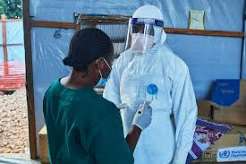
The Ebola outbreak in the Democratic Republic of the Congo has crossed a grim milestone, with more than 2,000 people now reported dead as health authorities and international partners struggle to contain one of the fastest moving Ebola epidemics ever recorded. As of August 11, 2026, government data cited by Reuters put the death toll at 2,011 confirmed fatalities and the number of confirmed cases at 4,381 across five provinces. :contentReference[oaicite:0]{index=0}
The scale of the crisis is becoming harder to ignore. Communities are facing a dangerous combination of active transmission, limited medical resources, insecurity and difficulties reaching patients in affected areas. For health workers on the ground, the emergency is not simply about treating Ebola. It is also about maintaining surveillance, protecting medical staff, tracing contacts and keeping ordinary health services functioning while fear and displacement complicate almost every part of the response.
A Rapidly Expanding Ebola Emergency
The current outbreak is being driven by the Bundibugyo species of Ebola virus, a strain that presents a particularly difficult challenge for public health teams because there is no approved vaccine or proven specific treatment available for it. Researchers have also identified a previously unrecorded variant of the Bundibugyo strain, with evidence suggesting that the outbreak may have begun following a new transmission event between animals and humans rather than simply continuing from an earlier human transmission chain. :contentReference[oaicite:1]{index=1}
That scientific finding adds another layer of uncertainty. Ebola is generally associated with transmission through direct contact with the blood or bodily fluids of an infected person or someone who has died from the disease. Earlier outbreaks have shown that rapid detection, isolation, contact tracing, infection prevention and community cooperation can dramatically change the course of an epidemic.
This time, however, many of those safeguards have been weakened by circumstances outside the control of individual patients and health workers. Conflict has restricted movement, surveillance teams have struggled to keep pace with new infections and health facilities in affected areas are under severe pressure.
Why This Outbreak Is Moving So Quickly
Health experts have described the current epidemic as unusually fast moving. Reuters reported earlier in August that roughly 80 percent of new infections were emerging outside known transmission chains, a sign that community transmission has become difficult to track. Delayed detection and gaps in surveillance have allowed the virus to spread before many infections were identified. :contentReference[oaicite:2]{index=2}
For communities, that can create a painful cycle. A person may become sick without immediately being recognized as an Ebola patient. Family members or caregivers may then come into close contact with that person. If the illness is not diagnosed quickly, health workers may also be exposed before appropriate infection prevention measures are put in place.
Population movement makes the problem even more complicated. People displaced by conflict may move between communities or stay in crowded temporary settlements where access to health care is already limited. Every missed case creates another opportunity for transmission, while every delayed contact investigation makes it harder for responders to reconstruct where the virus has traveled.
Conflict Is Making the Medical Response Harder
The Democratic Republic of the Congo has been dealing with prolonged insecurity in parts of the country, particularly in the east. Armed conflict can turn what would normally be a public health logistics problem into a security emergency.
Medical teams need reliable roads, safe transport, communications equipment, protective clothing, laboratories and access to communities. When roads become unsafe or humanitarian personnel cannot travel freely, even basic tasks such as collecting samples or transporting patients can become dangerous.
Calls for protected humanitarian access and security corridors therefore reflect a practical need rather than a purely political demand. Health workers cannot contain an infectious disease if they cannot safely reach people who may have it. Ambulances cannot move patients if routes are inaccessible. Supplies cannot reach treatment centers when transport networks are disrupted.
The consequences extend beyond Ebola treatment. When hospitals become overwhelmed by an outbreak, people suffering from other serious illnesses can also face delays in receiving care. Pregnant women, children, trauma patients and people with chronic conditions may all be affected when already limited medical capacity is redirected toward emergency response.
Why the Lack of a Bundibugyo Vaccine Matters
One of the most serious challenges facing responders is the absence of an approved vaccine specifically targeting the Bundibugyo virus. The scientific community has previously developed highly effective tools against other Ebola species, particularly Zaire ebolavirus, which has caused several major outbreaks in the Democratic Republic of the Congo and elsewhere.
Those advances have saved lives, but they cannot simply eliminate the need for research when a different viral species is responsible for an outbreak. Experts have been examining potential vaccine options for Bundibugyo as the crisis has developed. Reuters reported in May that international health experts convened to assess possible vaccine strategies. :contentReference[oaicite:3]{index=3}
Until effective preventive tools become available, the response depends heavily on public health fundamentals. Early diagnosis, safe clinical care, protective equipment, infection control, contact tracing, community education and rapid isolation remain central to slowing transmission.
International Aid Is Becoming Increasingly Important
The response is also being shaped by the availability of international funding. On August 5, the United States announced an additional $242 million for the Ebola response in eastern Congo, bringing its reported total commitment to $512 million. The funding is intended to support response activities for up to six months. :contentReference[oaicite:4]{index=4}
That financial support can translate into practical resources on the ground, including medical supplies, laboratory capacity, transportation, health facility support and assistance for health workers. But money alone cannot solve the crisis when insecurity prevents responders from reaching communities.
International organizations therefore face a dual challenge. They must provide enough resources to keep the response operating while also working with national authorities and local communities to establish safe access to affected areas.
The Human Cost Behind the Numbers
A death toll of more than 2,000 can appear as a statistic on a screen, but every number represents a family that has lost someone. Ebola can force painful decisions on relatives who want to care for sick loved ones but must also understand that direct contact can expose them to infection.
Fear can also produce stigma. Survivors may worry about how their communities will treat them after recovery, while families can experience isolation after losing relatives to the disease. Burial practices can become particularly sensitive because traditional contact with the body of someone who died from Ebola can create a significant transmission risk.
Public health teams therefore have to communicate carefully. Instructions that ignore local customs can produce distrust, while communication that respects communities can encourage people to report symptoms, cooperate with contact tracing and seek medical care sooner.
What Health Workers Are Trying to Achieve
The immediate objective is to interrupt transmission chains. That requires identifying infected people quickly and determining who may have been exposed to them.
Key elements of the response include:
- Rapid identification and laboratory confirmation of suspected Ebola cases.
- Safe isolation and supportive treatment for people who become ill.
- Contact tracing and monitoring of people who may have been exposed.
- Strict infection prevention measures inside health facilities.
- Protection, training and logistical support for health workers.
- Community engagement designed to reduce fear, misinformation and stigma.
- Safe and dignified burial practices for people who die from Ebola.
- Cross border surveillance to detect infections that could spread beyond affected provinces.
These measures are not new, but their effectiveness depends on speed and consistency. A surveillance system that identifies cases several days late can leave responders chasing an outbreak rather than staying ahead of it.
Uganda and Neighboring Countries Face Added Risk
The outbreak has also raised concerns beyond Congo’s borders. Uganda has reported Ebola activity linked to the wider regional situation, making cross border surveillance particularly important. The movement of people between neighboring countries means that health authorities cannot treat national borders as barriers to infectious disease transmission.
The World Health Organization’s regional response has continued to monitor the situation, while health officials work to strengthen preparedness and coordination. :contentReference[oaicite:5]{index=5}
For neighboring countries, preparedness can mean expanding laboratory testing, training health workers to recognize Ebola symptoms, checking referral systems and preparing isolation capacity before imported cases appear. Early preparation can be considerably less costly than attempting to build an emergency response after widespread transmission has already begun.
Why the World Is Watching Congo Closely
The Democratic Republic of the Congo has extensive experience responding to Ebola. Previous outbreaks have produced important lessons about community engagement, rapid vaccination, treatment and infection control. Yet experience does not make a new outbreak automatically manageable.
The current crisis combines several difficult factors at the same time: a rapidly spreading Bundibugyo virus, limited medical tools, delayed detection, armed conflict, population displacement and pressure on health facilities. Reuters has described the outbreak as the fastest spreading Ebola outbreak to date and reported that it has already become one of the largest Ebola epidemics ever recorded. :contentReference[oaicite:6]{index=6}
That combination explains why international support remains urgent. A response delayed by insecurity, funding shortages or inadequate surveillance can allow transmission to move far beyond the communities where the first cases were detected.
What Comes Next for the Ebola Response
The next stage will depend heavily on whether responders can regain control of transmission chains. That means reaching communities that have so far been difficult to access, improving case detection and ensuring that health workers have the equipment and security needed to operate safely.
Researchers will also continue examining vaccine and treatment options for the Bundibugyo virus. The discovery of a previously unrecorded variant makes genomic surveillance particularly valuable because scientists need to understand how the virus is changing and where transmission may have originated.
For ordinary people living in affected areas, however, the priorities are much more immediate. They need functioning health facilities, safe routes to care, accurate information and confidence that seeking medical assistance will not put their families at unnecessary risk.
A Crisis That Demands Urgent Action
The crossing of the 2,000 death mark is a stark reminder of how quickly an infectious disease can overwhelm communities when medical vulnerability and insecurity collide. As of August 11, the reported figures stood at 2,011 confirmed deaths and 4,381 confirmed cases, while subsequent government reporting indicated that the total had risen further by the following day. :contentReference[oaicite:7]{index=7}
We should view those numbers not simply as evidence of a severe outbreak, but as a measure of the urgent work still required. Every case identified early is an opportunity to protect a family. Every health worker who can safely reach an affected community represents another chance to break a transmission chain. Every functioning laboratory, treatment center and surveillance team strengthens the possibility of bringing the epidemic under control.
The international response now faces a race against transmission. Congo’s health authorities and their partners need sustained medical supplies, reliable funding, safe humanitarian access and stronger surveillance. The longer those needs remain unmet, the greater the risk that an already devastating outbreak will become even harder to contain.
For the communities living through the crisis, the most meaningful measure of international solidarity will not be another headline or another statistic. It will be whether medical teams can reach the sick, whether families can receive trustworthy information and whether the resources needed to stop Ebola arrive before another preventable death occurs.