The buildings that quietly power our streaming nights, our AI chats, and our cloud backed workdays are becoming some of the riskiest real estate on earth. A new Allianz Commercial report released this week, titled The Data Center Construction Boom: Risks and Claims Trends, lays out a striking picture. As of August 12, 2026, the firm confirms that annual global investment in data centers is projected to double from roughly 500 billion dollars in 2024 to more than 1 trillion dollars as soon as 2027, and nearly 80 percent of that capacity now sits in areas exposed to heightened natural catastrophe risk. What began as a niche corner of commercial property has quietly become one of the most consequential pieces of national infrastructure on the planet, and the insurance industry is racing to keep up.
A Trillion Dollar Buildout With Physical Limits
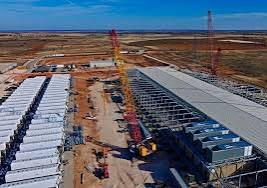
It is easy to think of data centers as abstract, invisible things, warehouses full of blinking lights somewhere far from daily life. But the scale of investment described in this report makes clear that these facilities have become tangible, physical infrastructure with real world constraints. Allianz notes that the investment opportunity now stretches well beyond server halls themselves into electricity generation, grid infrastructure, cooling systems, networking equipment, and semiconductor supply chains, an entire ecosystem being built at a pace few industries have ever attempted.
The United States and China are expected to account for around 62 percent of new global capacity additions through 2030, though the report is careful to note that the next wave of investment is becoming increasingly global, spreading into regions that have never before hosted infrastructure of this scale or sensitivity. That geographic spread brings its own complications, since building a hyperscale facility in a region with limited grid capacity, scarce skilled labor, or unfamiliar climate exposure introduces risks that did not exist when data centers were smaller, more contained operations tucked into established tech hubs.
Labor scarcity is already showing its teeth. In the United States alone, the construction industry faces a shortage of roughly 439,000 skilled workers, with an estimated 349,000 additional workers needed just in 2026 to keep pace with current build plans. For anyone who has watched a construction timeline slip because of a missing specialized contractor, that number is not just a statistic, it is a preview of delays, cost overruns, and mounting financial pressure across an industry racing to satisfy an almost insatiable appetite for computing power.
Why Climate Exposure Has Become a Central Concern
Perhaps the most sobering finding in the report is how much of this critical infrastructure sits directly in harm’s way. With nearly 80 percent of global data center capacity located in areas carrying elevated natural catastrophe risk, the industry is essentially building its most valuable, most sensitive assets in some of the most exposed locations available. That is not necessarily a matter of poor planning so much as a reflection of where power grids, fiber networks, and major population centers already exist, but it leaves very little room for error when a wildfire, flood, or severe storm moves through.
The financial fallout from that exposure is already visible in claims data. Fire has emerged as the leading driver of loss severity, accounting for well over half of roughly 800 million dollars in recent insurance losses tied to data centers, according to Allianz Commercial’s analysis. Natural catastrophe activity ranks second, followed by willful acts such as crime and cyber incidents, and then power failure. Water damage, meanwhile, is the single most frequent cause of claims overall, a detail that might surprise anyone picturing data centers as purely a fire risk. Cooling systems, plumbing failures, and storm related flooding all contribute to a steady drumbeat of smaller, more frequent losses that add up over time.
Business Interruption Is the Real Financial Threat
Beyond physical damage, the report identifies business interruption as the primary driver of claims severity across insurance lines, a finding that underscores just how much value now depends on these facilities staying online without interruption. When a single data center supports banking systems, hospital records, AI infrastructure, or global communications platforms, even a short outage can ripple outward into losses far larger than the physical repair costs themselves. That reality is reshaping how insurers think about coverage, since protecting a data center today means protecting not just a building, but the entire web of digital services depending on it.
Insurance Markets Racing to Catch Up
All of this is pushing the insurance industry into rapid expansion. The global data center insurance market is expected to more than double in value, reaching an estimated 24 billion dollars by 2030, as underwriters scramble to build products sophisticated enough to match the scale and complexity of modern facilities. Allianz Commercial leadership described the situation candidly, noting that as these centers evolve beyond simple data storage into high performance computing hubs, long term success will depend heavily on resilience, including access to power, dependable supply chains, disciplined construction practices, and insurance programs that genuinely reflect accumulated risk. Comprehensive coverage, the report states, has effectively become a prerequisite for financing many large scale AI infrastructure projects today, a shift that places insurers in a far more central role than they have traditionally held in commercial real estate financing.
That shift also reflects a broader change in how competitive advantage is defined within this sector. Increasingly, success is determined less by capital availability and more by access to electricity, grid connections, permitting approvals, specialized equipment, and skilled labor, resources that cannot simply be purchased on demand. Organizations tracking global infrastructure investment trends, including detailed sector analysis published through Allianz Commercial’s research platform, have emphasized that physical constraints, not financial ones, now represent the industry’s biggest bottleneck.
What This Means for Investors, Insurers, and Communities
For real estate investors, this report is a clear signal that data centers can no longer be evaluated using the same playbook applied to office towers or warehouses. Climate aware site selection, robust construction oversight, and realistic risk modeling are becoming essential rather than optional, particularly as facilities grow larger, more complex, and more interdependent with the surrounding power grid and regional economy. For insurers, the message is equally direct, the accumulation risk tied to concentrated, high value digital infrastructure requires fresh underwriting approaches built specifically for this asset class rather than adapted from older commercial property models.
There is a human dimension here too, one easy to overlook amid the billion dollar figures. Communities hosting these facilities often experience real strain on local power grids, water resources, and construction labor markets, even as they gain jobs and tax revenue from the buildout. Balancing that tradeoff responsibly will likely define how successfully regions absorb this next wave of investment. As data centers continue their transformation from quiet background infrastructure into critical national assets, the industries built to protect and finance them are being forced to grow up just as quickly, and this report makes clear that the stakes of getting that transition right have never been higher.