There is a particular sound that air traffic controllers know well, the low hum of hundreds of flight paths being redrawn overnight because a stretch of sky that was open yesterday is closed today. That sound has echoed across the aviation world for much of 2026, and this week it collided with something equally disruptive on the ground, a fresh wave of tariff activations that took effect at 12:01 a.m. Eastern time on August 19. Together, these two forces, one geopolitical and one economic, are squeezing the arteries of global travel and commerce in a way that few industry veterans can recall happening quite so simultaneously.
We have spent the past several months watching airlines, freight forwarders, and customs brokers scramble to keep pace with a world where the map itself seems to shift week to week. Passengers are rebooking flights they thought were confirmed. Warehouse managers are recalculating landed costs on shipments that were priced under an entirely different tariff schedule just days earlier. It is the kind of disruption that does not announce itself with a single dramatic headline but instead accumulates, delay by delay, surcharge by surcharge, until the whole system feels strained.
A Sky Redrawn by Conflict
The airspace picture over the Middle East remains, in the words of aviation risk monitors, fluid and complex. Large stretches of sky above Iran, Iraq, and Lebanon have stayed effectively off limits to most international carriers for months, and airlines continue routing around the region entirely rather than risk the kind of misidentification incidents that have haunted civil aviation in past conflicts. Iranian airspace in particular remains only partially open, with very few international operators willing to use it, and most Europe to Asia traffic now travels either south via Egypt and Saudi Arabia or north through the Caucasus and Afghanistan. Israeli airspace reopened months ago, yet the security situation has stayed volatile enough that many major international airlines still have not resumed regular service to Tel Aviv.
The human cost of these closures is easy to overlook in a spreadsheet of cancelled flight numbers, but it is real. Business travelers who once connected through Dubai or Doha now find themselves routed through unfamiliar hubs, adding hours to journeys and forcing overnight layovers that were never part of the plan. Seoul’s Incheon Airport, of all places, has quietly become the world’s busiest airport for international passengers, a shift driven largely by traffic diverting away from Middle East hubs, with the airport handling more than 38 million international passengers in just the first half of the year. That is not the story anyone would have predicted a year ago, and it captures just how far the ripple effects of regional conflict can travel.
Compounding matters, US embassies across eleven Middle East countries issued nearly identical emergency security alerts within a single day earlier this month, warning American travelers of a complex and fluid security environment and urging them to prepare for further flight cancellations and periodic airspace closures. For families planning long anticipated trips or executives trying to close deals in the region, that kind of synchronized warning lands with real weight. It is one thing to read about geopolitical tension in the abstract. It is another to be standing at a departure gate wondering whether the flight will actually leave, or to be a parent trying to explain to a child why the layover just turned into an unplanned night in a strange city.
Tariffs Land at the Worst Possible Moment
Just as airlines were adjusting to this new routing reality, freight and customs teams absorbed another jolt. New tariff actions targeting steel, aluminum, and copper alongside a fresh round of Section 338 duties on a wide range of Canadian goods, from cement to hockey sticks to wine, took effect at the same midnight hour that opened this week. The additional fifty percent tariff on covered Canadian goods applies broadly, including items covered under the existing North American trade agreement, though it carves out exceptions for energy products, potash, and certain critical minerals. For importers who had already built shipping schedules and pricing models around the prior tariff structure, the change forces an immediate scramble to recalculate costs that can no longer be assumed stable from one month to the next.
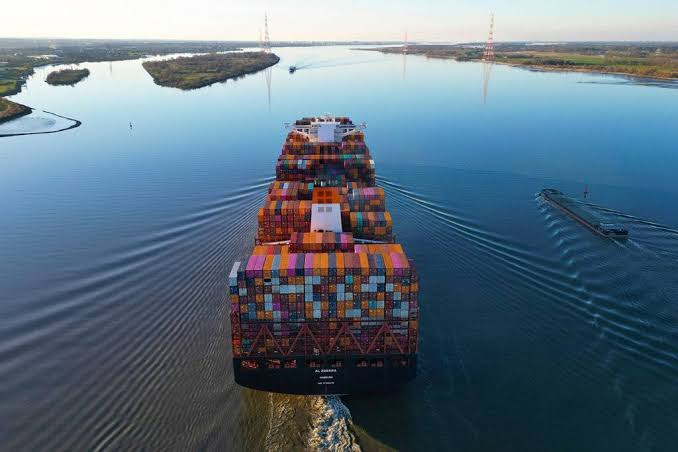
Ocean freight capacity has felt the strain in its own way throughout the summer. Container shipping on the transpacific lane peaked in July as importers rushed to front load orders ahead of new tariff activations, pushing freight indices sharply higher before easing once that frontloading demand faded, with multiple carriers announcing blank sailings on the route as they worked to manage capacity against cooling demand. That kind of whiplash, a scramble to load ships followed by a pullback in scheduled sailings, leaves everyone downstream guessing, from the trucking companies waiting at ports to the retailers hoping their fall inventory arrives on time.
Shippers watching the broader picture describe an environment where flexibility now matters more than finding the cheapest possible rate. Analysts tracking the transpacific and transatlantic corridors have noted that geopolitical instability tied to the Middle East and Red Sea continues to shape ocean routing decisions well beyond the region itself, since carriers avoiding one chokepoint often add days of transit time by rerouting around the Cape of Good Hope or through alternative corridors. Readers looking to track these shifting requirements in more detail can consult the U.S. Customs and Border Protection trade resources, which publish updated guidance as new tariff schedules and compliance requirements take hold.
What This Means for Travelers and Businesses Right Now
For anyone with an upcoming international itinerary, particularly one touching the Middle East, transpacific, or transatlantic corridors, we would encourage checking flight status directly with the airline in the days immediately before departure rather than relying on a booking confirmation made weeks earlier. Airlines have been updating suspension lists on a rolling basis, and a route that was operating normally on a Tuesday has, in several documented cases this year, been suspended by that same Friday.
Businesses moving freight across these lanes face a similarly moving target. Reviewing harmonized tariff codes, country of origin documentation, and total landed cost assumptions has become less of an occasional compliance exercise and more of a weekly habit for import and export teams trying to stay solvent amid policy whiplash. Companies that build in buffer time for customs clearance and maintain flexible routing options, rather than committing entirely to a single carrier or corridor, appear to be weathering this stretch with considerably less financial pain than those caught flat footed by sudden freezes.
A System Under Pressure, Not Yet Broken
We want to be careful not to overstate the crisis. Airlines are still flying, cargo is still moving, and the vast majority of global trade continues to function, if less smoothly than it did a year ago. What has changed is the margin for error. Every rerouted flight burns extra fuel and crew hours. Every tariff freeze forces a recalculation that can turn a profitable shipment into a break even one overnight. It is a system absorbing shock after shock, and while it has not buckled, the strain is visible to anyone paying close attention, from the passenger rebooking a connection in Seoul to the customs broker staring down a stack of newly obsolete paperwork on a Wednesday morning in August.