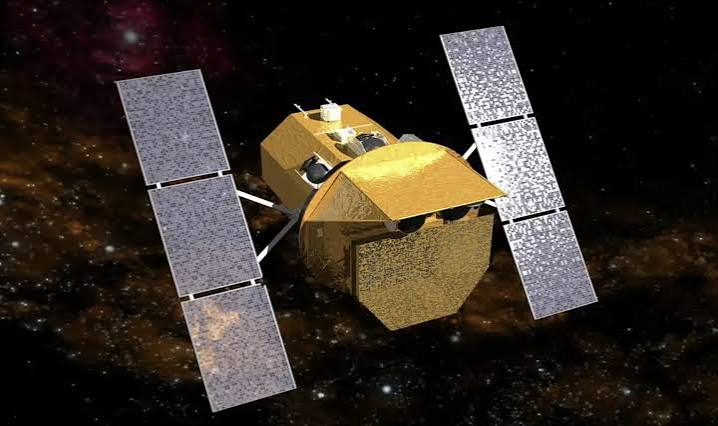
NASA has confirmed that the Swift space observatory will not receive the private rescue effort that might have extended its scientific life, after an electrical malfunction brought the $30 million Swift Boost mission to an unsuccessful end. The decision means the veteran telescope is now headed toward planned atmospheric reentry, closing a remarkable chapter for an observatory that spent years watching some of the universe’s most violent and mysterious events.
A Final Attempt to Save an Important Space Observatory
Swift was never simply another satellite orbiting Earth. Since its launch, the observatory has served as a rapid response astronomical platform, allowing scientists to observe powerful cosmic events and quickly direct other telescopes toward them. Its ability to identify sudden bursts of high energy radiation made it particularly valuable for studying phenomena that can appear and fade within minutes.
The possibility of extending that scientific legacy through a private rescue effort represented an unusual moment for space science. Instead of allowing the aging observatory to reach the end of its operational life, the Swift Boost mission sought to provide a new path forward. The mission was valued at approximately $30 million and was intended to demonstrate how private space capabilities might help preserve government owned scientific assets.
That effort has now ended after an electrical malfunction prevented the rescue mission from achieving its objective. NASA has consequently confirmed that Swift will proceed toward atmospheric reentry rather than receive another attempt at orbital recovery.
Why Swift Mattered to Astronomy
Swift was designed to study gamma ray bursts, among the most energetic explosions known to science. These extraordinary events can release enormous amounts of energy in a matter of seconds, providing researchers with information about the deaths of massive stars, the behavior of compact objects and conditions in the distant universe.
The observatory was especially useful because it could respond rapidly. When a gamma ray burst was detected, Swift could determine its location and turn its instruments toward the source. That speed allowed astronomers to observe an event while it was still developing.
For researchers, those observations were more than spectacular images. They offered clues about how stars live and die, how black holes form and how matter behaves under extreme physical conditions.
A telescope built for sudden cosmic events
The scientific value of Swift came partly from its ability to combine several forms of observation. Gamma ray measurements could be paired with observations in X ray and ultraviolet wavelengths, giving scientists a broader picture of distant cosmic explosions.
That combination helped researchers connect short lived bursts of radiation with their sources. In astronomy, timing can be everything. A telescope that observes a phenomenon shortly after it occurs may capture information that would be permanently lost if observations began hours later.
What the Failed Rescue Means
The failure of Swift Boost illustrates how difficult orbital rescue missions remain. A satellite operating in space is exposed to an environment where repairs are extraordinarily complicated. Engineers cannot simply send a technician to replace a damaged component or reset a system by hand.
An electrical malfunction can therefore become a mission ending problem. Even when a spacecraft remains structurally intact, the loss of critical electrical systems can prevent communication, propulsion or control functions from operating as intended.
Private rescue missions also face additional challenges because the spacecraft being rescued was not necessarily designed for the hardware that will approach it. Rendezvous, navigation, docking and stabilization all require exceptional precision.
The failed mission demonstrates that extending the life of an aging spacecraft can sometimes be more complicated than designing and launching a replacement. Every rescue attempt must account for the condition of the original spacecraft, the compatibility of new equipment and the unpredictable effects of years spent in orbit.
Why Atmospheric Reentry Is Now the Planned Ending
Once a satellite can no longer maintain a useful orbit, atmospheric reentry eventually becomes unavoidable unless another mission intervenes. Earth’s atmosphere creates drag, gradually reducing the spacecraft’s orbital altitude.
As Swift descends, atmospheric resistance will increase. The observatory will eventually encounter increasingly dense layers of air, producing intense heating and aerodynamic forces. Much of the spacecraft is expected to break apart during the process, with surviving debris falling toward Earth according to the spacecraft’s final trajectory.
Planned reentry is fundamentally different from an uncontrolled collision with Earth. Space agencies monitor the spacecraft’s trajectory and use available orbital information to estimate when and where reentry is likely to occur. The objective is to manage the end of the mission as safely as possible.
The End of Swift Does Not End Its Scientific Legacy
Although the observatory is approaching the end of its physical life, the scientific record created by Swift will remain available to researchers. Astronomical observations can continue to generate discoveries long after a telescope stops operating because scientists can return to archival data with new questions and improved analytical techniques.
This is one of the unusual characteristics of astronomy. A telescope can observe an event once, but the information it records can be examined repeatedly. New theoretical models, improved computing methods and observations from newer instruments can give researchers reasons to revisit older measurements.
The NASA gamma ray burst research resources provide broader scientific context for the phenomena that made Swift such an important observatory.
What Researchers Lose With the Telescope
Even with a valuable archive, the loss of an active observatory matters. A functioning space telescope can react to new events as they happen. An archive cannot make new observations.
This is particularly important for transient astronomy, where scientists study objects and events that change rapidly. A new gamma ray burst, unusual stellar explosion or other high energy event cannot be recreated for another observation once it has disappeared.
The retirement of Swift therefore creates a gap that future observatories will need to address. Modern missions may offer more powerful instruments, but each spacecraft has its own capabilities, orbital position and response time.
A Lesson for the Future of Private Space Rescue
The Swift Boost failure will also attract attention beyond astronomy. Private companies are increasingly being asked to perform tasks that were once considered the exclusive responsibility of government space agencies. Satellite servicing, orbital transportation and spacecraft life extension are becoming important areas of commercial space development.
Successful servicing could eventually reduce the need to abandon expensive spacecraft simply because one component fails. A satellite with years of scientific or commercial value remaining could potentially receive replacement equipment, additional propulsion or another form of life extension.
But the Swift experience shows that this emerging industry still faces significant technical risk. A rescue mission must function not only as a spacecraft in its own right but also as a highly precise repair or servicing system operating around another spacecraft.
The failure should therefore be viewed as a reminder that orbital servicing requires extensive testing, redundancy and careful compatibility planning. The economic case for rescue missions may be strong, but the engineering challenge remains substantial.
What Comes Next for Space Science
The retirement of Swift arrives during a period when astronomy is becoming increasingly dependent on networks of observatories rather than individual spacecraft. Scientists can combine data from space telescopes, ground based observatories and specialized instruments to study the same event across multiple wavelengths.
That approach can reduce dependence on any single mission. When one telescope reaches the end of its operational life, another instrument may be capable of continuing part of its scientific work.
NASA’s broader mission portfolio illustrates how individual observatories fit into a much larger scientific program involving planetary exploration, astrophysics, Earth science and human spaceflight.
A Quiet Goodbye to a Telescope That Watched the Violent Universe
There is something poignant about the end of a space observatory. Swift spent its operational life looking outward, watching explosions that occurred billions of light years away. Its instruments captured fleeting signals from places so distant that the light itself had traveled across the universe before reaching the telescope.
Now the observatory’s own journey is coming to an end.
For the engineers who built it, the scientists who depended on it and the researchers who continue studying its data, the failed rescue attempt will inevitably carry some disappointment. Yet the mission’s scientific contribution cannot be measured only by whether the spacecraft remains in orbit.
Swift helped astronomers understand some of the universe’s most energetic events and demonstrated the enormous value of rapid response astronomy. Its observations will remain part of the scientific record, available to researchers who may discover new meaning in data collected years earlier.
The failed Swift Boost mission also leaves a broader lesson for the future of spaceflight. Extending the life of spacecraft could become increasingly important as humanity places more valuable instruments in orbit, but doing so will demand sophisticated technology and exceptional reliability. For Swift, the rescue effort did not succeed. The observatory will instead make its final descent through Earth’s atmosphere, bringing an important scientific mission to a close while leaving behind a legacy that will continue to shape our understanding of the universe.