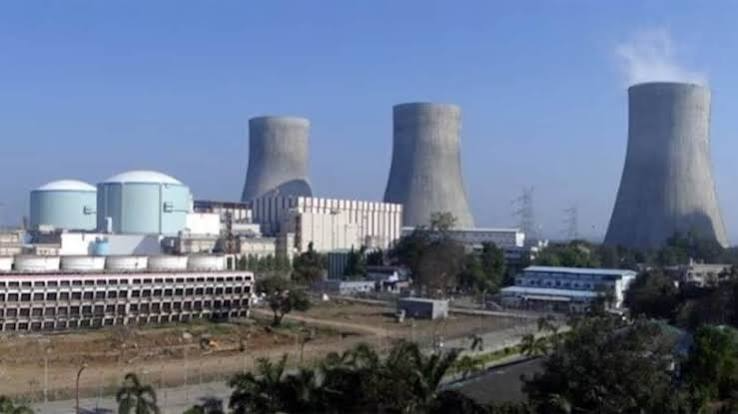
India is moving toward a more flexible nuclear liability framework under the Sustainable Harnessing and Advancement of Nuclear Energy for Transforming India Act, with draft rules proposing that operator liability limits be reviewed every five years. The provision comes as the country prepares for wider private sector participation in nuclear energy and seeks to build a regulatory system capable of keeping pace with changing reactor technology, insurance markets and the financial consequences of a nuclear accident.
Five Year Reviews Could Change How Nuclear Liability Is Assessed
The proposed review mechanism is one of the most consequential details in the draft rules released by the Department of Atomic Energy in August 2026. Under the proposal, the Central Government would constitute an expert group once every five years to examine the maximum limits of an operator’s civil liability for nuclear damage.
The group would bring together specialists from nuclear science and engineering, actuarial science, insurance and law, along with representatives of the public interest. Its recommendations could provide the government with a structured way to reconsider liability limits rather than leaving those limits unchanged for long periods while the nuclear industry evolves.
The Department of Atomic Energy’s official acts and rules portal lists the SHANTI Act among the country’s current nuclear legislation and regulatory material. The department has also opened a public consultation on the draft rules and regulations, giving industry participants, institutions, experts and members of the public an opportunity to submit comments before the framework is finalized.
What the SHANTI Act Sets for Nuclear Accident Liability
The SHANTI Act established a graded system of operator liability rather than applying one identical limit to every nuclear installation. The amount depends on the category and capacity of the facility.
Government information released in July 2026 states that the maximum operator liability ranges from ₹100 crore for smaller reactors, specified fuel cycle facilities and transportation of nuclear material to ₹3,000 crore for reactors with thermal power above 3,600 megawatts. Intermediate categories carry liability limits of ₹300 crore, ₹750 crore and ₹1,500 crore.
Above the operator’s liability, the Central Government is responsible for additional compensation up to the rupee equivalent of 300 million Special Drawing Rights, subject to the statutory framework. India is also a participant in the international Convention on Supplementary Compensation, creating another layer of international financial protection for qualifying nuclear incidents.
The government has described the structure as a graded and internationally aligned approach intended to provide prompt compensation following a nuclear incident. The framework places primary responsibility on the operator while establishing government support beyond the operator’s statutory ceiling.
Why the Review Mechanism Matters
A nuclear liability ceiling can look like a fixed legal number, but the economic circumstances surrounding that number can change substantially over time. Construction costs can rise, insurance markets can change, reactor designs can become more powerful and the potential cost of environmental remediation can increase.
A five year review therefore creates a formal opportunity to ask whether the existing limits remain appropriate. It does not automatically increase liability every five years. Instead, it creates a process through which specialists can assess whether changes are justified.
That distinction matters for both operators and potential investors. Nuclear power projects require large amounts of long term capital, and investors need to understand their maximum exposure before committing funds. At the same time, communities and potential claimants need confidence that the compensation framework remains credible if a serious accident occurs.
The Expert Review Would Bring Several Fields Together
The proposed composition of the review group is significant because nuclear liability is not simply a question of engineering. A reactor accident involves scientific risks, financial exposure, insurance capacity, legal responsibility and public consequences.
An engineer can assess the characteristics of a facility and its potential hazards. An actuary can examine probability and financial exposure. Insurance specialists can evaluate the availability and cost of coverage. Lawyers can assess statutory responsibilities and compensation mechanisms. Public interest representatives can bring attention to the concerns of people who could ultimately be affected by an incident.
Bringing these perspectives together could make future liability reviews more comprehensive and transparent.
Insurance and Financial Security Become Central Requirements
The draft rules also propose that nuclear plant operators maintain insurance, financial security or a combination of both to cover nuclear damage. The financial protection would have to remain available through the relevant period, including until spent fuel has been removed from the storage pool concerned.
This requirement is significant because liability on paper is only useful if an operator has the financial resources to meet its obligations. A nuclear installation has a long operating life and can continue creating financial responsibilities after electricity generation ends. Spent fuel management, radioactive waste handling, decommissioning and site remediation can all require substantial resources.
The proposed framework therefore looks beyond the moment when a reactor is generating electricity. Financial planning is connected to the wider life cycle of the installation.
Private Nuclear Investment Raises the Stakes
The SHANTI Act is designed to allow wider participation by private companies and joint ventures in India’s nuclear sector. That change is closely connected with the government’s long term energy ambitions, including its stated goal of reaching 100 gigawatts of nuclear power capacity by 2047.
Government statements have described the legislation as a means of allowing both public and private participation while maintaining safety, security and regulatory requirements. Rules under the Act were still being drafted as of July 2026, with licensing applications from private entities expected to be considered after the regulatory framework is notified.
For private companies, liability rules are among the most important commercial questions surrounding a nuclear project. Investors need to know how much financial exposure they may face, what insurance will be required and how responsibility will be divided between operators, the government and other parties.
The five year review system could provide a degree of predictability because companies can see that liability limits will be periodically examined through a defined process rather than being treated as permanently fixed.
Foreign Reactor Designs Face Additional Conditions
The draft rules also address nuclear reactors based on foreign designs. A foreign reactor design would need to be certified or approved by the regulatory authority in its country of origin. The proposed rules further require that the relevant reactor design be operational either in its country of origin or in another foreign country.
This provision reflects the government’s interest in using established international reactor technologies while maintaining a level of regulatory confidence about their safety and performance. It could become particularly relevant if private companies seek partnerships with international reactor manufacturers as India’s nuclear program expands.
For developers, technology approval and liability protection are closely connected. A reactor design must satisfy technical and safety requirements, but the company operating it must also understand the financial consequences associated with the technology.
A Single Licensing Structure Could Simplify Project Development
The draft rules propose a composite licence covering the construction, ownership, operation and eventual decommissioning of a nuclear power plant or reactor. Rather than requiring separate licences for each of these stages, the proposed structure would place the activities within one licensing framework.
The rules also provide for the possibility of in principle approval when an applicant has not yet selected a site or reactor technology. Such approval could allow an applicant to begin negotiations with technology suppliers and proceed with land and infrastructure arrangements before every project detail has been finalized.
For a sector in which planning and construction can take many years, this could have practical consequences. Developers could gain greater clarity about the regulatory path at an earlier stage while the government retains authority over final licensing and safety requirements.
Public Safety Remains at the Center of the Debate
The financial side of nuclear liability cannot be separated from the human consequences of an accident. A statutory ceiling may provide certainty for operators, but people living near nuclear facilities are concerned with something more immediate: whether compensation would be adequate, timely and accessible if their lives were disrupted.
The SHANTI framework retains the principle of prompt compensation and places responsibility on the operator for nuclear damage arising from an incident. Government statements describe the operator liability framework as a strict and no fault system, meaning compensation does not depend on an injured person proving negligence in the traditional sense.
At the same time, the statutory limits have attracted legal and public scrutiny. A petition challenging provisions of the SHANTI Act has reached the Supreme Court, with petitioners raising concerns about nuclear accident liability, supplier responsibility and regulatory independence. The court has sought responses from the government and the Atomic Energy Regulatory Board.
That judicial scrutiny adds another dimension to the policy debate. The government is seeking a framework that can support nuclear expansion and attract investment, while critics are asking whether statutory limits provide sufficient protection against the potentially enormous consequences of a major accident.
Public Consultation Gives Stakeholders a Role
The draft rules are not yet the final regulatory framework. The Department of Atomic Energy has invited comments from stakeholders, including industry, institutions, experts and members of the public. The stated deadline for submissions is 8 PM on September 4, 2026.
The consultation period gives affected groups an opportunity to examine the proposed financial security requirements, liability review process, licensing structure and technology provisions. Feedback can be particularly valuable where technical rules have consequences for businesses, local communities and future nuclear development.
The Press Information Bureau has also published government statements explaining how the SHANTI Act fits into India’s broader nuclear energy policy and its plans for expanded nuclear generation.
What the Five Year Cycle Could Mean for India’s Nuclear Future
The proposed five year review does not settle the debate over how much nuclear liability is appropriate. What it does provide is a mechanism for revisiting that question as circumstances change.
That could become increasingly important if India succeeds in expanding nuclear generation rapidly. More reactors, new reactor designs, private operators and international technology partnerships would create a more complex nuclear sector than the country has operated historically.
A liability framework designed for that future must balance several competing interests. Operators need predictable financial exposure. Insurers need realistic risk assessments. The government needs to protect public finances. International suppliers need confidence that India’s rules are compatible with established nuclear liability principles. Most importantly, people affected by a nuclear incident need a compensation system that is credible and capable of responding quickly.
A Regulatory Framework That Will Need to Keep Evolving
The draft SHANTI rules show that India’s nuclear policy is moving beyond the question of who can build and operate reactors. The government is also defining how those operators must prepare financially for accidents, how foreign technology will be assessed and how liability limits can be reconsidered over time.
The five year expert review is particularly important because it acknowledges that nuclear risk cannot be treated as a permanently fixed calculation. Technology changes, construction costs change, insurance markets change and society’s expectations about compensation change.
For India, the success of the SHANTI framework will ultimately depend on whether these different interests can coexist within a system that is financially predictable, technically rigorous and trusted by the public. The proposed review mechanism offers one way to keep the liability framework responsive rather than static.
As the consultation process moves forward, the central question will not simply be how large the liability ceiling should be. It will be whether India’s emerging nuclear framework can provide enough certainty for investment while preserving meaningful protection for people and communities in the event that the unthinkable happens.