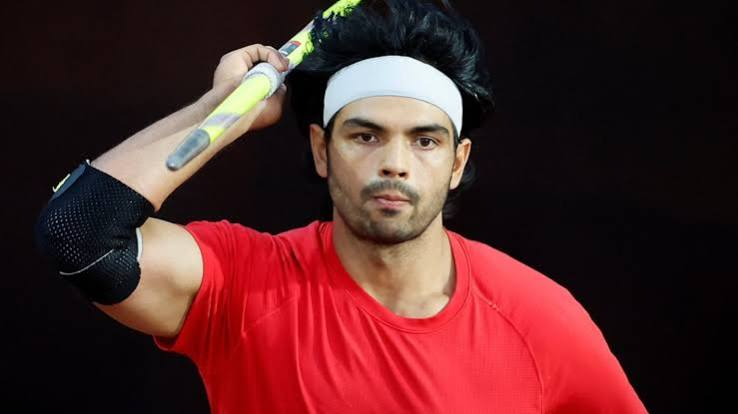
Neeraj Chopra’s 2026 season has come to an abrupt end after the Indian javelin star suffered a ligament tear in his ankle during training, just as his form appeared to be returning. The two time Olympic medallist confirmed on August 29 that, following discussions with his doctor and support team, he would sit out the remainder of the season. The decision rules him out of the upcoming Asian Games in Aichi Nagoya and the Diamond League Final, turning what had begun to look like a promising return campaign into another period of rehabilitation and recovery.
Neeraj Chopra’s Injury Comes at a Frustrating Moment
The timing of the injury makes the setback particularly difficult for Chopra and his supporters. After a lengthy period away from competition, the 28 year old had gradually begun rebuilding his competitive rhythm in 2026. His latest appearance at the Lausanne Diamond League on August 21 had provided perhaps the clearest indication that his confidence and throwing form were returning.
Chopra produced a season best throw of 88.05 metres in Lausanne and finished second. It was the kind of performance that could have created momentum heading into the Asian Games, where he had been expected to be one of India’s strongest medal contenders. Instead, the training injury that followed forced him to reassess the rest of his campaign.
Chopra announced the decision through social media, explaining that he had sustained the ankle ligament tear shortly after his Lausanne performance. Rather than risk making the injury worse by competing through it, he and his medical team chose rehabilitation over competition.
For an athlete whose success depends on an explosive run up, a powerful plant and precise transfer of force through the ankle and lower body, protecting the injured area is especially important. The decision to stop competing therefore reflects not simply the disappointment of missing major events, but also the longer view required to protect his career.
A Season That Had Already Started With a Long Road Back
Chopra’s 2026 campaign was already shaped by recovery before the ankle injury arrived. A lower back problem had kept him away from competition for an extended period, delaying his return until June.
He made his comeback at the Doha Diamond League, where he finished fourth with a throw of 85.69 metres. The result was not the spectacular return some fans may have hoped for, but it represented an important first step after months away from competition.
He then moved closer to his best level in Glasgow, winning silver with an 85.83 metre effort. Sri Lanka’s Rumesh Pathirage took the gold with a major throw of 89.75 metres, giving the competition another reminder that the global javelin field had continued to develop during Chopra’s absence.
Lausanne was the next step, and Chopra’s 88.05 metre season best suggested that the pieces were beginning to come together. His latest injury therefore arrived at precisely the point when his season appeared to be gaining direction.
Why Chopra Will Miss the Asian Games
The biggest immediate consequence is Chopra’s withdrawal from the 2026 Asian Games in Aichi Nagoya, Japan. The Games are scheduled to begin on September 19 and continue through October 4, placing the competition only weeks after Chopra’s injury announcement.
Chopra had been expected to play a central role in India’s athletics campaign and was among the leading contenders in the men’s javelin competition. His absence removes one of the sport’s most recognizable names from an event where he would have carried considerable expectations.
India will now have to rely on its wider javelin group. Rohit Yadav has emerged as an important name in the national event and recently recorded a personal best of 87.68 metres. Chopra’s withdrawal gives other Indian throwers an opportunity to compete for the spotlight, but replacing an Olympic champion is never a straightforward task.
The Asian Games will also lose one of the event’s most anticipated storylines. Chopra’s presence normally brings enormous attention to the javelin competition, not only in India but across the wider athletics community. His absence changes the competitive picture and leaves the medal race considerably more open.
Diamond League Final Qualification Also Ends
Chopra will also miss the Diamond League Final in Brussels, scheduled for September 5. He had been in contention for qualification after collecting valuable points during his 2026 appearances.
His Doha fourth place and Lausanne runner up finish helped him remain competitive in the season standings. The Lausanne performance was particularly significant because it showed that he was approaching a stronger level after his delayed start to the season.
With the injury ending his campaign, however, Chopra will not be able to compete for the prestigious Diamond League title. The withdrawal is another reminder of how quickly the trajectory of an athletics season can change. A thrower can spend months preparing for a handful of major competitions, only for one injury to remove several of those opportunities at once.
The Bigger Concern Is Recovery, Not the Missed Medals
For fans, the natural reaction is to focus on the competitions Chopra will miss. From a long term sporting perspective, however, the more important question is how effectively he can recover.
Javelin throwing places substantial demands on the body. The athlete must accelerate rapidly, convert that speed into a powerful throwing movement and then absorb considerable forces while stopping. The ankle plays an important role in that sequence, particularly during the final stages of the approach and delivery.
Returning too quickly from a ligament injury can create unnecessary risks. That makes Chopra’s decision to end the season understandable even though it means giving up several major opportunities. A complete recovery now could be more valuable than attempting to salvage a few competitions while carrying an injury.
Chopra has also experienced the frustration of a lengthy rehabilitation period before. His recent return from a lower back problem had already required patience and disciplined preparation. Having worked through that process, he now faces another recovery challenge.
A Setback, But Not the End of Chopra’s Story
There is a temptation in elite sport to judge an athlete by one competition, one throw or one injury. Chopra’s career offers a much broader perspective.
He won Olympic gold at Tokyo 2020 and followed it with Olympic silver at Paris 2024. He also established himself as one of the world’s leading javelin throwers, helping bring unprecedented attention to the event in India.
His personal best remains 89.94 metres, a mark he set at the Stockholm Diamond League in 2022. His career has also been defined by repeated attempts to improve rather than simply protect past achievements.
The latest injury does not erase those accomplishments. Nor does it necessarily determine what comes next. What it does is force another pause at a time when Chopra was beginning to rediscover his competitive rhythm.
What Chopra’s Withdrawal Means for International Javelin
Chopra’s absence will affect more than India’s medal prospects. His competitions have become major attractions within international athletics, and his presence often changes the attention surrounding a javelin field.
The upcoming Asian Games will now provide a different competitive environment. Athletes who might otherwise have been focused on challenging Chopra will have a clearer opportunity to compete for the gold medal. Sri Lanka’s Rumesh Pathirage, who defeated Chopra in Glasgow with an 89.75 metre throw, is among the athletes whose performances will receive greater attention.
For the wider sport, Chopra’s absence also creates space for other throwers to establish themselves. Javelin remains one of athletics’ most visually compelling events because a single throw can completely alter the standings. Without Chopra in the field, the competition will have a different balance and potentially a new leading figure.
Chopra’s Focus Now Turns to Rehabilitation
Chopra has made it clear that his priority is recovery and returning stronger rather than attempting to continue competing through the injury. That approach is consistent with the demands of elite athletics, where preserving long term fitness can matter far more than forcing a premature return.
His announcement also reflects the reality that rehabilitation is part of an athlete’s career, not a sign that the career itself has ended. The next phase will likely involve medical assessment, rehabilitation work, gradual conditioning and eventually a carefully managed return to throwing, although the exact timeline will depend on the severity of the ligament injury and the advice of his medical team.
Fans can follow official competition information and future updates through World Athletics, the governing body for international track and field, while the Olympics athlete profile for Neeraj Chopra provides a record of his Olympic career and achievements.
A Difficult Ending to 2026, But a Longer Career Still Ahead
We can view Chopra’s decision as disappointing without viewing it as defeat. His 2026 season had only recently begun to show signs of promise, and the 88.05 metre effort in Lausanne suggested that he was moving toward the level he wanted. The injury has interrupted that progress, but it does not change the larger arc of his career.
For now, the roar of the stadium will have to wait. Chopra will not defend his Asian Games opportunity, will not compete in the Diamond League Final and will not add another major result to his 2026 record. Instead, the focus shifts from the runway to recovery.
That may be the most important competition of the season for him. A careful rehabilitation process can give Chopra the best chance of returning without rushing the body that has carried him through Olympic triumphs, world class throws and years of international competition.
His season has ended earlier than anyone expected. His journey, however, is far from over. For one of India’s most accomplished athletes, the next throw begins with getting healthy enough to make it.