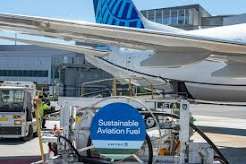
The International Civil Aviation Organization has enacted mandatory Sustainable Aviation Fuel targets for commercial passenger flights operating across major transatlantic and transpacific routes, beginning in the third quarter of 2026. The decision places renewable aviation fuel at the center of international efforts to reduce the environmental impact of long distance air travel while creating new responsibilities for airlines, fuel suppliers, airports, and governments.
A Major Shift for International Aviation
For passengers sitting inside a wide body aircraft at cruising altitude, aviation fuel is rarely visible. Yet every departure depends on thousands of liters of fuel being delivered, tested, stored, and loaded before the aircraft leaves the gate. The new international SAF requirements bring that hidden part of aviation directly into the climate discussion.
Sustainable Aviation Fuel, commonly known as SAF, is designed to reduce lifecycle greenhouse gas emissions compared with conventional jet fuel. Depending on the feedstock and production method, SAF can be produced from materials such as used cooking oils, agricultural residues, municipal waste, or other approved renewable sources. Some emerging technologies are also working toward fuels made from captured carbon and renewable energy.
The mandate represents a significant change because it moves SAF from voluntary airline programs and limited commercial agreements toward a more structured international requirement. The immediate impact will be felt most strongly on long distance routes where fuel consumption is substantial and where aviation emissions are a major part of the industry’s environmental footprint.
Why Transatlantic and Transpacific Routes Matter
Flights crossing the Atlantic and Pacific connect some of the world’s busiest economic centers. New York, London, Los Angeles, Tokyo, Singapore, Paris, Hong Kong, Sydney, and other major cities depend heavily on long distance aviation for tourism, business, trade, education, and family connections.
These journeys also require large quantities of aviation fuel. Because of the distances involved, even relatively small changes in fuel composition can have meaningful implications when applied across thousands of flights.
We should therefore view the mandate as both an environmental policy and a major supply chain decision. Airlines will need access to sufficient SAF, airports will need reliable fuel handling systems, and producers will need confidence that there will be a sustained market for their output.
What Sustainable Aviation Fuel Actually Changes
SAF is not intended to require airlines to redesign their existing aircraft overnight. Approved SAF can generally be blended with conventional jet fuel and used within existing aviation systems when the fuel meets applicable technical requirements. That makes it particularly attractive as a near term tool for reducing aviation emissions while newer aircraft technologies continue to develop.
The environmental benefit depends heavily on how the fuel is produced. Not every alternative fuel provides the same emissions reduction. The source of the feedstock, energy used during production, transportation requirements, and processing method can all influence the final lifecycle impact.
This means the success of the international mandate will depend not only on the quantity of SAF used but also on the quality and sustainability of the fuel entering the market.
Airlines Face a New Operational and Financial Challenge
Airlines operate within an industry where fuel is already one of the largest variable expenses. Introducing mandatory SAF targets could increase operating costs if renewable aviation fuel remains more expensive than conventional jet fuel or if production capacity fails to keep pace with demand.
Those costs create difficult decisions. Airlines may absorb some of the additional expense, negotiate long term purchasing agreements, adjust route economics, or eventually pass part of the cost to passengers through ticket prices and other charges.
For travelers, the effect may not appear as a clearly labeled SAF fee on every ticket. Instead, the cost could become part of broader airfare pricing as carriers adapt their fuel procurement strategies.
For an industry already dealing with airport charges, labor expenses, aircraft maintenance, and fluctuating fuel markets, careful implementation will be essential. Airlines need predictable rules so they can plan fleet operations and fuel purchasing several years ahead.
Fuel Producers Are Under Pressure to Scale
The mandate also creates a major opportunity and challenge for renewable fuel producers. Demand for SAF is expected to grow as more governments and aviation organizations pursue lower carbon aviation, but production must expand without compromising sustainability standards.
Building a SAF facility requires substantial investment, specialized technology, dependable feedstock supplies, and access to energy and transportation infrastructure. Investors are more likely to commit capital when future demand is predictable, which is one reason mandatory targets can influence the economics of new production projects.
At the same time, rapid expansion could create competition for limited sustainable feedstocks. Used cooking oil, agricultural residues, and other materials have multiple potential uses. If demand rises faster than responsible supply, prices could increase or producers could face pressure to use less desirable sources.
Airports Become a Critical Part of the Transition
Airports will play a central role in putting the policy into practice. Fuel must arrive at airports, pass quality checks, enter storage systems, and reach aircraft safely and efficiently. International hubs handling hundreds of long distance flights each day will require dependable fuel logistics capable of managing new blends at scale.
That challenge is particularly significant for airports serving multiple airlines from different countries. Standardized procedures can reduce confusion and make it easier for carriers to meet common requirements across international routes.
The physical infrastructure may receive less attention than aircraft technology, but it can determine how quickly SAF adoption expands. A fuel supply that exists on paper is of limited value if an airport cannot receive and distribute it efficiently.
Passengers May Notice the Change Gradually
Most passengers are unlikely to notice a direct difference during a flight powered partly by SAF. The aircraft will still climb from the runway, settle into cruise altitude, and arrive at its destination using familiar aviation systems.
The more visible changes may occur around ticket prices, airline sustainability reporting, and the way travelers evaluate the environmental impact of their journeys.
For some passengers, paying slightly more for a flight that uses a higher proportion of sustainable fuel may be acceptable. Others may be more concerned about affordability, particularly on international routes where airfare already represents a significant expense.
That tension deserves serious attention. Climate policy works best when it recognizes that passengers have different financial circumstances. A sustainable aviation transition should not become a system where lower income travelers are simply priced out of international mobility.
The Broader Climate Challenge for Aviation
SAF can play an important role, but it is not a complete solution to aviation emissions. Aircraft remain energy intensive, particularly during long distance operations. The sector is also difficult to decarbonize because batteries and other low energy density technologies are not yet practical replacements for conventional jet fuel on many long haul routes.
That makes a combination of approaches necessary. More efficient aircraft, improved air traffic management, operational improvements, renewable aviation fuels, and future propulsion technologies can all contribute to reducing aviation’s climate impact.
The International Civil Aviation Organization remains central to international coordination because aviation routinely crosses national boundaries. Common standards can help prevent a fragmented system in which airlines face substantially different requirements depending on the countries they serve.
Why Sustainable Fuel Standards Need Strong Oversight
Mandatory SAF targets will only deliver meaningful environmental benefits if sustainability claims are carefully verified. Regulators and industry bodies will need reliable systems for tracing fuel origins, measuring lifecycle emissions, and preventing questionable feedstocks from being classified as sustainable simply because they meet a narrow technical definition.
Transparency will matter as much as fuel volume. Airlines and passengers need confidence that the environmental claims associated with SAF reflect genuine emissions reductions rather than accounting changes.
Strong certification systems can also protect responsible producers from unfair competition. Companies investing in cleaner production methods should not be placed at a disadvantage against suppliers using cheaper but environmentally questionable inputs.
Investment Could Accelerate Across the Aviation Fuel Industry
A mandatory international market can influence investment decisions well beyond airlines. Renewable fuel companies, energy producers, infrastructure developers, airports, logistics firms, and technology companies may all see new commercial opportunities as SAF demand grows.
Long term purchasing agreements between airlines and fuel producers could become increasingly important. Such contracts can provide producers with greater certainty while helping airlines secure supplies before market demand rises further.
Governments may also have a role through research funding, infrastructure support, incentives, and clear sustainability rules. Public policy can help close the cost gap between emerging sustainable fuels and established petroleum based aviation fuel while private investment expands production capacity.
The Road Ahead for Global Aviation
The implementation of mandatory SAF targets marks a consequential moment for international aviation. The policy does not mean conventional jet fuel will disappear, nor does it remove the industry’s broader environmental challenges. Instead, it establishes sustainable aviation fuel as a more firmly integrated part of international commercial flight operations.
The coming years will reveal whether producers can scale responsibly, whether airlines can manage additional costs, and whether airports can build the infrastructure required for dependable distribution. Success will require coordination rather than isolated action.
For travelers, the transition may initially feel distant. A passenger boarding a flight from Los Angeles to Tokyo or London to New York will still experience the same airport gates, cabin lights, takeoff, and landing. Yet behind that familiar journey, the fuel powering the aircraft could increasingly come from a different industrial system.
That is ultimately what makes the ICAO mandate significant. Aviation has spent decades refining the speed, safety, and efficiency of global travel. The next challenge is ensuring that the fuels supporting that connectivity become more sustainable without undermining affordability or access.
The international SAF mandate begins a new phase in that effort. Its success will depend on credible standards, sufficient production, responsible sourcing, practical airport infrastructure, and cooperation across borders. If those pieces develop together, sustainable aviation fuel could become one of the most important tools available for reducing the environmental cost of long distance air travel while keeping the world connected.