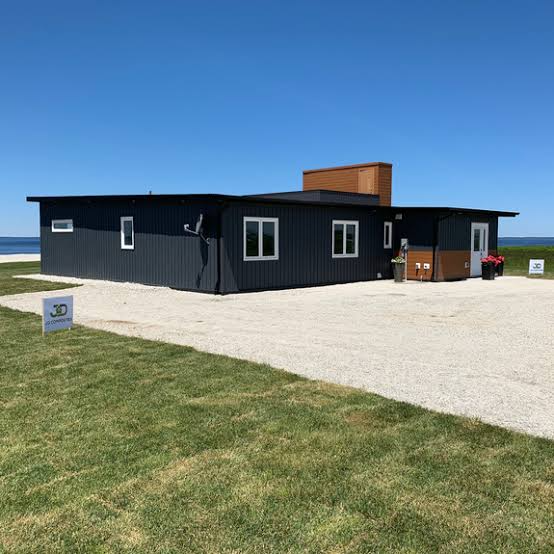
A housing concept built around an unlikely construction material is attracting growing attention as engineers and sustainable building advocates explore how discarded plastic bottles can become part of practical homes. Following successful engineering trials involving sand filled recycled plastic bottles used within structural masonry, the concept has expanded beyond experimental walls into complete multi room duplex designs. The development offers a striking example of how waste materials can be reconsidered as resources while addressing the persistent need for affordable and environmentally responsible housing.
From Recycled Bottles to Complete Homes
The central idea is straightforward but technically demanding. Empty plastic bottles that would otherwise enter waste streams are filled with sand and incorporated into masonry systems. Instead of relying only on conventional bricks or blocks, builders can use the prepared bottles as components within carefully designed wall assemblies.
Early engineering trials helped demonstrate that the concept could move beyond a simple environmental experiment. Once questions surrounding structural performance, stability, moisture protection, insulation, and construction methods were considered, designers began exploring larger applications. The latest direction toward full duplex housing represents a significant change in scale because a complete home requires considerably more planning than an individual demonstration wall.
A multi room duplex must account for living spaces, bedrooms, kitchens, bathrooms, stairways, doors, windows, electrical systems, plumbing, ventilation, roofing, and foundations. That makes the expansion particularly significant. The concept is no longer simply about finding a creative use for plastic waste. It is about determining whether recycled materials can become part of a reliable construction system suitable for real communities.
Why Sand Filled Plastic Bottles Are Drawing Attention
Plastic bottles are widely used because they are lightweight, durable, and inexpensive to manufacture. Those same characteristics become a challenge after disposal because many plastic products can remain in the environment for extremely long periods. Converting some of that waste into construction material creates a possible second use for products that would otherwise require collection, recycling, disposal, or remain in uncontrolled waste streams.
Filling bottles with sand changes their physical characteristics considerably. The loose container becomes a compact building component that can be arranged within a larger masonry structure. The surrounding construction system then provides additional support and protection. The approach can also use locally available materials, depending on the specific design and location.
However, the presence of recycled plastic does not automatically make a building sustainable or safe. A responsible project must evaluate the entire construction system rather than focusing on one material. Structural loads, fire performance, temperature changes, water exposure, ultraviolet radiation, foundation conditions, and long term durability all require careful testing.
The Expansion Into Multi Room Duplexes
The move toward duplex housing is especially relevant because it demonstrates how an experimental construction technique might be adapted to ordinary residential needs. A duplex can provide several separate living spaces within one building, potentially allowing families or multiple households to share land and infrastructure.
For communities facing housing shortages, the appeal is easy to understand. A construction method that can safely incorporate abundant waste material could potentially reduce dependence on some conventional resources while creating opportunities for local labor. Yet affordability depends on more than the cost of the bottles themselves. Labor, foundations, reinforcement, cement, roofing, transportation, land, plumbing, electrical work, permits, and skilled supervision can all determine the final cost.
That is why the strongest future applications will likely involve integrated building designs rather than simply replacing every conventional brick with a plastic bottle. The recycled material can serve one function within a broader system designed around safety, climate conditions, resource availability, and local building standards.
Environmental Benefits Could Extend Beyond Waste Reduction
The environmental argument for recycled bottle construction begins with waste management. Plastic pollution affects communities through overflowing disposal sites, litter, blocked drainage systems, and contamination of natural environments. Giving suitable plastic containers another useful purpose could reduce the volume entering those pathways.
There is also a broader question about construction resources. Conventional housing requires large quantities of materials, energy, transportation, and labor. If recycled bottles can replace a portion of conventional masonry in appropriate applications without compromising safety, the environmental footprint of certain building projects could potentially be reduced.
Still, sustainability must be measured across the complete life cycle of a building. A project should consider where the bottles come from, how they are collected and cleaned, what material is used to fill them, how far construction supplies travel, how the building performs during decades of use, and what happens to the structure at the end of its useful life.
Resources such as the United Nations Environment Programme provide broader context on plastic pollution and resource management, issues that are closely connected to the search for responsible ways to reuse discarded materials.
Engineering Safety Remains the Critical Test
Perhaps the most important lesson from the expansion of plastic bottle housing is that environmental enthusiasm cannot replace engineering evidence. A home must protect people through storms, temperature changes, daily occupancy, accidental impacts, and years of weather exposure.
Engineers therefore need to examine how bottle based masonry behaves under compression and other forces. Connections between walls and foundations must also be considered, along with openings for doors and windows. Roofing systems create additional loads that must be transferred safely through the structure.
Fire safety deserves particular attention because plastic is combustible or can behave differently from traditional masonry when exposed to extreme heat. The bottles must therefore be incorporated into assemblies that meet appropriate fire safety requirements. Building codes and professional engineering review remain essential before any experimental construction method is adopted at large scale.
Key questions for future projects
- Can the wall system maintain structural performance over many years?
- How does the construction perform in hot, cold, humid, and rainy climates?
- Can local builders construct the homes safely after appropriate training?
- How does the total cost compare with conventional housing?
- Can the system meet local building regulations and fire safety requirements?
- What happens to the plastic components when the building eventually reaches the end of its useful life?
Potential Benefits for Developing Communities
The concept could be particularly interesting in areas where housing demand is rising while waste management systems remain under pressure. Communities with large quantities of discarded bottles could potentially create organized collection networks that connect waste recovery with construction projects.
Such a system could create work at several stages. People could collect and sort suitable bottles, prepare them for construction, transport materials, and participate in building projects after receiving appropriate training. The economic value would depend heavily on local conditions, but the possibility of linking waste recovery with housing development gives the model a social dimension that goes beyond recycling.
There is also a psychological benefit when discarded materials become visible parts of useful infrastructure. A bottle that once represented waste can become part of a family’s home. That change can help communities see waste management not simply as disposal but as a potential source of recoverable resources.
Why Global Adoption Will Require Local Adaptation
A construction technique that works in one region cannot automatically be copied elsewhere. Climate, soil, building codes, labor practices, available materials, household needs, and construction traditions vary widely.
In regions exposed to earthquakes, for example, structural design must address seismic forces. Areas affected by hurricanes or severe storms require careful attention to wind resistance. Hot climates raise questions about indoor temperatures and ventilation, while humid environments create additional concerns about moisture and mold.
For that reason, global adoption would likely mean adapting the underlying principle rather than producing one identical house design for every country. Local engineers could determine how recycled bottle components fit into regional construction systems while maintaining established safety requirements.
The Role of Standards and Professional Testing
As interest in alternative building materials grows, professional standards will become increasingly important. Homeowners need confidence that an experimental material has been tested properly before it becomes part of their daily environment.
Government agencies, universities, engineering organizations, architects, construction companies, and community groups can all contribute to that process. Independent testing can help determine whether the materials perform consistently and whether construction methods can be repeated without compromising safety.
The broader sustainable construction movement also shows why material innovation needs to be connected to measurable environmental outcomes. The UNEP buildings and climate research highlights the significant relationship between buildings, materials, energy use, and environmental impact.
A Different Way to Think About Housing Waste
The most compelling aspect of plastic bottle housing may not be the bottle itself. It is the change in thinking that the concept represents. Materials commonly treated as useless after a single use can sometimes become inputs for another economic and social purpose.
That does not mean every plastic bottle belongs inside a wall. Recycling, waste reduction, responsible consumption, and improved collection systems remain essential. Reuse should also be evaluated carefully so that a solution to one environmental problem does not create another.
What the emerging duplex designs demonstrate is that sustainable construction can begin with unconventional questions. Instead of asking only how to dispose of plastic waste, engineers can ask whether some of that material can safely serve another purpose. Instead of treating affordable housing and environmental protection as completely separate challenges, communities can explore solutions that address both.
What Comes Next for Plastic Bottle Homes
The expansion from small engineering trials to complete multi room duplex concepts marks an important stage in the development of recycled material housing. The next phase will require evidence rather than excitement. Long term testing, independent engineering assessment, cost analysis, climate testing, fire safety evaluation, and compliance with local construction regulations will determine whether the concept can move from promising demonstration to dependable housing option.
If those challenges can be addressed, plastic bottle masonry could become one part of a wider toolkit for sustainable construction. Its greatest value may ultimately come from combining waste recovery with thoughtful architectural design and local building knowledge.
For families searching for safe and affordable homes, the appeal is deeply practical. For communities struggling with plastic waste, the idea offers another reason to improve collection and recovery systems. And for engineers, it presents a reminder that useful building materials do not always begin as traditional construction products. Sometimes innovation starts with something people once considered nothing more than rubbish.