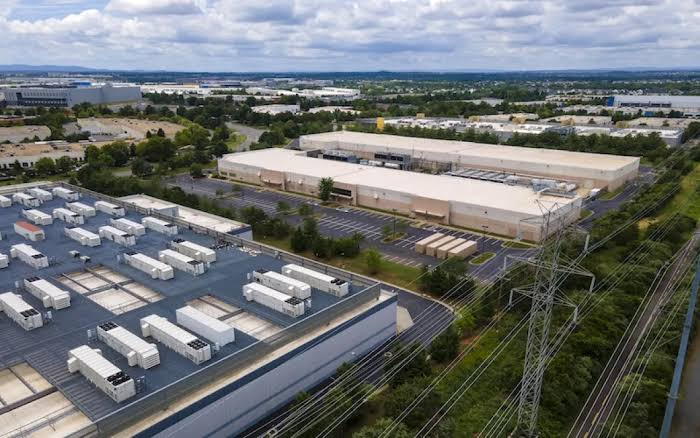
The rapid expansion of artificial intelligence infrastructure is creating a new environmental concern far beyond electricity consumption and water use. A surge in demand for advanced cooling systems and semiconductor manufacturing is increasing attention on per and polyfluoroalkyl substances, widely known as PFAS or “forever chemicals.” Environmental health groups warn that the AI boom could encourage greater production and use of highly persistent fluorinated chemicals at a time when governments are already struggling to control PFAS contamination.
The concern comes as companies race to build increasingly powerful data centers filled with specialized processors that generate enormous amounts of heat. Keeping those machines operating safely requires sophisticated thermal management, including liquid cooling and, in some applications, immersion cooling technologies. Some of the materials and fluids used in these systems involve fluorinated chemistry, creating a complicated environmental question: how can the world expand computing capacity without creating another long lived pollution problem?
Why AI Infrastructure Is Bringing PFAS Back Into Focus
PFAS refers to a large family of manufactured chemicals with properties that make them unusually resistant to heat, water and chemical degradation. Those characteristics have made certain fluorinated materials valuable in electronics, semiconductor production, industrial equipment and specialized cooling applications.
The US Environmental Protection Agency says fluoropolymers and related fluorinated materials have applications across industries including electronics and semiconductor manufacturing. The agency also recognizes that certain PFAS are highly persistent and can remain in people and the environment for extended periods.
The connection with artificial intelligence is therefore not as simple as saying that every AI data center contains large quantities of one particular toxic substance. The concern is broader. AI requires more advanced chips, more semiconductor production and increasingly sophisticated cooling equipment. Some of the chemicals and materials associated with those supply chains can belong to the wider family of fluorinated substances.
A recent report highlighted by environmental campaigners argues that companies are expanding PFAS production to meet demand connected with AI infrastructure. The campaigners point specifically to semiconductor manufacturing and advanced data center cooling as areas where fluorinated chemistry is becoming increasingly important. :contentReference[oaicite:0]{index=0}
Cooling Powerful AI Chips Is Becoming a Major Engineering Challenge
Traditional computer cooling methods are under increasing pressure as processors become more powerful. A modern AI server can generate substantial heat while performing the calculations required to train and operate large artificial intelligence systems.
Air cooling remains widely used, but higher computing densities are encouraging data center operators to consider liquid based approaches. Direct to chip cooling can move heat away from processors more efficiently, while immersion systems place electronic equipment into specialized cooling fluids.
Some emerging two phase cooling technologies use fluorinated fluids because they can offer characteristics that are difficult to achieve with ordinary water based systems. Their thermal properties and electrical insulation can make them attractive for environments where large amounts of computing equipment must be cooled continuously.
A 2026 study published in Frontiers in Toxicology examined the toxicological and environmental characteristics of one two phase immersion cooling fluid and specifically assessed its relationship to PFAS concerns. The study illustrates how quickly scientific scrutiny is beginning to follow the expansion of advanced data center cooling technologies.
The Health Concern Goes Beyond the Data Center
The greatest concern surrounding PFAS is persistence. Many substances in this chemical family do not readily break down, meaning contamination can remain in soil, groundwater and surface water for long periods.
That persistence changes the way we should think about industrial expansion. A conventional manufacturing emission may decline after production stops. PFAS contamination can present a different challenge because the chemicals may remain in environmental systems long after the original industrial activity has ended.
The World Health Organization published a major PFAS health review in July 2026 that examined available evidence on PFAS occurrence and associated health effects. The review evaluated dozens of PFAS and identified priority chemical and health effect categories requiring further assessment. :contentReference[oaicite:1]{index=1}
Scientists have investigated associations between particular PFAS exposures and several adverse health outcomes. The strength of evidence varies among individual chemicals, and PFAS should not be treated as one substance with identical risks. That distinction matters because the term PFAS covers thousands of compounds with different properties and different levels of available toxicological evidence.
AI Cooling Chemicals Are Creating a Regulatory Challenge
Regulators now face a difficult question. Some fluorinated chemicals may provide technical advantages for cooling high density computing equipment, including potentially reducing water consumption in certain systems. At the same time, the environmental persistence of PFAS means that replacing one resource problem with a long term chemical problem could create serious consequences.
The US EPA has already developed regulatory frameworks for PFAS under the Toxic Substances Control Act. Its approach recognizes that risk can depend heavily on how a substance is used, the possibility of environmental release and the level of exposure experienced by workers and communities.
The agency has also acknowledged that PFAS can be used in closed industrial systems where exposure and environmental release may be limited. That does not eliminate the need for oversight, particularly as production expands and new chemicals enter commercial markets.
Manufacturing Could Be as Important as the Data Centers
Much of the public discussion about AI pollution focuses on what happens at a data center. Yet the chemical footprint of artificial intelligence begins much earlier in the supply chain.
Semiconductor facilities use specialized fluorinated compounds during processes that create intricate circuitry on silicon wafers and clean manufacturing equipment. The EPA says semiconductor manufacturing uses fluorinated heat transfer fluids and other fluorinated compounds for several production and temperature control applications.
This means the environmental cost of AI cannot be measured solely by electricity consumed by servers. A complete assessment also needs to consider chip fabrication, chemical production, equipment manufacturing, transportation, cooling systems and eventual disposal.
Researchers writing in Environmental Science and Technology have similarly argued that the chemical footprint of digital infrastructure deserves greater attention. Their analysis identifies PFAS and other contaminants as potential components of data center environmental impacts, alongside energy and water consumption.
Why “Forever Chemicals” Are Especially Difficult to Manage
PFAS contamination creates a problem that can outlast the technology that generated it. A data center may operate for decades, but chemicals released during manufacturing or improper disposal can remain in the environment far longer.
Cleanup can also be technically complicated and expensive. Once PFAS enters groundwater, removing it can require specialized treatment systems. Disposal creates another challenge because destroying or safely managing contaminated materials requires careful controls.
The EPA updated its interim guidance on PFAS destruction and disposal in 2026. The agency says the guidance evaluates technologies and approaches intended to reduce environmental releases and describes continuing scientific uncertainties surrounding PFAS management.
This is why environmental groups are calling for prevention rather than relying entirely on cleanup after contamination occurs. If a chemical is extremely persistent, preventing unnecessary releases can be more practical than attempting to remove contamination decades later.
The Water Question Adds Another Layer
AI data centers already face criticism over water consumption. Large facilities can require substantial quantities of water for cooling, particularly in regions where temperatures are high and computing demand is concentrated.
That has created an understandable attraction to alternative cooling technologies. A system that uses less water can appear to offer a solution to one environmental problem. But if the alternative relies on persistent fluorinated chemicals, communities may reasonably ask whether the tradeoff has been fully evaluated.
Environmental decisions should therefore consider the entire life cycle of a cooling system. Water savings at the data center are only one measurement. Policymakers also need to consider chemical production, transportation, leaks, worker exposure, equipment disposal and potential releases into air and water.
Companies Are Beginning to Face Pressure for Safer Alternatives
The growing scrutiny could accelerate research into cooling systems that do not depend on PFAS. Water based direct cooling, improved heat exchangers and other engineering approaches may offer alternatives for some applications, although each technology has its own technical limitations.
The answer will not necessarily be a single replacement chemical. Different data centers have different climates, processor configurations and cooling requirements. Some facilities may be able to rely primarily on water based systems, while others may require specialized dielectric fluids or hybrid designs.
What matters is that chemical safety becomes part of the engineering decision from the beginning rather than being considered only after a system has been deployed.
What AI Companies and Data Center Operators Should Watch
Companies expanding AI infrastructure can take several practical steps while regulators continue developing standards. The first is greater transparency about the chemicals used in cooling equipment and manufacturing supply chains. Without reliable chemical inventories, communities and regulators cannot accurately assess environmental exposure.
- Identify PFAS and fluorinated substances used throughout cooling systems and equipment supply chains.
- Evaluate whether less persistent alternatives can meet the same technical requirements.
- Establish strict procedures for storage, maintenance, leakage prevention and disposal.
- Measure wastewater and other potential environmental release pathways.
- Publish meaningful information about chemical use and environmental safeguards.
These measures would not stop AI development. They would make it easier to determine whether growth is occurring with adequate environmental controls.
The Global AI Race Is Becoming an Environmental Chemistry Story
The PFAS debate reveals a side of artificial intelligence that is easy to miss when attention is focused on software, chips and investment. Every AI model ultimately depends on physical infrastructure. Servers need electricity. Chips need factories. Factories need chemicals. Data centers need cooling systems. Each link introduces environmental consequences that can extend well beyond the buildings where computing takes place.
We should therefore be cautious about describing AI infrastructure as environmentally sustainable simply because one data center uses less water or electricity than another. Efficiency in one category does not automatically eliminate risk in another.
A Critical Moment for AI Infrastructure Planning
The expansion of AI data centers is unlikely to slow dramatically in the near future. Demand for computing capacity continues to influence investment decisions across North America, Europe and Asia. That makes the decisions being made now especially consequential.
The PFAS concern should not be interpreted as proof that artificial intelligence itself is inherently toxic or that every advanced cooling system creates dangerous contamination. The evidence is more specific and more useful than that. Certain chemicals associated with semiconductor production and advanced cooling deserve careful scrutiny because some are persistent and because their environmental behavior can create long term consequences.
The strongest response is neither to dismiss those concerns nor to reject technological progress. It is to require better information, stronger safeguards and serious investment in safer alternatives before chemical demand becomes locked into another generation of infrastructure.
AI may be built from algorithms and processors, but its environmental footprint is ultimately physical. As billions of dollars flow into new computing facilities, the choices made about cooling fluids, manufacturing chemicals and waste management could determine whether the next phase of technological growth leaves behind cleaner infrastructure or another generation of persistent pollution.