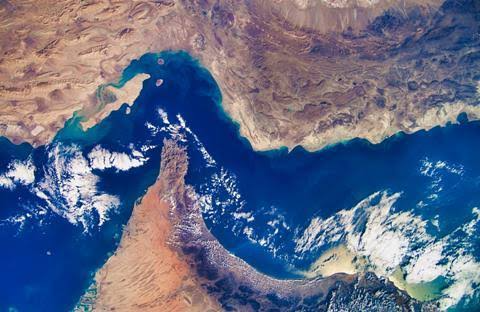
What begins as a disruption at sea can quickly become a problem at the kitchen table. The continuing conflict around the Strait of Hormuz has reduced maritime traffic, increased shipping and insurance costs, disrupted fertilizer flows, and placed additional pressure on countries that depend heavily on imported food. For consumers thousands of miles from the Gulf, the consequences may appear gradually through higher grocery bills, tighter supplies, and more expensive agricultural production.
A Critical Shipping Corridor Under Severe Pressure
The Strait of Hormuz remains one of the world’s most important maritime gateways for energy and agricultural inputs. When commercial vessels face security risks in the corridor, shipping companies must weigh the cost of continuing through the area against longer alternative routes, higher insurance premiums, fuel expenses, and the possibility of delays.
Recent shipping data shows how sharply activity has fallen. Reuters reported on September 18 that only four commodity vessels crossed the Strait of Hormuz on Thursday, compared with a ten day average of 16. Some vessels have also reduced the visibility of their movements by switching off tracking systems, adding another layer of uncertainty for companies trying to manage cargo schedules.
That uncertainty matters far beyond the oil market. Food systems depend on predictable transportation at almost every stage. Grain, rice, cooking oil, animal feed, fertilizer, packaging materials, refrigeration equipment, and fuel all move through interconnected international supply networks. When one major corridor becomes difficult to use, costs can spread across the entire system.
Freight Costs Are Moving Sharply Higher
The immediate financial pressure is already visible in international shipping markets. Reuters reported that container shipping rates from China to the United States East Coast had climbed to about $10,948 for a 40 foot container, more than four times the level seen before the war. Higher fuel costs and additional surcharges are contributing to the increase.
For food importers, freight is only one part of the problem. Cargo insurance, port handling, vessel availability, storage, inland transportation, and financing costs can all increase when maritime routes become unpredictable. A shipment that once moved according to a stable timetable may suddenly require a more expensive route or additional time at sea.
That creates a difficult calculation for import dependent economies. Businesses may absorb some of the added expense for a period, but prolonged disruption can eventually reach wholesalers, retailers, restaurants, food processors, and households.
Why Food Security Is Closely Linked to Fertilizer
The Strait of Hormuz is not simply an energy corridor. It is also connected to international fertilizer trade. Natural gas and energy are fundamental inputs for the production of nitrogen fertilizer, while several major fertilizer exporting regions rely on maritime transportation to reach customers in Africa, Asia, and other markets.
The United Nations Conference on Trade and Development has warned that disruption in the region can connect energy prices, fertilizer availability, transport costs, and agricultural production. When fertilizer becomes more expensive or difficult to obtain, farmers may reduce applications. The consequences can emerge months later when harvests are smaller and food markets have less supply available.
The Food and Agriculture Organization has also warned that disruption around the Strait can create interconnected shocks across energy, fertilizer, agriculture, and food markets. That connection is particularly important for countries where farmers already operate with narrow profit margins and limited access to affordable agricultural inputs.
The Food Crisis May Develop in Stages
A shipping disruption does not necessarily produce empty supermarket shelves overnight. Modern food systems usually contain inventories, alternative suppliers, domestic production, and different transportation options. These buffers can delay the visible effects of a crisis.
The greater concern comes when disruption lasts long enough for those buffers to weaken. Importers may begin drawing down stocks, freight companies may face equipment shortages, fertilizer buyers may compete for alternative supplies, and farmers may confront higher input prices during critical planting periods.
This is why food security specialists often look beyond today’s grocery prices. A shipping crisis can influence agricultural decisions that affect food availability several months into the future.
Import Dependent Economies Face Greater Exposure
Countries that import a large share of their food are especially vulnerable when shipping costs rise sharply. The problem can become more severe when a country also depends on imported fuel and fertilizer.
Middle Eastern and African economies are particularly exposed to the combined effects of higher transportation costs, energy volatility, and limited fiscal room to subsidize essential goods. Small island economies can also face serious challenges because their geographic isolation leaves them heavily dependent on maritime transportation.
Asian markets are not immune. Many economies across the region import substantial quantities of energy, agricultural commodities, animal feed, and fertilizer. Even countries with strong domestic agricultural sectors can experience higher production costs when fuel and fertilizer prices rise.
Higher Energy Costs Can Reach the Farm
Food production depends on energy long before a product reaches a supermarket. Diesel powers tractors and trucks. Electricity supports irrigation and cold storage. Fuel is required to transport crops from farms to processing facilities and ports. Fertilizer production itself is highly dependent on energy markets.
When shipping disruptions push energy costs higher, the impact can therefore travel through several stages of the food economy. Farmers may pay more to operate machinery, processors may face higher energy bills, transport companies may increase rates, and retailers may pass some of those expenses to consumers.
The World Food Programme has highlighted this connection in its recent assessment of disruptions affecting the Strait of Hormuz, the Red Sea, and the Black Sea. The organization has warned that higher fuel and transportation costs can increase food prices far from the original conflict zone while also making humanitarian deliveries more expensive.
Alternative Routes Can Reduce Risk but Not Eliminate It
Shipping companies have options when a major corridor becomes dangerous. Cargo can be redirected through alternative ports, transferred between vessels, or moved overland where infrastructure permits. Gulf energy exporters are already using ship to ship transfers and other arrangements to maintain some flows.
But alternatives generally come with a price. Longer voyages consume more fuel and require additional vessel capacity. Land routes can face customs delays, limited rail connections, road congestion, and higher handling costs. Alternative ports may also lack the capacity needed to process a sudden increase in cargo.
That means rerouting can preserve physical supply while still creating an affordability problem. A country may technically be able to obtain wheat, rice, fertilizer, or cooking oil, but the delivered price can become much higher.
Global Fertilizer Markets Are Showing Signs of Adaptation
There are also reasons to avoid assuming that a prolonged shipping disruption will automatically produce a worldwide food shortage. International markets can adapt. New suppliers can increase exports, traders can redirect cargoes, and importers can change purchasing patterns.
Recent analysis from the International Food Policy Research Institute indicates that nitrogen fertilizer markets have begun moving back toward levels seen before the conflict, although risks remain and seasonal demand could create renewed price pressure if disruptions continue.
Financial Times reporting has similarly highlighted the emergence of alternative fertilizer suppliers. Global fertilizer trade has adjusted even as Gulf exports declined sharply, demonstrating the ability of international markets to compensate for the loss of some supply routes.
Those adjustments, however, do not mean that every country experiences the same outcome. Wealthier importers may be able to secure alternative cargoes by paying higher prices, while poorer economies can struggle to compete for the same supplies.
Humanitarian Operations Are Also Under Pressure
Food supply disruptions have consequences beyond commercial markets. Humanitarian organizations depend on ships, aircraft, trucks, ports, fuel, and reliable suppliers to deliver food to communities already facing hunger.
When shipping and aviation costs rise, humanitarian budgets purchase fewer supplies. The World Food Programme has reported higher shipping and aviation expenses during the current period of disruption. That means a transportation shock can indirectly reduce the amount of food assistance reaching vulnerable populations.
For a family already living close to the edge, a higher food price is not simply an economic statistic. It can mean fewer meals, less nutritious food, or difficult choices between groceries, medicine, rent, and transportation.
What Governments and Food Companies Are Watching
Governments, importers, agricultural companies, and humanitarian organizations are likely to focus on several indicators as the situation develops.
- Maritime traffic through the Strait of Hormuz and nearby alternative corridors
- Freight rates, fuel prices, and cargo insurance costs
- Fertilizer prices and availability during planting seasons
- Grain, rice, vegetable oil, and animal feed inventories
- Port congestion and availability of shipping containers
- Food inflation in import dependent economies
These indicators can reveal whether the disruption is becoming a temporary transportation shock or a broader food security problem. The longer the conflict affects major maritime routes, the greater the possibility that higher costs will become embedded throughout agricultural supply chains.
Why the Next Few Months Matter
The most consequential effects may not appear immediately. Agriculture operates on biological cycles, meaning decisions about fertilizer, fuel, irrigation, and planting today can determine food availability later in the year.
For that reason, keeping trade corridors open is not only a matter of protecting shipping companies or reducing freight rates. It is directly connected to the ability of farmers to produce food at affordable costs and the ability of consumers to obtain it at reasonable prices.
The current crisis also demonstrates how closely energy security and food security are connected. A conflict affecting a narrow waterway can influence fuel markets, shipping prices, fertilizer supplies, agricultural production, humanitarian operations, and household budgets across continents.
A Global Food Supply Chain Under Pressure
The Strait of Hormuz disruption is testing the resilience of international food trade at a moment when many economies are already managing inflation, high transportation costs, and fragile household budgets. Markets have shown an ability to adapt, but adaptation does not guarantee affordability for every country or consumer.
For businesses, the immediate priority is maintaining diversified sourcing, monitoring freight exposure, and securing essential agricultural inputs before shortages develop. For governments, protecting food reserves, supporting vulnerable households, and maintaining reliable trade channels can help limit the social impact of higher costs.
For consumers, the effects may be felt gradually rather than through a single dramatic shortage. A slightly higher price on a staple food, a more expensive restaurant meal, or an increase in the cost of imported products can all reflect pressures that began thousands of miles away.
The central lesson is clear. Global food security depends on more than farms and harvests. It also depends on ships moving safely, fuel remaining available, fertilizer reaching farmers, ports functioning efficiently, and international trade remaining predictable. As the Strait of Hormuz remains under pressure, those connections are becoming visible in markets and households around the world.