Homeowners are increasingly looking beyond traditional utility systems as rising energy costs, improved solar technology and new international clean energy initiatives accelerate the adoption of residential solar power. What was once viewed mainly as an environmental choice is becoming part of a broader smart living strategy, with households using rooftop panels, home batteries and localized energy systems to generate and manage electricity closer to where it is consumed.
Residential Solar Moves Further Into the Mainstream
The global energy transition is reaching a place where consumers can see it directly: the roofs, garages and electrical systems of ordinary homes. Solar panels are becoming a familiar feature in residential neighborhoods, while battery storage and smart energy controls are giving homeowners greater control over when electricity is generated, stored and used.
This shift is being supported by several forces at once. Electricity prices and fuel costs remain important considerations for households, while governments and energy agencies continue promoting renewable generation and lower carbon energy systems. At the same time, solar equipment has become more accessible in many markets, creating new opportunities for homeowners who previously could not justify the cost of installation.
We are also seeing a change in the way residential energy is viewed. A home is no longer necessarily just a place that consumes electricity from a centralized grid. With solar panels and storage, it can become a small energy producing system capable of generating power during daylight hours and storing some of that electricity for later use.
Why Rising Energy Costs Are Changing Household Decisions
For many families, the decision to install solar begins with a simple monthly calculation. When electricity bills become difficult to predict, homeowners naturally start looking for ways to reduce exposure to changing utility prices.
Solar generation can provide a degree of protection against those fluctuations because sunlight itself does not carry a fuel cost. Once a residential system is operating, the household can generate electricity without purchasing additional fuel for every unit of energy produced.
The financial equation varies significantly from one location to another. Electricity prices, sunlight levels, installation costs, financing terms, government incentives, local regulations and available utility programs can all influence how quickly a system pays for itself.
For homeowners considering solar, the most useful questions are therefore practical rather than purely environmental. How much electricity does the household consume? How much sunlight reaches the property? What is the expected system lifespan? Is battery storage necessary? What happens when the grid is unavailable? These factors can determine whether a residential solar system makes economic sense.
Solar Panels Are Only One Part of the Smart Home Energy System
The next phase of residential solar is increasingly connected to energy storage and intelligent controls. A solar panel produces electricity when sunlight is available, but household demand does not always follow the same schedule.
A family may generate more electricity than it needs during the afternoon while using substantially more power after sunset. Battery storage can help bridge that gap by holding electricity generated earlier and making it available later.
Smart energy management systems can add another layer of control. These systems can monitor household consumption, solar generation and battery levels, allowing homeowners to make better decisions about when appliances should operate or when stored electricity should be used.
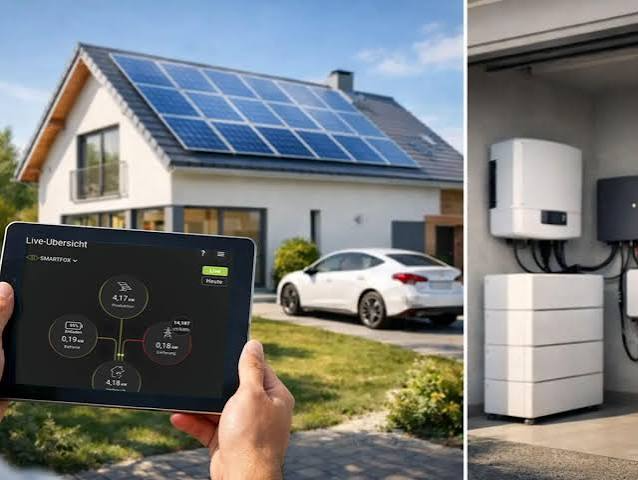
A modern residential energy system can include:
- Rooftop or ground mounted solar panels
- Home battery storage
- Smart electricity meters
- Energy monitoring software
- Smart appliances and automated controls
- Electric vehicle charging equipment
Together, these technologies can turn a traditional household electricity system into a more responsive local energy network.
Home Batteries Could Become Increasingly Important
Battery storage is gaining attention because it changes the usefulness of solar electricity. Without storage, homeowners generally need to use solar power while it is being generated or rely on the grid when production falls.
A battery provides another option. Excess electricity generated during sunny periods can be stored and used later. In areas with frequent power interruptions, batteries can also provide backup electricity for selected household systems.
The economics remain highly location specific. Batteries add an additional upfront expense, require appropriate installation and eventually need replacement. Yet for households facing expensive electricity during particular hours, storage can make it easier to shift consumption away from periods when grid electricity costs more.
The International Energy Agency continues to track developments in solar power, electricity storage and distributed energy systems as renewable generation becomes a larger part of global energy markets.
Distributed Energy Is Changing the Relationship With the Grid
Traditional electricity networks were designed around a relatively straightforward model. Large power stations generated electricity, transmission networks carried it across long distances and distribution systems delivered it to homes and businesses.
Residential solar introduces electricity generation at the edge of that system. Thousands or millions of homes can become small producers connected to the same network that supplies their electricity.
This creates both opportunities and challenges. Distributed solar can reduce the amount of electricity that needs to travel long distances during periods of strong production. It can also increase the resilience of local energy systems when paired with batteries and appropriate grid controls.
At the same time, large numbers of rooftop systems can make electricity flows more complicated. Utilities need accurate information about generation, household demand and battery behavior. Grid operators may also need investments in equipment and software to manage changing patterns of electricity production.
Government Policies Are Helping Drive Residential Solar Adoption
Public policy remains one of the strongest influences on the residential clean energy market. Governments can affect adoption through tax incentives, rebates, financing programs, building standards, electricity market rules and support for battery storage.
International initiatives are also encouraging countries to expand renewable electricity and improve energy efficiency. The International Renewable Energy Agency has reported continued growth in renewable generation capacity, with solar accounting for a substantial share of new installations globally.
The International Renewable Energy Agency provides global data on renewable capacity and the development of solar power markets, offering a useful view of how rapidly distributed renewable generation is expanding.
However, policy support can change over time. Homeowners therefore need to examine the rules that apply in their own location rather than assuming that an incentive available today will remain unchanged for the entire life of a solar system.
Solar Can Also Change How Homes Are Built
The growing popularity of localized energy generation is beginning to influence the wider home improvement market. Solar installation is increasingly connected with roofing decisions, electrical upgrades, insulation improvements, heating systems and electric vehicle charging.
For a homeowner renovating a property, energy generation can become part of a larger project rather than an isolated purchase. A roof replacement, for example, may provide an opportunity to consider the placement and lifespan of solar equipment at the same time.
New construction presents an even broader opportunity. Builders can design homes around energy efficiency from the beginning, considering roof orientation, insulation, ventilation, efficient heating and cooling equipment, solar generation and battery storage as parts of a single residential energy strategy.
The Benefits Go Beyond Lower Electricity Bills
The financial case often receives the most attention, but residential solar can provide several other potential benefits. Producing electricity locally can reduce reliance on centralized generation during certain periods, while battery systems can provide backup power when grid conditions become unstable.
For households with electric vehicles, solar generation can also create a connection between transportation and home energy. A vehicle can be charged using electricity generated on the property, while future energy management systems may coordinate charging with household consumption and grid conditions.
There is also a personal dimension to the transition. For some homeowners, watching solar panels generate electricity on a bright afternoon changes the way energy is perceived. Electricity stops being an invisible service that simply arrives through a wall socket and becomes something the household can actively produce, monitor and manage.
The Challenges Homeowners Still Need to Consider
Residential solar is not automatically the right choice for every property. Roof condition, shading, local climate, installation costs and electricity tariffs can all affect the outcome.
Upfront costs remain a major barrier for many households, particularly when a battery is included. Financing can make systems more accessible, but homeowners need to examine interest costs, contract terms, maintenance responsibilities and ownership arrangements carefully.
Installation quality is another important consideration. Solar equipment involves electrical work, structural considerations and connections to the local power system. Choosing qualified professionals and using equipment that meets applicable safety standards can reduce problems later.
Homeowners should also understand what happens when the grid fails. A standard solar installation may shut down during an outage for safety reasons. Backup operation generally requires compatible battery equipment and an appropriately configured system.
What the Energy Transition Means for Homeowners
The growing interest in residential solar reflects a larger change in household energy behavior. People are increasingly looking for ways to control energy costs, reduce dependence on conventional fuel sources and make their homes more resilient.
For consumers, the strongest approach is to treat solar as part of a complete energy plan. Improving insulation, reducing unnecessary electricity consumption and selecting efficient appliances can sometimes deliver meaningful savings before additional generation capacity is installed.
Once those fundamentals are considered, solar panels and battery storage can be evaluated according to actual household needs. A system designed around real electricity consumption is generally more useful than one selected simply because it has a large capacity.
Smart Living Is Becoming an Energy Question
The residential energy transition is moving beyond the simple image of solar panels on rooftops. The emerging model combines local generation, battery storage, smart controls, efficient appliances and electric transportation into a connected household energy system.
That model will not develop at the same pace everywhere. Some regions have abundant sunlight and high electricity prices, while others face lower energy costs, weaker incentives or technical limitations. Even so, the direction of the market is clear: households are gaining more tools to produce, store and manage their own electricity.
As commercial fuel prices and utility costs continue influencing household budgets, localized micro generation is likely to remain an important part of the home improvement market. The most meaningful change may not be the number of panels installed, but the growing idea that a home can actively participate in the energy system rather than simply consume what the grid provides.
For homeowners, that shift brings both opportunity and responsibility. The transition to smart home energy will require careful financial planning, reliable installation and realistic expectations. But when solar generation is combined with efficiency, storage and intelligent energy management, the ordinary household can become a much more active participant in the global move toward cleaner and more flexible electricity.