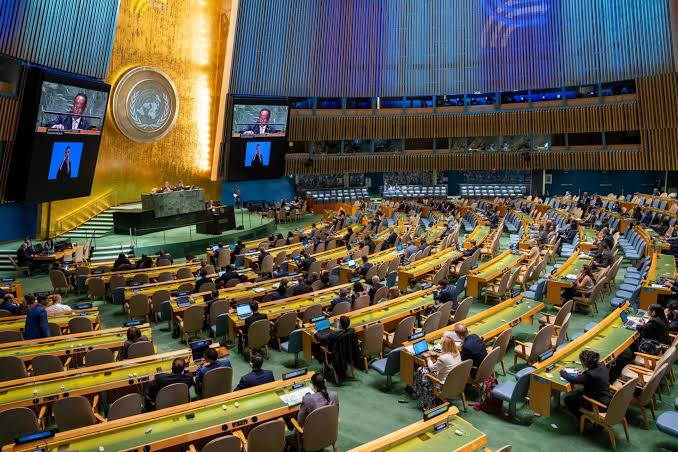
World leaders are gathering in New York this week as the United Nations General Assembly brings together governments facing an unusually complicated mix of trade disputes, economic uncertainty, security crises and diplomatic negotiations. The 81st session of the General Assembly is placing international cooperation back under an intense spotlight, with trade relationships across Asia, planned meetings between major powers and wider questions about global economic stability all unfolding around the same diplomatic calendar. The United Nations has scheduled its high level week from September 18 through September 28, with the main general debate beginning September 22.
For businesses and households far beyond Manhattan, these meetings can feel distant. Yet the discussions taking place in conference rooms and behind closed doors can eventually influence tariffs, energy prices, investment decisions, supply chains and the cost of everyday goods. We are watching diplomacy and economics become increasingly intertwined, with governments seeking new commercial relationships while simultaneously managing conflicts and strategic competition.
UN General Assembly Becomes a Meeting Point for Trade and Diplomacy
The General Assembly is not a trade negotiation forum in the same way as a dedicated trade organization, but its annual gathering creates an extraordinary opportunity for leaders to meet privately and publicly. Heads of state and government use the week to discuss bilateral relationships, regional disputes, investment opportunities and international economic priorities alongside the formal UN agenda.
The official schedule for September 23 includes meetings of the General Assembly as well as a high level gathering marking the 40th anniversary of the Declaration on the Right to Development. The broader week also includes discussions covering climate action, development, sea level rise and other issues that have direct economic consequences for countries and businesses.
That combination gives the New York meetings an unusual breadth. A conversation that begins with security can quickly move toward energy. A discussion about supply chains can lead to investment. A bilateral meeting about technology can become a conversation about tariffs and market access.
ASEAN Trade Relationships Are Gaining Attention
Southeast Asia is playing an increasingly important role in the global trade conversation. Governments across the region have spent years strengthening supply chains, attracting manufacturing investment and expanding relationships with partners outside the region.
Canada is one example of this broader push. Canadian Trade Minister Maninder Sidhu said on September 22 that negotiations on free trade agreements with the Philippines and the Association of Southeast Asian Nations were more than 90 percent complete. Ottawa is hoping to complete both agreements by November, when Prime Minister Mark Carney is expected to visit Manila.
The negotiations are part of a wider effort to deepen economic connections with Southeast Asia. Canada has also been positioning its growing liquefied natural gas capacity as a potential source of energy for Asian markets while exploring investment opportunities involving infrastructure and data centers in the Philippines.
These developments matter because ASEAN economies occupy an increasingly important position in global manufacturing and trade. The region connects major Asian markets while also serving as a production base for electronics, machinery, consumer products and other goods.
Why Southeast Asia Matters to Global Supply Chains
Companies are paying close attention to Southeast Asia because supply chains have become more sensitive to political and economic disruptions. Manufacturers want access to multiple production locations, while governments want investment that creates employment and strengthens domestic industrial capacity.
Trade agreements can support that process by reducing barriers and creating clearer rules for businesses. They can also encourage companies to establish new production facilities when they believe market access will remain reliable over the long term.
For consumers, the effects can eventually appear in less visible ways. A new trade agreement may influence where a product is assembled, where components are sourced or how efficiently goods move through ports. The result can affect prices and availability even when the consumer never hears about the original diplomatic discussion.
ASEAN itself held its economic ministers meetings in Manila from September 19 through September 22, with discussions covering regional economic integration, external economic relations and engagement with dialogue partners. The meetings included ASEAN Free Trade Area discussions and investment related consultations.
Washington and Beijing Remain Central to the Global Economic Conversation
The UN gathering is also taking place ahead of another closely watched diplomatic event involving the United States and China. President Donald Trump and Chinese President Xi Jinping are preparing for high level discussions in Washington, with trade, artificial intelligence, technology restrictions and strategic stability among the issues attracting attention.
Reuters reported that the upcoming meeting is part of a broader period of diplomatic activity surrounding the UN General Assembly. Financial markets are watching closely because the relationship between the world’s two largest economies has implications for tariffs, agricultural purchases, technology, rare materials and global supply chains.
Xi is expected to seek greater stability in the economic relationship, while the United States has its own priorities involving trade, technology and national security. Reports have indicated that the existing trade truce is also an important issue because its future could affect businesses planning investment and sourcing decisions.
Neither government has guaranteed a sweeping settlement. The value of the meetings may instead lie in keeping direct communication open at a time when disagreements over trade and technology remain significant.
Trade Policy Is Becoming Closely Linked With Technology
One of the clearest changes in global diplomacy is the growing connection between trade and technology. Artificial intelligence, advanced computing, semiconductor production and data infrastructure are now treated as strategic economic issues rather than purely commercial matters.
This means trade negotiations can involve questions that once belonged mainly to technology ministries or national security agencies. Governments are considering who can access advanced technology, where sensitive equipment can be manufactured and how critical materials move between countries.
The planned US China discussions are expected to reflect this reality. Reports indicate that artificial intelligence safety, technology restrictions and access to advanced technologies are among the subjects that could receive attention.
For companies, this creates a difficult planning environment. A factory investment that appears commercially attractive today can become more complicated if tariffs change or technology restrictions are introduced. Businesses therefore have stronger incentives to build supply chains that can withstand sudden policy changes.
Energy Security Is Another Major Economic Concern
Trade diplomacy is also being shaped by energy security. Disruptions around the Strait of Hormuz have increased concern about shipping routes, energy supplies and transportation costs, creating another layer of uncertainty for governments and companies.
Energy importing countries are looking for greater diversity in their sources of supply, while exporters are seeking reliable long term customers. This is one reason Canada is highlighting its LNG capacity during its discussions with Southeast Asian partners.
Energy prices affect almost every part of an economy. Higher fuel costs can raise transportation expenses, increase manufacturing costs and place additional pressure on households. Stable energy relationships can therefore become a foundation for broader trade cooperation.
Diplomacy Carries Consequences Beyond Government Offices
It is easy to view a UN summit through photographs of leaders entering meeting rooms or speaking from the General Assembly podium. The more meaningful story often develops later, when diplomatic commitments become government policy and businesses begin responding.
A trade agreement can influence hiring decisions. A change in tariffs can alter a manufacturer’s supply chain. A new energy arrangement can affect industrial costs. A diplomatic breakthrough can reduce uncertainty for investors, while renewed tensions can encourage companies to delay major commitments.
That human dimension deserves attention because international trade is ultimately connected to ordinary lives. Behind every shipment crossing an ocean are workers producing goods, drivers moving cargo, businesses paying suppliers and families buying products in local markets.
What Businesses Should Watch After the UN Meetings
Companies following the diplomatic activity in New York should pay attention not only to speeches but also to concrete policy signals. The most useful indicators are often agreements, implementation timelines and specific commitments rather than broad statements of cooperation.
- Progress on ASEAN trade agreements and bilateral economic partnerships
- Changes in tariffs and market access rules
- Developments in US China trade discussions
- New arrangements involving energy supply and critical shipping routes
- Technology policies affecting artificial intelligence, semiconductors and data infrastructure
These areas can provide a clearer picture of whether governments are moving toward greater economic cooperation or preparing for a longer period of strategic competition.
A Global Economy Waiting for Clearer Signals
The September 23 meetings arrive at a moment when governments are trying to balance cooperation with national interests. ASEAN countries are strengthening external trade relationships. Canada is pursuing agreements with Southeast Asian partners. The United States and China are preparing for another high level conversation. Meanwhile, the UN is attempting to keep international cooperation functioning across a wide range of political, economic and humanitarian challenges.
We should therefore view this week’s diplomacy as a series of connected conversations rather than one single summit capable of resolving every dispute. Trade agreements take time. Investment decisions require confidence. Supply chains cannot be rebuilt overnight, and diplomatic relationships often move through periods of tension before reaching workable compromises.
The significance of the New York gathering lies partly in that continued contact. Even when governments disagree, direct meetings create opportunities to clarify positions, negotiate practical arrangements and prevent misunderstandings from becoming larger economic problems.
The Next Phase of Global Trade Will Be Shaped by These Choices
The international economy is moving through a period in which trade, technology, energy and security increasingly overlap. That reality makes diplomatic meetings more consequential for businesses and consumers than they may appear from outside the conference halls.
The United Nations General Assembly provides a rare setting where leaders from across the world can conduct multiple bilateral conversations within the same week. The ASEAN trade discussions, Canadian negotiations and expected US China engagement illustrate how governments are searching for practical economic relationships while managing wider geopolitical pressures.
There may be no single agreement capable of settling these challenges. What matters now is whether governments can convert diplomatic meetings into stable rules, reliable trade channels and clearer expectations for businesses. The decisions being discussed around New York this week will not remain inside the UN complex. Their effects can eventually reach factories, ports, offices, financial markets and households around the world.
For the global economy, the most valuable outcome may ultimately be greater predictability. When governments can establish dependable rules for trade and investment, businesses can plan with greater confidence and workers can benefit from more stable economic activity. The coming weeks will show which of the diplomatic conversations surrounding the 2026 General Assembly produce concrete results and which remain only the beginning of longer negotiations.