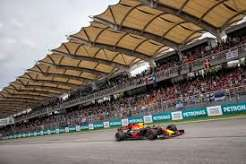
Formula 1 is heading back to Malaysia in an unexpected October return that has reshaped travel plans, freight movements and the rhythm of the 2026 championship. The Sepang International Circuit will host the Formula 1 Gulf Air Bahrain Grand Prix from October 2 through October 4, replacing the planned Bahrain venue after the event could not proceed there. Formula 1 and the FIA confirmed the arrangement in July, preserving the Bahrain race while placing it between the Azerbaijan and Singapore rounds.
Sepang Becomes the Emergency Home of the Bahrain Grand Prix
The announcement represents one of the more unusual calendar adjustments in recent Formula 1 history. Rather than canceling the Bahrain Grand Prix, Formula 1, the FIA, Bahrain and Malaysia reached an agreement that moves the event to Sepang. The race retains its Bahrain identity while being staged thousands of miles from the circuit that normally hosts it.
The arrangement was confirmed on July 26, giving teams, organizers, airlines, hotels and fans time to prepare for a race weekend that had not originally been part of Malaysia’s Formula 1 schedule. Formula 1 said the agreement allows the sport to preserve a Grand Prix that otherwise would not have taken place.
For Malaysian motorsport supporters, the change carries particular significance. Sepang has not hosted a Formula 1 race since 2017, meaning the October event marks the circuit’s return to the championship after a long absence. The track is already an established international motorsport venue, and its location near Kuala Lumpur International Airport makes it particularly practical for a sudden international event.
Why the Schedule Had to Move Quickly
The change is closely connected to security conditions surrounding the Middle East. The Bahrain Grand Prix could not be staged at Sakhir under the circumstances, creating a difficult problem for Formula 1 because the championship calendar involves teams, drivers, broadcasters, sponsors, suppliers and thousands of traveling staff.
Canceling a race can have consequences far beyond a single Sunday afternoon. Teams build logistics plans months ahead, with cars, spare components, garage equipment, hospitality structures and communications systems moving from one country to another. A replacement venue therefore has to be capable of accepting a major international racing operation on very short notice.
Sepang offered an established Formula 1 grade facility with extensive paddock infrastructure and international transport connections. Formula 1 described the agreement as an example of the sport’s ability to adapt quickly while maintaining the broader 2026 schedule.
A Familiar Circuit With a Very Different Weekend
Sepang is not a new name to Formula 1. The circuit made its Formula 1 debut in 1999 and became known for its demanding combination of long straights, fast corners, heavy braking zones and tropical weather. The official circuit information lists a track length of 5.543 kilometers, with 15 corners and eight straights.
The Malaysian climate can also add another layer of uncertainty. Heat, humidity and sudden rainfall can change the character of a race within minutes. Drivers have historically had to manage demanding physical conditions while engineers monitor tire temperatures, track grip and changing weather patterns.
That environment could make the return especially interesting for fans. Formula 1 cars are designed around precise aerodynamic and mechanical requirements, yet Sepang can challenge teams with conditions that are difficult to reproduce during preparation. A dry morning can give way to intense rain, while high temperatures can place additional demands on tires and cooling systems.
The October 2 to October 4 Race Weekend
The revised event will take place from Friday October 2 through Sunday October 4. Formula 1 has published a full timetable for the Bahrain Grand Prix in Malaysia, with the main race scheduled for Sunday at 3 PM local time. The Grand Prix is set for 56 laps or a maximum duration of 120 minutes.
Friday will feature two Formula 1 practice sessions. Saturday will bring the final practice session followed by qualifying at 4 PM local time. Sunday will then build toward the main event with the drivers’ parade, national anthem ceremony and the race itself.
Kuala Lumpur operates eight hours ahead of Coordinated Universal Time. That timing will matter for international viewers, particularly audiences in Europe and the Americas who will need to adjust their viewing schedules for a race taking place during the Malaysian afternoon.
A Major Logistics Operation for Formula 1 Teams
Moving Formula 1 to Sepang is not simply a matter of booking flights for twenty drivers and their crews. A modern Formula 1 team travels with an enormous technical operation. Cars must be transported alongside engines, gearboxes, suspension components, aerodynamic parts, tires, tools, electronics and specialized garage equipment.
Every change in the calendar affects that movement. Freight teams have to coordinate customs procedures, airport handling, trucking routes and arrival schedules. Engineers need equipment in place before practice begins, while mechanics require enough time to prepare the cars and garage before the first session.
The geographical position of Sepang is particularly useful in this situation. The circuit sits close to Kuala Lumpur International Airport, and the official circuit site describes it as being about 30 minutes from central Kuala Lumpur by road under suitable conditions.
For teams operating on tight schedules, that proximity can reduce some of the pressure associated with an emergency venue change. It does not eliminate the logistical challenge, but an established international airport and a purpose built racing facility provide infrastructure that a temporary replacement venue might not have.
What the Change Means for International Travelers
The calendar adjustment also creates a new travel equation for fans. Supporters who had planned around the original Bahrain race now have a different destination, while Malaysian and regional fans have an opportunity to attend a Formula 1 weekend that was not part of the original calendar.
Hotels near Kuala Lumpur and the airport can expect additional demand around the race weekend. Transport providers, restaurants and tourism businesses may also experience increased activity as international visitors arrive for the event.
For travelers, the practical considerations include accommodation near the circuit, airport transfers, local transportation and sufficient time for traffic around the venue. Sepang is outside central Kuala Lumpur, so visitors staying in the city should plan their journey carefully on race day.
The official Sepang International Circuit provides venue information and current event details for spectators planning to attend.
Why the Return Matters to Malaysian Motorsport
There is a strong sense of history attached to Formula 1 at Sepang. The circuit hosted the Malaysian Grand Prix for nearly two decades before Formula 1 left the venue after the 2017 season. Its return gives Malaysian fans another chance to see the championship’s current generation of cars compete on a track that has played an important role in the sport’s modern history.
The timing is also significant because the 2026 Formula 1 season represents a major technical transition. Formula 1 has introduced a new generation of technical regulations and power unit requirements, creating a championship environment in which teams are still learning how their cars respond to different circuits and conditions.
Sepang can provide a demanding test of that technology. Long straights place importance on power and efficiency, while slower corners require strong braking performance and traction. Tropical heat can add another variable for cooling and tire management.
Safety and Organization Take Center Stage
A race moved under unusual circumstances requires careful coordination beyond the Formula 1 paddock. Malaysian authorities are preparing for the arrival of large crowds, with police and transport personnel assigned to support security and traffic management around the event. Local reporting has indicated that hundreds of personnel are being deployed for the race weekend.
This kind of preparation matters because the spectator experience begins long before a car reaches the starting grid. Roads, parking areas, pedestrian routes, emergency services and public transportation all become part of the event infrastructure when tens of thousands of people converge on the same area.
For families attending the race, planning around heat and humidity will also be important. Comfortable clothing, water, sun protection and enough time between transport connections can make a significant difference during a long day at the circuit.
The Championship Moves Forward Despite the Disruption
The Sepang decision demonstrates how closely Formula 1’s sporting calendar is tied to international logistics and world events. The championship operates across continents, meaning a disruption in one region can quickly affect teams, workers and spectators elsewhere.
Rather than removing the Bahrain Grand Prix from the season, Formula 1 and the FIA chose a solution that keeps the race alive while giving it a different physical location. The rest of the announced arrangement was designed to preserve the broader championship schedule, with Singapore remaining the next scheduled Grand Prix after the Malaysia event.
The decision also shows why established circuits remain valuable to international motorsport. Sepang can absorb a major event because it already has the track, paddock, spectator areas and transport connections required for Formula 1 competition.
What Fans Should Expect at Sepang
For fans, the October weekend should feel both familiar and unusual. The Formula 1 teams will arrive with the same championship machinery, but the setting will be unmistakably Malaysian. The sound of engines will return to Sepang, the tropical heat will become part of the race atmosphere and thousands of spectators will watch a Grand Prix that was never originally intended to take place there.
The official Formula 1 race timetable provides the latest session information, including practice, qualifying and the Sunday Grand Prix schedule.
For us as observers of international sport, the most revealing part of this story may be what happens away from the podium. A Formula 1 calendar is a vast moving system involving technology, aviation, freight, tourism, public authorities, workers and fans. When circumstances force that system to change, every part of it must respond.
On October 4, the focus will eventually narrow to the starting grid at Sepang. Twenty cars will line up, the lights will go out and the race will become a contest of speed and strategy. Yet behind that moment will be a remarkable logistical effort that brought the Bahrain Grand Prix to Malaysia and allowed the 2026 Formula 1 season to continue under extraordinary circumstances.