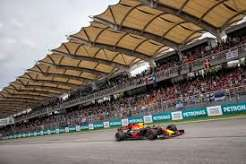
Cadillac Formula 1 Team is heading into one of the most demanding weekends of its debut season as Formula 1 returns to Malaysia’s Sepang International Circuit. For a new team still learning the behavior of its car at every venue, the return to a circuit absent from the Formula 1 calendar since 2017 brings an unusual combination of technical uncertainty, intense heat, high humidity, tyre degradation and the possibility of heavy rain. We are also watching a rare situation in which the Bahrain Grand Prix will be staged at Sepang from October 2 to 4 after the original event was relocated to Malaysia.
Cadillac Arrives at Sepang During a Defining Debut Season
The Sepang weekend represents another significant test for Cadillac Formula 1 Team, which joined the Formula 1 grid for the first time in 2026. Backed by General Motors and TWG Motorsports, the team has been building its operation from the ground up across facilities in the United States and the United Kingdom.
Cadillac entered the championship with two highly experienced drivers, Valtteri Bottas and Sergio Pérez. The pairing gives the new organization a substantial amount of Formula 1 experience while engineers continue to learn how their car performs under different circuit conditions. Cadillac’s own driver announcement described Bottas and Pérez as central figures in establishing the technical and competitive foundation of the new operation.
That experience could become particularly valuable at Sepang. The circuit is not simply another stop on the calendar. Its combination of long straights, fast corners, heavy braking zones and changing weather conditions creates a demanding environment in which small setup decisions can have major consequences.
Fans can follow the official Formula 1 schedule and race information through the Formula 1 website, while Cadillac’s official team information provides further background on the organization’s debut campaign.
Why Sepang Creates Such a Difficult Technical Puzzle
Sepang has been away from Formula 1 for almost a decade, meaning teams cannot simply rely on recent race data from previous seasons. The current generation of Formula 1 cars is also different from the machinery that competed there in 2017. That makes simulator work, historical information and practice sessions especially valuable.
The circuit’s long straights require strong aerodynamic efficiency, while its faster corners demand confidence and stability from the car. Engineers must find a setup that provides sufficient downforce without creating excessive drag. A compromise that works well in one part of the lap can create problems somewhere else.
For Cadillac, that balancing act is particularly significant because the team is still developing its understanding of its first Formula 1 car. Every practice lap can provide information about tyre behavior, braking performance, aerodynamic balance and power management. The challenge is turning that information into useful decisions quickly enough for qualifying and the race.
Tyre Wear Could Become a Major Factor
Sepang is also known for placing considerable stress on tyres. Several corners place sustained loads through the rubber, while the heat can accelerate degradation. That means teams must think beyond outright lap time and consider how their cars behave over a longer run.
A car that appears fast over one lap may not necessarily be comfortable over a full race stint. Excessive sliding can increase tyre temperatures and degradation, potentially forcing teams into additional pit stops or changing their preferred strategy.
For a new team such as Cadillac, gathering reliable long run data will therefore be one of the most valuable objectives of practice. Engineers need to understand not only how quickly the car can circulate but also how consistently it can maintain performance as fuel burns away and tyres lose grip.
Malaysia’s Weather Adds Another Layer of Uncertainty
The technical challenge is only part of the story. Sepang’s tropical climate can change the character of a Formula 1 session within minutes. High temperatures and humidity place a heavy physical burden on drivers, while sudden rainfall can completely alter track conditions.
Formula 1 has reached Round 16 of the 2026 season without a fully wet session or race, making the possibility of significant rain at Sepang particularly interesting. Drivers who have not raced there before will have to learn the circuit while potentially dealing with reduced visibility, standing water and dramatically different grip levels.
The weather also complicates strategic planning. A dry setup can become unsuitable if a storm arrives at the wrong moment, while teams must decide when to switch between tyre compounds if rainfall develops gradually. For Cadillac, the ability to communicate clearly between the pit wall, engineers and drivers could become just as important as raw car performance.
Only Part of the Grid Has Sepang Experience
Another unusual element of the return is the lack of firsthand experience among much of the current grid. Only 10 of the current Formula 1 drivers have previously started a Grand Prix at Sepang. That leaves a large portion of the field learning the circuit through simulator work, video analysis and practice sessions.
Fernando Alonso has particularly strong memories of the venue, having won the Malaysian Grand Prix there three times. Lewis Hamilton has also won at Sepang, while Max Verstappen took victory in the final Formula 1 race held at the circuit in 2017.
Valtteri Bottas is among the drivers returning with previous experience of the circuit, which gives Cadillac a useful reference point inside its own garage. Pérez also raced at Sepang before its departure from the calendar. Their familiarity may help the team interpret some of the circuit’s characteristics more quickly than drivers experiencing the venue for the first time.
Cadillac’s Experience Could Matter Beyond Lap Time
For Cadillac, the value of Bottas and Pérez extends beyond their ability to set fast laps. A new Formula 1 organization has to build procedures, communication habits and technical knowledge while competing against teams that have spent years refining those systems.
At a circuit as unpredictable as Sepang, experienced drivers can provide detailed feedback about how the car behaves when temperatures rise, grip changes or the tyres begin to deteriorate. That information can help engineers distinguish between a problem caused by the circuit and a problem related to the car itself.
This is particularly important for a team that is still creating its identity in Formula 1. Every race weekend becomes part of a larger learning process. A difficult session is not necessarily wasted if the team can extract reliable information from it and use that knowledge during future races.
The Return of Sepang Is Bigger Than a Single Race
Formula 1’s return to Malaysia has also created a striking backdrop for the 2026 season. Sepang was scheduled to return as the temporary host of the Bahrain Grand Prix after the Bahrain event could not proceed at its original venue. Formula 1 and the FIA confirmed in July that Sepang would host the race from October 2 to 4.
The arrangement demonstrates how quickly the championship can adapt when circumstances force changes to the calendar. It also gives Malaysian fans another opportunity to see Formula 1 machinery competing at a circuit that has remained popular with motorsport audiences even after the championship stopped racing there.
The venue has a long history with Formula 1. Sepang hosted 19 Malaysian Grands Prix between 1999 and 2017 and became known for producing races in which overtaking, weather and tyre management could all influence the final result.
What Cadillac Will Need to Manage at Sepang
As we look toward the weekend, several factors will shape Cadillac’s challenge. None can be isolated from the others because the circuit, climate and car setup interact constantly.
- Cadillac will need to find an aerodynamic balance that provides competitive straight line speed without sacrificing stability through the faster corners.
- Engineers will need accurate tyre data to understand degradation and determine suitable race strategies.
- The team will need to manage high temperatures and humidity that can affect both the drivers and the car.
- Rain could force rapid changes in tyre choice, setup assumptions and race strategy.
- Bottas and Pérez will be important sources of firsthand Sepang knowledge for a team still developing its operational experience.
A Tough Test for Formula 1’s Newcomer
Cadillac’s arrival at Sepang comes at a fascinating point in its first Formula 1 season. The team is no longer simply introducing itself to the championship. It is now collecting the difficult lessons that determine how quickly a new operation can mature.
Sepang provides almost every ingredient that can expose weaknesses in a racing car. Long straights can reveal aerodynamic compromises. Fast corners can expose balance problems. Heat can punish tyres and drivers. Humidity can make the physical demands even greater. Rain can erase the assumptions teams make during a dry session.
That combination makes the Malaysian weekend a meaningful technical examination for Cadillac. The result will be measured not only by where its cars finish but also by how effectively the team understands the information gathered across the weekend.
Formula 1’s return to Sepang is therefore more than a nostalgic visit to a familiar circuit. For Cadillac, it is an opportunity to test its people, processes and machinery against conditions that leave little room for complacency. The tropical air, demanding corners and uncertain skies should provide a stern examination of a team still writing the opening chapters of its Formula 1 story.
For fans, that uncertainty is part of the appeal. After years away, the sound of Formula 1 cars returning through Sepang’s sweeping corners will carry a sense of history, while the unfamiliarity of the modern cars ensures that the weekend will also feel entirely new.