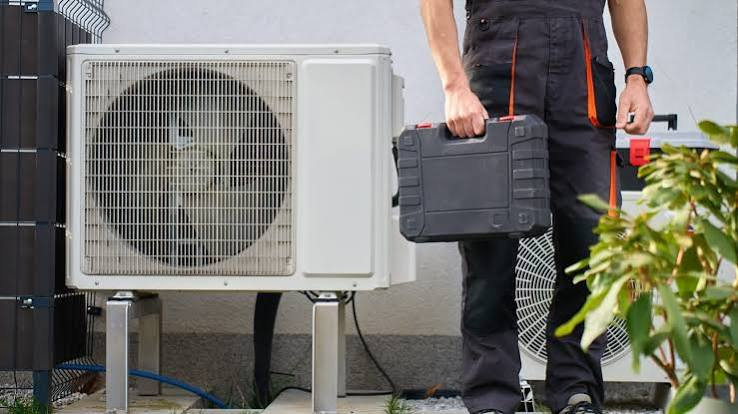
Global energy policy is putting greater attention on the machines that heat ordinary homes. Recent international energy assessments point toward faster adoption of efficient heat pumps, better building efficiency and residential battery storage as households and power systems confront higher electricity demand, fuel price uncertainty and the need to reduce emissions. For families looking at their next heating system, the discussion is becoming less about distant climate targets and more about monthly bills, winter comfort and the reliability of the energy flowing into the home.
Why Home Heating Has Become a Global Energy Issue
Heating a home can be one of the largest sources of household energy consumption, particularly in colder regions where furnaces and boilers operate for months at a time. Traditional systems that burn natural gas, heating oil or other fuels can also expose consumers to changes in international energy markets. When fuel prices rise, the effect can eventually reach household budgets through higher utility bills.
The United Nations energy framework is increasingly focused on practical measures that can improve energy efficiency while expanding access to reliable and sustainable power. The UN Energy programme coordinates work across more than 30 United Nations entities and partners, with its current 2026 to 2030 programme centered on acceleration, partnerships, data and coordinated action.
The broader 2026 Tracking SDG 7 report also finds that progress toward affordable, reliable and sustainable energy has continued, but the pace remains insufficient to meet global targets. That gap places greater attention on technologies that can be deployed inside homes and buildings rather than relying only on large power projects.
Heat Pumps Move Closer to the Center of Residential Energy Planning
A heat pump works differently from a conventional furnace. Instead of creating heat primarily by burning fuel, it moves thermal energy from one location to another. In heating mode, an air source system can extract heat from outdoor air and transfer it indoors. The same basic principle can provide cooling during warmer months.
This flexibility is one reason heat pumps have attracted increasing attention from energy planners. The International Energy Agency reported that global heat pump sales fell by about 2 percent in 2025, but regional trends varied considerably. European sales increased by 11 percent, while sales in the United States declined by about 13 percent. Even after the decline, heat pumps in the United States outsold gas boilers for the fourth consecutive year.
The numbers show that adoption is not following one universal pattern. Household economics, building design, electricity prices, fuel availability, weather conditions and government policies all influence the decision. A technology that makes strong financial sense in one country may require different incentives or building improvements in another.
Heat Pumps Can Reduce Exposure to Gas Markets
One of the strongest arguments for efficient electric heating is energy security. The IEA estimates that heat pumps installed across Europe, Japan and China avoided roughly 53 billion cubic meters of natural gas use for building heating in 2025. Without those systems, natural gas consumption for building heating would have been more than 10 percent higher in Europe and about 35 percent higher in both Japan and China.
For households, that broader energy calculation has a personal dimension. A family does not normally think about international gas supply chains when adjusting a thermostat on a cold morning. Yet fuel markets, import dependence and weather can all influence what appears on a monthly utility statement.
Efficient electric heating can reduce direct dependence on fossil fuels, although the financial result depends on local electricity and fuel prices, the efficiency of the building and the performance of the equipment. Consumers therefore need to consider the complete cost of ownership rather than assuming that every heat pump will automatically produce lower bills.
Residential Batteries Add Another Layer of Flexibility
Heat pumps are only one part of the emerging home energy system. Residential battery storage can allow households to store electricity when it is available and use that energy later. When combined with solar panels, a battery can store excess daytime generation for use during evening hours, when household demand may be higher.
This combination can become particularly useful as more homes rely on electric appliances. A household with a heat pump, electric vehicle, induction cooking and other electrical equipment may have a much larger electricity load than a comparable home of the past. Battery storage can help shift some of that demand away from periods when the grid is under pressure.
The IEA reports that global battery storage capacity additions increased by around 40 percent in 2025, reaching almost 110 gigawatts. That rapid expansion reflects growing demand for flexibility across electricity systems, although utility scale storage currently represents a major share of the market.
Why Storage Matters When Heating Becomes Electric
Electrifying heating does not simply eliminate energy demand. It changes when that demand reaches the electricity system. A large number of households turning on heating equipment during a cold evening can create substantial demand at the same time.
Smart controls and thermal storage can help manage that challenge. A heat pump may operate earlier when electricity demand is lower, while a well insulated home can retain warmth for longer. A battery can provide another source of flexibility, particularly where electricity tariffs vary during the day.
The IEA has highlighted this relationship between heat pumps, thermal storage and digital controls. Its analysis indicates that heat pumps can become a source of flexibility rather than simply another source of electricity demand when systems are designed properly.
The Cost Question Remains Central for Families
For many households, environmental benefits alone are not enough to justify replacing a working heating system. Installation costs can be significant, especially when a property needs electrical upgrades, new radiators, insulation improvements or other modifications.
That is why energy policy increasingly focuses on the full package surrounding efficient heating. Financing, consumer information, building standards, skilled installers and predictable electricity pricing can matter just as much as the equipment itself.
The IEA estimates that heat pumps supplied about 12 percent of global building space heating needs in 2024. The agency expects deployment to increase under current policy and stronger policy scenarios, although the pace varies according to national conditions.
For homeowners, the practical lesson is straightforward. Before replacing a heating system, it is worth comparing installation costs, expected electricity consumption, existing insulation, local fuel prices, maintenance requirements and available financial support. A professional assessment of the building can often be more useful than choosing equipment based solely on its headline efficiency rating.
Efficient Homes Are Just as Important as Efficient Machines
A highly efficient heating system cannot compensate completely for a poorly insulated building. Heat can escape through roofs, windows, doors and walls, forcing heating equipment to operate for longer periods.
Improving insulation and reducing air leakage can therefore lower the amount of energy required before a new heating system is installed. Better windows, roof insulation and carefully sealed gaps can improve comfort while reducing heating demand.
This is particularly important for older housing. Many homes were built before modern energy efficiency standards became common, and their heating systems were designed around much higher energy consumption. Combining building improvements with efficient electric heating can produce a more meaningful change than replacing equipment alone.
Technology Adoption Still Faces Real Barriers
The transition is not without challenges. Heat pumps require qualified installation and maintenance, and some regions face shortages of trained technicians. The IEA says global employment in the heat pump sector has increased by around 50 percent since 2015, while shortages of qualified workers remain a bottleneck.
Supply chains also matter. Heat pump manufacturing is spread across major markets, while important components such as compressors remain concentrated in particular production centers. A rapid increase in demand therefore requires manufacturers, suppliers and governments to plan for equipment availability rather than assuming that products can immediately appear when consumers receive incentives.
Electricity grids also need preparation. More heat pumps mean more electricity demand, particularly during cold periods. Grid upgrades, local distribution capacity, demand management and battery storage can help ensure that electrification does not simply move pressure from fuel infrastructure to electricity infrastructure.
What Consumers Should Consider Before Switching
- Check the insulation and overall energy performance of the home.
- Compare the complete installation cost with expected operating costs.
- Review local electricity and heating fuel prices before calculating savings.
- Choose an installer with appropriate technical qualifications.
- Consider whether solar generation or battery storage could complement electric heating.
- Review available government or utility assistance before purchasing equipment.
A Broader Shift Toward Smarter Residential Energy
The discussion around heat pumps and home batteries points toward a larger change in how residential energy systems are designed. A house is increasingly becoming more than a passive consumer of electricity. With solar panels, batteries, smart thermostats, efficient heating and connected appliances, a home can potentially manage when and how it consumes energy.
That shift could also help electricity networks absorb rising demand. The IEA reports that buildings accounted for nearly 45 percent of the increase in global electricity consumption in 2025. Growing use of appliances, air conditioning and heat pumps contributed to that rise.
The challenge is therefore not simply to make every household electric. The objective is to make homes use electricity efficiently and at times that support a reliable power system. That requires better technology, stronger building standards and energy policies that recognize the financial reality faced by ordinary families.
The Next Phase Will Be About Affordability and Access
The global energy transition will ultimately be measured inside homes as much as in national statistics. A cleaner power system has limited value to a household if the equipment is unaffordable, difficult to install or impossible to maintain. Likewise, an efficient heating system cannot deliver its full potential if electricity networks cannot accommodate growing demand.
We are therefore entering a phase where policy ambition must connect with household experience. Heat pumps, batteries, insulation and smart energy controls are no longer isolated technologies. Together, they form part of a residential energy system that can reduce wasted power, improve comfort and potentially reduce exposure to volatile fuel markets.
The latest international energy assessments make the direction clear while leaving room for countries to choose their own approaches. Faster adoption will depend on costs, infrastructure, consumer confidence and skilled workers as much as technology itself. For millions of households facing the next heating season, that practical question will remain the most important one: how can a home stay comfortable while using less energy and keeping utility costs manageable?