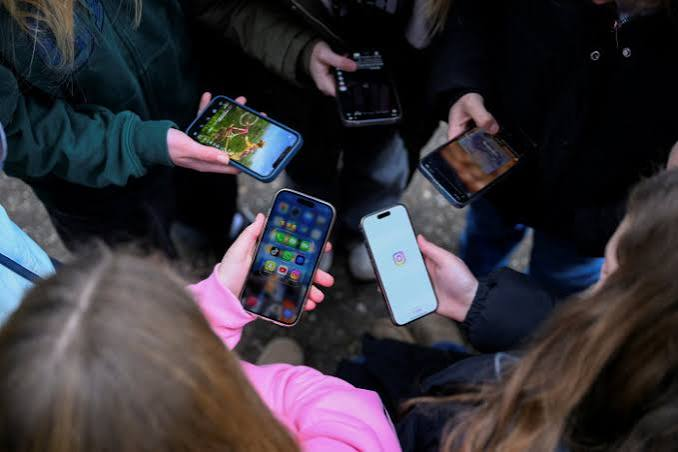
Universities are rewriting how students, researchers and faculty use artificial intelligence as higher education moves from early experimentation toward formal rules for responsible adoption. The debate now reaches far beyond whether a student may use a chatbot to write an assignment. Institutions are examining AI assisted research, automated grading, academic integrity, privacy, bias, authorship and the role of human judgment in decisions that can shape a student’s academic future.
Higher Education Faces a New AI Policy Test
The rapid spread of generative artificial intelligence has left universities facing a difficult balancing act. Students increasingly use AI tools for brainstorming, editing, coding, translation and research support, while faculty members are experimenting with automated feedback, assessment tools and research assistants. At the same time, universities remain responsible for ensuring that academic work reflects genuine learning and that research meets established standards of integrity.
The OECD’s 2026 policy work describes generative AI as a technology affecting how students learn, how teaching and assessment are conducted, what skills graduates need, how research is performed and how institutions operate. Its recommendations point toward coordinated policies covering data protection, academic integrity, equity, reliability and the development of AI skills. :contentReference[oaicite:0]{index=0}
That direction reflects a broader shift in university policy. Rather than treating AI as a temporary disruption that can be managed through isolated classroom rules, education authorities are increasingly considering institution wide frameworks. UNESCO has similarly called for human centered approaches that address ethical, safe, equitable and meaningful use of generative AI in education and research. :contentReference[oaicite:1]{index=1}
Automated Grading Is Becoming One of the Most Sensitive Issues
Few applications of AI in higher education are as consequential as automated grading. A writing assistant can suggest a sentence, but an automated assessment system can influence a grade that affects scholarships, progression, graduation and a student’s academic record.
That difference explains why universities are approaching automated marking with caution. AI systems can process large numbers of assignments quickly, identify patterns and provide preliminary feedback. Yet speed does not automatically guarantee accuracy, fairness or meaningful educational judgment.
Recent debate in Australian universities illustrates the concern. Some institutions have allowed limited AI assistance in marking, generally with human oversight, while others continue to restrict AI from grading student work. Critics have raised concerns that automated student submissions combined with automated marking could create a cycle in which both sides of the educational process become increasingly dependent on machine generated material.
UNESCO’s policy guidance has previously urged caution with algorithm based automatic grading, particularly for assessments where reliability and accuracy have not been sufficiently demonstrated. Its recommendations also support the use of AI for formative assessment when teachers remain involved and can interpret the resulting information. :contentReference[oaicite:2]{index=2}
Why Human Review Still Matters
A professor does more than compare an answer with a model response. Human assessment can consider context, originality, reasoning, improvement and the quality of an argument. A teacher may also recognize that a student has misunderstood one concept while demonstrating unusually strong thinking in another area.
An automated system may identify patterns in language or structure without fully understanding the intellectual journey behind the work. That distinction becomes particularly important in essays, creative projects, research papers and complex problem solving where there may be several defensible approaches.
For that reason, a responsible university policy can distinguish between AI assisting an instructor and AI replacing the instructor. Automated tools may organize information, identify potential inconsistencies or provide preliminary feedback, while final academic decisions remain subject to qualified human review.
Research Policies Are Changing Too
AI is also changing academic research. Researchers can use generative systems to summarize papers, explore research questions, organize information, assist with programming, improve language and generate early drafts. These applications can reduce routine workloads, but they also introduce questions about accuracy, attribution, confidentiality and intellectual ownership.
A research paper generated with the assistance of an AI system still requires a researcher who can verify its claims. Generative systems can produce plausible statements that contain factual errors, invented references or incomplete interpretations. The responsibility for the final work therefore cannot simply be transferred to a software system.
Universities are increasingly asking researchers to disclose meaningful AI assistance and maintain appropriate records of how such systems were used. The exact requirements differ between institutions and disciplines, but the underlying concern is consistent: readers need to understand how research was produced and researchers need to remain accountable for what they publish.
Privacy is another major concern. Researchers may handle unpublished manuscripts, confidential datasets, participant information or commercially sensitive material. Sending such information to an external AI service without understanding its data handling practices can create risks that have little to do with the quality of the generated text.
Universities Are Moving Toward Clearer Categories of AI Use
One practical response is to classify AI use according to academic risk. Instead of a single rule that simply permits or bans artificial intelligence, institutions can establish different expectations for different activities.
- AI may be permitted for brainstorming or language assistance when the student remains responsible for the final work.
- AI generated material may need to be disclosed when it contributes substantially to an assignment or research output.
- AI may face tighter restrictions during examinations and assessments designed to measure unaided knowledge.
- Automated grading may require human verification before a final academic decision is recorded.
- Confidential research information should not be entered into AI services without appropriate privacy safeguards.
This type of policy can give students more useful guidance than a broad statement saying that AI is either acceptable or prohibited. The technology is capable of supporting legitimate learning while also creating opportunities for academic misconduct. Context matters.
AI Literacy Is Becoming Part of Academic Responsibility
Another major development is the growing recognition that students need to understand AI rather than simply learn rules about it. If graduates will encounter AI systems in workplaces, research environments and public institutions, universities need to teach them how to question machine generated information and recognize its limitations.
UNESCO’s AI competency framework identifies areas including a human centered mindset, AI ethics, technical knowledge and AI system design. The framework is structured around progression from understanding to applying and creating. :contentReference[oaicite:3]{index=3}
The OECD’s 2026 Digital Education Outlook reaches a related conclusion. Its research indicates that general purpose generative AI can improve the quality of student outputs without necessarily producing equivalent learning gains. When students outsource cognitive work to a chatbot, they may produce a stronger immediate answer while gaining less of the underlying knowledge or skill. :contentReference[oaicite:4]{index=4}
That distinction is central to the university debate. Education is not simply about producing a correct document. It is also about developing judgment, memory, communication, problem solving and the ability to work independently.
The Student Experience Is at the Center of the Debate
Behind every AI policy is a student sitting at a desk, trying to understand a difficult subject, meet a deadline or recover from an academic setback. Rules that are unclear can create anxiety and confusion, especially when one professor permits a particular AI use while another treats the same activity as misconduct.
Clear communication therefore matters as much as the policy itself. Students should know whether AI can be used for research, editing, coding, translation, brainstorming or drafting. They should also understand when disclosure is required and what counts as unauthorized assistance.
Teachers need similar clarity. Faculty members should not be expected to police unfamiliar technologies without training or institutional support. A university that introduces AI tools into assessment should also explain how those tools are evaluated, monitored and challenged.
Privacy and Fairness Cannot Be Secondary Issues
AI adoption also raises questions about whether students are being treated fairly. Automated systems can reflect biases present in their training data, design or evaluation criteria. Differences in language, writing style, disability and access to technology can also affect how students interact with AI systems.
UNESCO’s broader AI ethics recommendation calls for strong safeguards when AI is used to monitor or assess learners and stresses the importance of protecting human rights and maintaining meaningful teacher and student relationships. :contentReference[oaicite:5]{index=5}
There is also an access issue. Students with reliable access to advanced paid AI services may have capabilities that are unavailable to students who depend on free tools or limited internet connections. Universities therefore need to consider whether their policies unintentionally create a two tier academic environment.
What the New University AI Rules Could Mean
The emerging approach is unlikely to produce one universal rulebook that every university follows word for word. Different countries have different education systems, privacy laws and academic traditions. Research universities also face different needs from institutions focused primarily on professional education.
What is becoming clearer is the set of principles behind responsible adoption. Human accountability, transparency, academic integrity, privacy, fairness and meaningful learning are becoming central considerations in institutional AI policies.
The UNESCO guidance for generative AI in education and research provides a useful example of the human centered direction being discussed internationally. It calls for policy frameworks that allow useful applications while addressing risks surrounding privacy, ethics and educational quality. :contentReference[oaicite:6]{index=6}
A More Deliberate Era of Academic AI
The university response to artificial intelligence is entering a more mature phase. The initial question was whether students and teachers would use AI. That question has largely been answered. The harder questions now concern how it should be used, when it should be restricted, who remains responsible and how universities can ensure that technology supports learning rather than replacing it.
We should expect academic AI policies to continue changing as institutions gather evidence from real classrooms and research environments. A rule written today may need revision when new models, assessment systems and educational applications become available.
The strongest policy direction is therefore not necessarily a permanent list of permitted and prohibited tools. It is a framework that gives students and educators clear expectations while preserving human judgment. Universities can use artificial intelligence for legitimate support without allowing automation to become a substitute for scholarship, teaching or critical thinking.
For students, researchers and faculty members, that distinction may become the defining feature of higher education’s next AI chapter. The goal is not simply to decide where machines belong on campus. It is to make sure that when they are used, they strengthen the purpose of education rather than quietly replacing the human work that gives education its value.