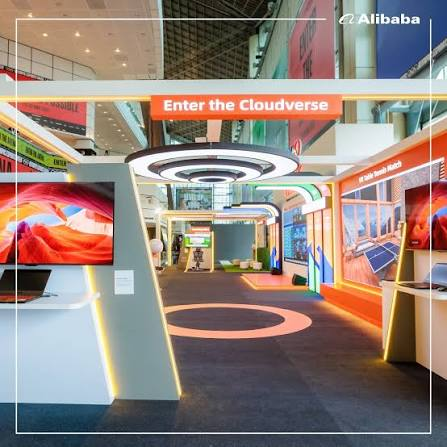
Global gaming showcases are putting a new technical priority at the center of interactive entertainment: making cloud rendered games feel as immediate as locally rendered games. Developers and technology companies are presenting advances in low latency rendering, cross platform game engines, real time networking, and cloud infrastructure that could reshape how competitive games are built and played. For esports players, where a fraction of a second can change the outcome of a match, these developments are more than a visual upgrade. They could influence the architecture of tournaments, spectator experiences, game servers, and the devices used by competitors around the world.
Why Low Latency Cloud Gaming Matters Now
Cloud gaming has always carried a simple promise. A powerful computer can handle rendering somewhere else while a player receives the resulting images through an internet connection. The difficulty has been making that experience responsive enough for demanding games. Every action travels from the player to a remote system, the game processes the input, a new frame is rendered, the result is encoded, and the image travels back to the screen.
For a casual adventure game, a small delay may be tolerable. Competitive shooters, racing games, fighting games, and other fast reaction titles are different. A player can press a button and expect an immediate response. When opponents are separated by thousands of miles and every action is measured against another player’s reaction time, network performance becomes part of the competitive environment itself.
The latest work being demonstrated across the gaming technology sector focuses on reducing those delays at several stages rather than treating internet speed as the only solution. Rendering pipelines, server placement, input handling, frame delivery, compression, prediction, and synchronization can all affect the final experience.
Cloud Rendering Is Moving Closer to the Player
One of the most important changes is the expansion of geographically distributed cloud infrastructure. Instead of sending every player to a distant central data center, modern cloud gaming systems can place computing resources closer to major population centers. Shorter physical distances can reduce network travel time and create a more responsive connection.
NVIDIA has already demonstrated this approach through its graphics delivery technology, which is designed to stream games and interactive three dimensional applications to a wide range of devices. The company has described global data center coverage as a way to provide a near native experience with low latency. Its technology has also been used for interactive events, browser based game access, and immersive esports viewing experiences.
That direction is significant because the future of cloud gaming is not necessarily limited to traditional game streaming. Cloud rendering can also become a layer inside a broader entertainment platform, allowing a game, event, virtual stadium, social experience, or interactive broadcast to reach users without requiring powerful local hardware.
Cross Platform Engines Are Becoming More Important
The technical challenge becomes even larger when developers need one game to work across personal computers, consoles, mobile devices, browsers, and cloud systems. Each platform has different hardware capabilities, display characteristics, input methods, and networking conditions.
Modern development engines are therefore being designed around greater flexibility. Developers want to maintain common game logic while adjusting rendering quality, controls, network behavior, and performance for individual devices. This approach can reduce development duplication while helping studios reach a broader audience.
Low latency networking is particularly important for multiplayer games. Platforms such as Photon Realtime are built around globally distributed multiplayer infrastructure, matchmaking, synchronization, and cross platform connectivity. These systems show how networking has become an essential component of the game engine rather than a feature added after the core game is finished.
One Game Can Now Serve Many Types of Players
A modern competitive title may have players using different hardware while participating in the same digital environment. One competitor could be playing on a gaming computer, another on a console, and another through a supported cloud system. The game needs to preserve consistent rules while adapting the technical delivery to each device.
This creates a difficult balancing act. Developers must prevent faster hardware or better connections from creating unintended advantages while still providing enough graphical quality to make each version attractive. Cloud rendering can help by shifting some computational requirements away from the player’s device, but it also introduces the need for extremely reliable data transmission.
Esports Architecture Could Change With Cloud Technology
Competitive esports has traditionally relied on carefully controlled hardware and network environments. Professional tournaments often use dedicated systems, specialized peripherals, controlled connections, and standardized settings because fairness depends on consistency.
Low latency cloud rendering could eventually change parts of that structure. Instead of requiring every competitor to bring or use identical high performance machines, tournament organizers could potentially provide standardized cloud computing environments. Game instances could be hosted on controlled infrastructure, while players connect through approved devices.
That possibility does not eliminate the need for local equipment. Input devices, displays, network connections, and physical environments would still matter. However, moving more of the game computation into standardized infrastructure could give organizers greater control over the software environment and hardware configuration.
Research is also exploring esports itself as a setting for studying performance and interaction. A 2026 NVIDIA research project involving Rocket League tournament experiments examined performance and interaction in real competitive environments, illustrating how esports can serve as both entertainment and a practical testing ground for real time technology.
Latency Is More Than Internet Speed
One of the most common misunderstandings about gaming latency is that faster internet automatically solves the problem. Connection bandwidth matters, but responsiveness depends on a chain of technical events.
- Player input must reach the game system quickly.
- The game engine must process that input without unnecessary delays.
- The graphics system must render the resulting frame efficiently.
- The frame must be encoded and transmitted with minimal delay.
- The player’s display must present the image quickly.
NVIDIA Reflex provides one example of how developers are addressing this problem at the rendering level. Its developer tools are designed to synchronize CPU and GPU work so that frames can be rendered closer to the moment they are needed. The system also provides latency measurements that can help developers identify where delays occur inside the graphics pipeline.
The broader lesson is that low latency is a system level problem. Improving one component while leaving another inefficient can limit the benefit. Competitive cloud gaming therefore requires coordination between game engines, graphics hardware, network infrastructure, servers, operating systems, displays, and input devices.
Frame Generation and Rendering Efficiency Add Another Layer
Modern rendering techniques are also changing the relationship between image quality and performance. Neural rendering and frame generation can reduce the amount of traditional rendering work required for certain visual outputs, allowing systems to deliver higher frame rates or improved image quality under constrained conditions.
That matters for cloud gaming because every additional frame has to be processed and delivered within a tight time window. A cloud platform that can produce visually rich images without placing excessive pressure on its graphics hardware may be able to serve more users or provide higher quality streams.
However, developers must carefully distinguish between visual smoothness and true responsiveness. A higher displayed frame rate does not automatically mean that input latency has disappeared. Competitive players care about the complete chain from action to visible response, which is why rendering efficiency and latency measurement remain closely connected.
What This Could Mean for Esports Viewers
The effects may extend beyond professional players. Cloud infrastructure can also change how spectators experience esports events. Instead of watching only a conventional video broadcast, viewers could eventually enter interactive virtual venues, switch between perspectives, inspect game environments, or participate in shared digital spaces.
Cloud graphics technology has already been used for browser based interactive esports experiences. Virtual stadium concepts have demonstrated how audiences can enter three dimensional environments without installing a traditional game client. For viewers sitting at home, the difference could feel substantial. A conventional broadcast places the audience outside the action, while an interactive environment can make spectators feel closer to the competition.
This could become particularly valuable for international tournaments. A fan who cannot attend an event physically could still experience a digital venue with friends, interact with other spectators, and move through different parts of the virtual presentation.
The Biggest Challenge Remains Network Reliability
The promise of cloud gaming still depends on the quality of the connection between the player and the cloud infrastructure. Even sophisticated rendering technology cannot completely eliminate problems caused by unstable networks, congestion, poor routing, or physical distance.
For competitive esports, that concern is especially serious. A brief connection disruption can have consequences that are far greater than those experienced during ordinary entertainment use. Tournament organizers would need robust redundancy, monitoring, regional infrastructure, and clearly defined technical standards before cloud competition could become a dominant model for professional play.
There is also the question of fairness. If players in different regions have different routes to cloud servers, their experiences may not be identical. Developers and tournament operators would need transparent latency standards and reliable measurement tools to ensure that technical conditions do not quietly influence results.
Developers Are Building Toward a More Connected Gaming Model
The direction shown by current technology is clear even though the final shape of the industry remains uncertain. Game engines are becoming more connected to cloud infrastructure, networking is becoming more deeply integrated into game architecture, and rendering technology is being designed around both visual quality and responsiveness.
For developers, the practical opportunity is significant. A game designed for cloud deployment from the beginning can make decisions about server location, asset delivery, player synchronization, input prediction, and rendering efficiency much earlier in production. That can be very different from taking an existing local game and attempting to stream it afterward.
For players, the potential benefit is access. A person without an expensive gaming computer could eventually participate in experiences that once required substantial local hardware. For esports, that could broaden participation while giving organizers new ways to manage competitive infrastructure.
The Next Competitive Gaming Battle May Happen in the Cloud
The most important development emerging from global gaming showcases is not simply better graphics. It is the attempt to make the location of the computer running a game matter less to the person playing it. If cloud rendering becomes responsive enough, a powerful graphics system could feel increasingly invisible to the player.
We should remain realistic about the challenges. Network conditions vary, hardware remains important, and competitive gaming demands extremely precise synchronization. Yet the progress in low latency rendering, distributed cloud infrastructure, cross platform engines, and real time networking shows that developers are attacking those problems from several directions at once.
Resources from the NVIDIA developer ecosystem illustrate how closely modern game development now connects rendering, networking, cloud infrastructure, and performance measurement. The emerging model is not simply about putting games on remote servers. It is about redesigning the technical foundation so interactive entertainment can respond almost as naturally from the cloud as it does from a machine sitting beside the player.
For competitive esports, that distinction could eventually define the next generation of competition. The screen may look familiar, the controller may feel familiar, and the excitement of a final match may remain unchanged. Behind that familiar experience, however, the technology could be increasingly distributed across a global network of powerful machines working together in real time.