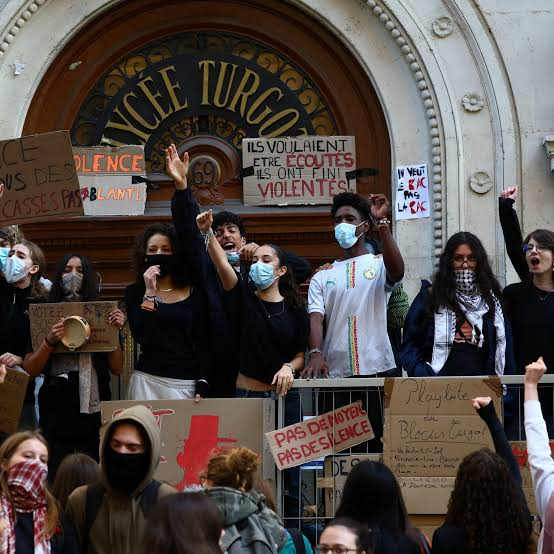
Thousands of students across France took to the streets on October 5, 2026, as a growing education crisis disrupted schools, colleges and universities nationwide. Student boycotts and demonstrations reportedly forced hundreds of educational institutions to close or suspend normal operations, with protesters demanding action on teacher shortages, overcrowded classrooms and deteriorating infrastructure. For students arriving at locked school gates and educators trying to keep already strained classrooms running, the demonstrations have become a visible expression of frustration with an education system they say is struggling to provide basic conditions for learning.
Students Turn Education Frustration Into Nationwide Protests
The demonstrations reflect concerns that have been building inside French education for months. Students and their supporters say persistent staffing shortages have left classrooms without enough teachers, while overcrowding has made it increasingly difficult for educators to give individual attention to pupils. Complaints about aging buildings, inadequate facilities and insufficient resources have added another layer to the dispute.
What began as local frustration has now taken on a national character. Students have organized boycotts, demonstrations and school blockades in different parts of France, disrupting the ordinary rhythm of lessons and examinations. For many young people, the protest is not simply about missing a day of class. It is about whether the state is providing the conditions they believe they need to receive a meaningful education.
We should also recognize the personal dimension behind the statistics. A student sitting in a crowded classroom may struggle to hear a teacher clearly. Another may arrive at school only to discover that a scheduled lesson has been cancelled because no qualified replacement is available. When those experiences repeat themselves, frustration can move quickly from individual disappointment to collective action.
Teacher Shortages Put Pressure on Classrooms
Teacher recruitment has become one of the central issues driving the protests. Schools need qualified educators across a range of subjects, yet staffing gaps can leave existing teachers responsible for additional classes and administrative duties. The result can be heavier workloads for teachers and less consistent instruction for students.
The problem is particularly difficult because recruiting teachers is not simply a matter of filling vacant positions. Schools need qualified professionals who can remain in the profession for years. Competitive working conditions, workload, pay, classroom demands and opportunities for career development all influence whether graduates choose teaching and whether experienced educators remain.
When vacancies remain open, schools often have to rely on temporary arrangements. Substitute teachers can help prevent complete disruption, but repeated changes in staff can make it harder for students to maintain continuity in their studies. This is especially significant for pupils preparing for major examinations or students who require additional educational support.
Why Staffing Problems Affect More Than One Classroom
A teacher shortage can create a chain reaction. One missing educator may require classes to be merged, lessons cancelled or students reassigned. That increases the number of pupils in other classrooms and places additional pressure on teachers who are already working at capacity.
The French government has therefore faced a difficult policy challenge: increasing recruitment while also addressing the working conditions that influence retention. Long term improvement will require more than temporary appointments if schools are to regain stable staffing levels.
Overcrowded Classrooms Become a Major Protest Issue
Classroom overcrowding is another major concern voiced by protesters. A classroom designed for a manageable group can become a very different environment when additional students are added. Teachers may have less time to answer questions, provide feedback or identify pupils who are falling behind.
For students, overcrowding can affect concentration and participation. Some pupils become reluctant to ask questions in a crowded environment, while others may struggle simply to find enough quiet space to work. The consequences can be particularly serious for students already dealing with learning difficulties or language barriers.
French education officials face competing pressures when addressing classroom size. Population changes can increase enrollment in some areas while schools elsewhere may have unused capacity. Building new facilities takes years and requires significant public investment, while moving students between schools can create transportation and accessibility problems.
Infrastructure Problems Add to Student Anger
The protests are also drawing attention to the physical condition of educational buildings. Students and educators have complained about inadequate facilities and infrastructure that does not always match the needs of modern education.
School buildings are more than places where lessons take place. Heating, ventilation, lighting, sanitation, accessibility, laboratories, libraries and technology all influence the daily learning environment. When these systems fail or become outdated, students experience the consequences directly.
For a teenager spending most of the day inside a school building, a poorly maintained classroom is not an abstract infrastructure issue. It is the room where they prepare for exams, meet friends, complete assignments and spend a significant portion of their formative years. That makes infrastructure particularly powerful as a source of public frustration.
University Students Join the Wider Education Dispute
The unrest extends beyond primary and secondary schools. University students have also joined the broader movement, linking concerns about educational resources with the cost and quality of higher education.
Universities across France face their own pressures, including large student populations, limited resources and demands for additional academic support. Students entering higher education often expect greater independence, but independence becomes difficult when lecture halls are overcrowded or access to professors and academic services is limited.
The participation of university students gives the protests an additional dimension. Young people who have already moved through the school system are now describing similar structural problems at the next stage of their education. That creates a powerful argument for examining education as a connected system rather than treating individual institutions separately.
Parents and Teachers Face Difficult Choices
The disruption has also placed families in a difficult position. Parents may support students’ concerns while worrying about missed lessons, childcare arrangements and the potential impact on academic progress. Working families can be particularly vulnerable when schools close unexpectedly.
Teachers face an equally complicated choice. Many educators share concerns about staffing, resources and classroom conditions, yet prolonged disruption can place them in conflict with their responsibility to students. A teacher can support the principle behind a protest while worrying about the practical consequences for pupils preparing for important examinations.
That tension deserves attention because education protests are rarely experienced only by the people standing outside government buildings. Their effects reach classrooms, households and communities. Any lasting solution will need to address the grievances without allowing students’ education to become another casualty of the dispute.
The Government Faces Pressure to Respond
The scale of the protests increases pressure on French policymakers to provide a credible response. Students are asking for visible improvements, while teachers and school administrators need policies that can work beyond the immediate political cycle.
A serious response could involve several areas of action:
- Recruiting and retaining more qualified teachers through sustainable working conditions.
- Reducing excessive classroom sizes where local enrollment makes overcrowding severe.
- Investing in school repairs, accessibility, heating, ventilation and modern learning facilities.
- Providing stronger support for students who need additional academic or social assistance.
- Improving communication between education authorities, teachers, parents and student representatives.
Funding will inevitably be part of that conversation. France already allocates substantial public resources to education, but the protests demonstrate that spending levels alone do not determine whether students experience a functioning school system. Policymakers must also examine where resources are going, how quickly they reach institutions and whether staffing policies are producing stable results.
Why the Protests Matter Beyond France
The French demonstrations are worth watching internationally because the pressures behind them are not unique. Education systems in many countries are dealing with teacher shortages, rising enrollment, aging infrastructure and growing expectations from families.
The challenge is particularly significant because education problems tend to compound over time. A student who misses lessons because of teacher shortages may face difficulties in later grades. A school that postpones infrastructure repairs may eventually face much more expensive reconstruction. A teacher who leaves because of unsustainable working conditions represents not only a vacant position but also years of experience lost from the classroom.
That is why education policy often requires patience even when public frustration is immediate. Building classrooms can take years. Training teachers takes time. Recruiting enough specialists in high demand subjects cannot happen overnight. Yet students experiencing these problems today cannot simply wait indefinitely for reforms to arrive.
What Happens Next for French Schools and Universities
The coming days will determine whether the demonstrations remain concentrated around specific institutions or develop into a broader and more sustained national movement. Government negotiations with education representatives, student organizations and teachers could become central to the next phase of the dispute.
For students, the immediate question is whether their concerns will produce measurable changes rather than another round of promises. For teachers, the issue is whether policymakers will address the working conditions behind staffing shortages. For families, the priority is restoring reliable access to education without dismissing the concerns that brought students onto the streets.
The French Ministry of National Education provides official information about schools, education policy and national education programs, while broader international education comparisons are available through the OECD’s education resources.
A Defining Moment for French Education
The nationwide protests have turned long standing complaints about French education into a highly visible public debate. Behind the demonstrations are students who want classrooms where they can learn, teachers who need workable conditions and families who expect public education to provide stability.
We should view the protests not simply as an interruption to the school calendar but as a warning about what happens when everyday problems accumulate without satisfactory solutions. A missing teacher, an overcrowded classroom or a damaged school building may seem manageable when considered separately. When thousands of students encounter those problems repeatedly, they become evidence of a much larger crisis.
France now faces a choice between treating the demonstrations as a temporary disruption and addressing the structural pressures that produced them. The response will matter not only for the students standing outside schools today, but also for the quality of education available to the next generation. For those young people, the message behind the protests is straightforward: they want the opportunity to learn in schools that have enough teachers, enough space and facilities worthy of the future they are being asked to prepare for.