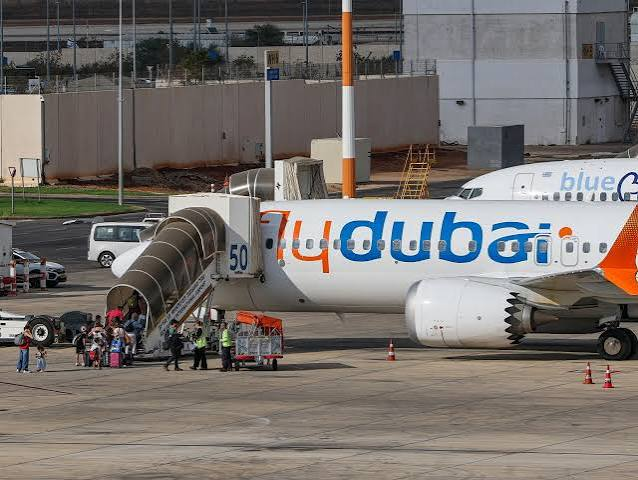
A high profile in flight safety intervention involving a FlyDubai commercial route has prompted international civil aviation authorities to review security procedures, passenger screening practices, and operational safeguards. The response highlights how a single serious incident can lead aviation regulators to examine procedures far beyond the airport and aircraft where an event occurred, with the goal of preventing similar risks from spreading across the global air transport network.
Why the FlyDubai Incident Has Drawn International Attention
Commercial aviation depends on layers of security that most passengers rarely notice. Before an aircraft leaves the gate, passengers pass through screening, baggage is checked, crews complete security procedures, and airport personnel coordinate with airlines and government agencies. Once the aircraft is airborne, flight crews remain responsible for maintaining order and responding to unexpected situations.
When an in flight safety intervention occurs, authorities must examine whether existing safeguards worked as intended and whether any weakness allowed a potentially dangerous situation to develop. That assessment can involve the airport, airline, security contractors, law enforcement agencies, regulators, and international aviation organizations.
The FlyDubai incident has therefore become part of a broader aviation security discussion. Rather than treating the event as an isolated occurrence, authorities are reviewing passenger screening and security protocols with an eye toward identifying weaknesses that could exist on other routes.
Security Audits Put Existing Procedures Under the Microscope
Security audits are designed to test whether established procedures are actually being followed and whether those procedures remain effective as risks change. They can involve reviews of airport screening systems, access controls, passenger identification procedures, baggage security, staff training, and communication between different security teams.
For passengers, much of this work happens behind the scenes. A traveler may simply see an officer checking a boarding pass or walk through a screening area without realizing how many separate procedures support that moment.
Following a serious aviation security concern, regulators may compare procedures across airports and airlines rather than limiting the investigation to one location. This approach can reveal whether a problem resulted from an isolated failure or reflects a broader weakness.
The International Civil Aviation Organization security resources provide a framework for understanding the international standards and recommended practices that shape aviation security across member states.
Passenger Screening Could Receive New Attention
Passenger screening is one of the most visible parts of aviation security, but effective screening involves much more than checking luggage and identifying prohibited items.
Authorities continuously assess how passengers enter secure areas, how identity information is verified, how suspicious behavior is reported, and how airport security teams respond when concerns arise. Screening procedures must also balance safety with the practical need to process large numbers of travelers efficiently.
A major security review can result in additional training, revised procedures, updated technology, or stronger coordination between airport personnel and law enforcement agencies.
Areas Authorities May Review
- Passenger identity verification procedures
- Airport access controls and secure area monitoring
- Security staff training and response procedures
- Communication between airlines and airport authorities
- Emergency response coordination
- Screening technology and inspection practices
The Human Element Remains Central to Aviation Security
Technology plays a major role in modern aviation security, but trained personnel remain essential. Security officers, cabin crew, pilots, airport workers, and law enforcement officials may have only seconds or minutes to recognize a developing problem and determine the appropriate response.
That human responsibility can be stressful. Cabin crew members are trained to manage difficult situations while maintaining calm among passengers. A person sitting several rows away may see only a brief exchange or an unusual movement, while crew members may already be assessing a much larger set of risks.
We should remember that aviation security is ultimately about protecting people. Every procedure, screening checkpoint, and emergency protocol exists because hundreds of passengers may be depending on professionals to make sound decisions under pressure.
Airlines Face Pressure to Maintain Consistent Standards
Airlines operate across multiple jurisdictions, which makes consistency especially important. A carrier may fly between countries with different security procedures, legal requirements, airport layouts, and enforcement systems.
That complexity means an airline cannot rely entirely on the standards of one airport. It must maintain its own operational procedures while complying with national and international requirements.
Following a major security event, airlines may review crew training, onboard incident reporting, communication systems, and procedures for managing disruptive or potentially dangerous situations. These reviews can help determine whether staff had the information, authority, and support needed to respond effectively.
Why Aviation Security Requires International Cooperation
Air travel connects countries through an enormous network of airports and routes. A security weakness in one location can potentially affect travelers far beyond that jurisdiction.
This is why international aviation security relies on shared standards and cooperation. Governments exchange information, regulators establish requirements, airlines coordinate with airports, and international bodies develop common frameworks intended to reduce differences between national systems.
The Federal Aviation Administration’s airport security resources illustrate the extensive role that national aviation authorities play in maintaining secure airport operations and protecting passengers.
The latest review following the FlyDubai incident reinforces that principle. Security cannot be treated as a single checkpoint or a single organization’s responsibility. It is a chain of measures involving many people and institutions.
Balancing Stronger Security With Passenger Convenience
Any decision to strengthen passenger screening creates a practical question: how can authorities improve security without making air travel unnecessarily difficult?
Airports already process large crowds under strict time constraints. Additional screening can increase waiting times, create congestion, and place greater pressure on airport staff. Yet reducing screening simply to improve convenience can introduce unacceptable risks.
The challenge is finding procedures that are both effective and proportionate. New technology may help authorities identify potential concerns more efficiently, while improved staff training can reduce unnecessary delays caused by inconsistent procedures.
Passengers may notice changes through longer screening processes, additional questions, revised boarding procedures, or increased security personnel. While such changes can be inconvenient, clear communication can help travelers understand why procedures have changed.
What Passengers Should Expect From Aviation Security Changes
Travelers should expect airport security requirements to vary by country and airport. Passengers can reduce delays by arriving with sufficient time, keeping travel documents accessible, following screening instructions, and checking airline guidance before departure.
People should also avoid assuming that a familiar airport procedure will be identical on another international route. Security requirements can differ depending on destination, transit arrangements, local regulations, and current threat assessments.
For frequent travelers, the most useful response is preparation rather than anxiety. Aviation security reviews are intended to identify weaknesses and strengthen procedures before a problem becomes larger.
Security Reviews Can Strengthen Public Confidence
Passengers rarely think about aviation security when everything goes smoothly. They check in, pass through the airport, board their aircraft, and expect to reach their destination safely.
That sense of normality depends on an extensive system operating in the background. When a high profile incident occurs, public confidence can be shaken because travelers are reminded that aviation involves real risks despite its strong safety record.
Transparent security reviews can help rebuild confidence by demonstrating that authorities are willing to examine what happened and make changes when necessary. The goal should not be to create fear around air travel. It should be to show that security procedures are continuously tested and improved.
The Broader Lessons for Global Aviation
The FlyDubai incident demonstrates why aviation security cannot remain static. Passenger behavior, technology, airport operations, international travel patterns, and security threats can change over time.
A procedure that worked effectively several years ago may require adjustment as circumstances evolve. Regular audits give authorities an opportunity to identify weaknesses before they become systemic.
That process also requires cooperation from airlines and passengers. Airlines must invest in training and operational preparedness, regulators must maintain effective oversight, and travelers must follow established security procedures even when those procedures are inconvenient.
A More Vigilant Aviation System Ahead
The international response to the FlyDubai incident is likely to keep attention focused on passenger screening, security audits, crew preparedness, and cooperation between aviation authorities. The immediate objective is to determine whether additional safeguards are needed and where those safeguards can have the greatest effect.
For passengers, the most important message is that aviation security is built around prevention. Reviews are valuable because they give authorities an opportunity to learn from difficult events rather than waiting for another incident to expose the same weakness.
We should expect aviation security to continue evolving as regulators assess new risks and airlines refine their procedures. Strong security does not mean creating fear at every airport gate. It means building systems that allow passengers to travel with confidence while giving trained professionals the tools and authority needed to respond when something goes wrong.
The wider aviation community now faces the task of turning the lessons from this incident into practical safeguards. If the resulting audits lead to better coordination, stronger screening, clearer emergency procedures, and more consistent international standards, the consequences of one difficult event could ultimately contribute to a safer global aviation system.