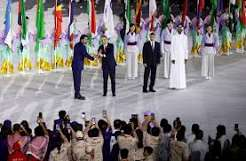
The 20th Asian Games have officially concluded in Aichi Nagoya, Japan, closing a 16 day celebration of sport that brought thousands of athletes together across dozens of disciplines. From packed arenas and emotional medal ceremonies to difficult moments involving transport and accommodation, the Games produced a memorable mix of athletic achievement, national pride, youthful breakthroughs, and lessons for the future of international sporting events.
Aichi Nagoya Brings the 2026 Asian Games to a Close
The closing ceremony in Nagoya on October 4 marked the end of two weeks of intense competition across Asia. The official schedule ran from September 19 through October 4, with competition spread across Aichi Prefecture and the wider region. The Japanese Olympic Committee lists the event as the 20th Asian Games and confirms Aichi Nagoya as the host location. The Japanese Olympic Committee’s official Asian Games coverage provides schedules, results, athlete information, and tournament updates.
For athletes, the closing ceremony represented something deeply personal. Years of early morning training, injuries, qualifying events, travel, and moments of doubt had finally reached their conclusion. Some competitors left Japan with gold medals and Olympic qualification secured. Others returned home without a medal but with performances that may shape the next stage of their careers.
We often remember major sporting events through medal tables and record books, but the human story is much larger. Behind every result was an athlete who had spent countless hours preparing for a few minutes, or sometimes a few seconds, when everything depended on execution.
A Competition Spanning 43 Sports Disciplines
The Aichi Nagoya Games featured competition across 43 sports disciplines, giving athletes from across the continent opportunities to compete in established Olympic sports as well as newer and emerging events. The broad program reflected the changing character of Asian sport, where traditional disciplines continue to share attention with rapidly growing activities.
The event also demonstrated the enormous geographical reach of modern Asian sport. Competitors arrived from countries and territories with very different sporting systems, economic resources, climates, and traditions. Yet once competition began, the focus narrowed to familiar elements shared by elite athletes everywhere: preparation, pressure, concentration, and the desire to represent home with pride.
Newer sports added another layer of interest. Padel and surfing were among the disciplines making a notable appearance in the Games program, providing athletes with an opportunity to compete on one of Asia’s biggest sporting stages while introducing these events to new audiences.
Olympic Qualification Added Greater Pressure to the Competition
One of the most important aspects of the 2026 Asian Games was the role that selected events played in Olympic qualification. Victories in certain disciplines could provide direct qualification pathways for the 2028 Los Angeles Olympics, making some finals about far more than an Asian Games medal.
India’s men’s hockey team provided one of the clearest examples. The team defeated Malaysia 5 to 1 in the final to retain its Asian Games title and secure direct qualification for the Los Angeles Olympics. The result was particularly significant because India had also defeated Pakistan in the semifinal, turning the tournament into an emotional campaign for one of the sport’s most closely followed rivalries.
Such qualification opportunities change the atmosphere surrounding a final. Athletes are not simply competing for a medal that will remain in a cabinet or appear in a record book. They are competing for a place at the world’s biggest sporting event, and that possibility can make every mistake feel heavier and every successful play more meaningful.
Why Olympic Qualification Matters
- It gives athletes a direct route toward the 2028 Olympic Games in selected sports
- It reduces the uncertainty associated with later qualification tournaments
- It rewards teams that perform at their highest level during the Asian Games
- It gives national sporting programs an earlier opportunity to plan for Olympic competition
India, China and Japan Among the Major Stories
China finished at the top of the medal standings with 169 gold medals, continuing its long standing strength across a wide range of sports. Japan followed with a strong performance on home soil, while India also enjoyed a highly successful campaign that included major victories in hockey, cricket, boxing, wrestling, archery, and other disciplines.
China’s young athletes attracted particular attention. Thirteen year old swimmer Yu Zidi won three gold medals and was named the female most valuable player, while teammate Zhang Zhanshuo collected seven gold medals. Their performances illustrated how quickly the next generation of Asian sporting talent is emerging.
Japan also produced memorable achievements in front of home supporters. The host nation recorded strong results across several disciplines, including a notable performance in softball and the inaugural Asian Games padel competition.
For India, the tournament provided another opportunity to build on its recent rise across multiple sports. The country’s medal campaign included major achievements in hockey and cricket, with its men’s hockey title also carrying the significance of Olympic qualification.
Historic Moments Extended Beyond the Medal Table
The Games created stories that will remain meaningful long after the closing ceremony. South Korea’s An Se Young successfully defended her women’s badminton singles title, maintaining her position among the continent’s leading players. Thailand’s Puripol Boonson emerged as one of the most prominent sprinting stars after winning the men’s 100 meter and 200 meter titles.
Japan’s Shin Ohashi also produced a major swimming moment by breaking the world record in the 200 meter breaststroke. In golf, South Korea’s Tom Kim won gold in dramatic fashion, while his victory carried an additional personal significance because it affected his military service status under South Korean rules.
These stories demonstrate why a continental sporting event cannot be reduced to a single medal count. Every sport produces its own heroes, rivalries, records, disappointments, and unexpected breakthroughs.
The Games Also Faced Serious Organizational Challenges
The sporting achievements were accompanied by criticism over logistics. The absence of a traditional dedicated Athletes Village created accommodation challenges, with competitors housed in hotels, container units, and even a cruise ship. Transport problems and delays also affected athletes during the competition.
For athletes preparing for an important final, a long journey between accommodation and a venue is not a minor inconvenience. Travel affects rest, meals, warmups, recovery, and concentration. When schedules are tight, even small delays can create additional pressure.
These problems offer an important lesson for future hosts. A major sporting event must be judged not only by the quality of its arenas and ceremonies, but also by how comfortably and reliably athletes can move through the competition environment.
At the same time, organizers and the Olympic Council of Asia pointed to the scale of participation and the sporting quality of the Games as evidence of success. The event reportedly attracted about 17,000 athletes and officials and produced dozens of world and continental records.
Athlete Welfare Will Remain a Key Lesson
The logistical problems surrounding Aichi Nagoya raise a wider issue that deserves continued attention: athlete welfare. Elite competition already places enormous physical and psychological demands on competitors. Organizers therefore have a responsibility to provide conditions that allow athletes to recover, travel, eat, sleep, and prepare properly.
That responsibility becomes especially important when young athletes are involved. The presence of teenage medalists in major competitions is inspiring, but it also reminds us that young competitors require appropriate support and careful management of their schedules.
Future organizers can learn from Aichi Nagoya by planning transportation capacity, accommodation, athlete services, communication systems, and contingency arrangements well before competition begins. A successful sporting event should make extraordinary athletic performances possible without placing unnecessary burdens on the people producing them.
The Emotional Side of the Closing Ceremony
By the final evening, the competition venues had begun to change character. The tension of qualification races and medal matches gave way to celebration. Athletes who had spent days focused on individual events could finally share the experience with competitors from other countries.
The closing ceremony also marked a symbolic transfer of responsibility. The Asian Games flag was passed toward Doha, Qatar, which will host the next edition in 2030. The gesture represented more than a formal tradition. It reminded viewers that every major sporting event has a beginning, a competitive peak, and eventually a new host preparing to carry the story forward.
For Japan, the conclusion brought both relief and reflection. The country demonstrated its ability to host an enormous international sporting event while also confronting the organizational problems that accompanied it.
What Aichi Nagoya Leaves Behind
The 2026 Asian Games will be remembered for more than the final medal standings. It gave young athletes a global platform, produced new sporting records, delivered Olympic qualification opportunities, and created powerful moments of national pride across Asia.
It also exposed the practical challenges of hosting a modern multi sport event. Large competitions require enormous coordination between venues, hotels, transportation providers, security teams, volunteers, medical services, broadcasters, athletes, and sporting federations. A weakness in any one part can affect the experience of thousands of people.
For future hosts, those lessons may prove as valuable as the medals. Sporting excellence requires more than an arena and a schedule. It requires an environment in which athletes can focus on competition and audiences can experience the event with confidence.
Asia Turns Toward the Road to Los Angeles
With the Asian Games now concluded, attention immediately shifts toward the next stage of the sporting calendar. Athletes who secured Olympic qualification can begin preparing for Los Angeles with greater certainty, while others will continue through their respective qualification pathways.
For many competitors, Aichi Nagoya was not the final destination but another major step toward an even larger goal. The lessons learned in Japan, whether from victory, defeat, pressure, travel, or competition against the continent’s strongest athletes, will continue to shape their preparation.
The 20th Asian Games closed with the flame extinguished, but the sporting stories created in Aichi Nagoya will continue. Champions return home with medals, emerging athletes leave with experience, and teams that earned Olympic places now have a direct path toward Los Angeles.
That is ultimately the lasting value of the Asian Games. For two weeks, athletes from across a vast and diverse continent met on common ground. They competed fiercely, celebrated together, endured setbacks, and showed that sport can create connections that remain long after the final ceremony has ended.