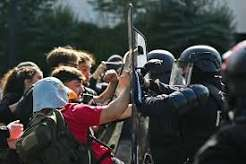
France is facing a major education crisis as coordinated protests by students, teachers and education unions disrupt schools across the country. Nearly 2,000 public schools have reportedly been blockaded, disrupted or temporarily shut down, with protesters demanding action on overcrowded classrooms, persistent staff shortages and deteriorating school facilities. The demonstrations on October 6, 2026, have turned long running complaints about France’s public education system into a national political challenge.
Behind the scenes of the protests are students trying to prepare for exams, teachers attempting to manage increasingly difficult workloads and parents worried about whether their children are receiving the education they need. For many families, the dispute is no longer simply about government policy. It is about whether a child can enter a classroom, find a qualified teacher and learn in a safe and properly maintained environment.
Why Nearly 2,000 Schools Have Been Disrupted
The scale of the demonstrations reflects frustration that has been building across France’s public education system. Student organizations and educators have pointed to classrooms that are too large, vacant teaching positions and buildings that require significant maintenance. These problems can vary from one region to another, but protesters say they share a common cause: insufficient resources reaching schools.
When a school has too few teachers, the consequences quickly spread. An absent teacher may not be replaced, leaving students without lessons. Other teachers may have to absorb additional students, creating larger classes and heavier workloads. Over time, that pressure can affect both the quality of instruction and the ability of teachers to give individual students the attention they need.
For students, the experience can be particularly frustrating. A teenager preparing for important examinations does not see a staffing shortage as an administrative statistic. They see an empty classroom, a cancelled lesson or a teacher rushing through material because there is not enough time to provide individual assistance.
Overcrowded Classrooms Are at the Center of the Anger
Classroom size has become one of the most visible complaints during the protests. Teachers say overcrowding makes classroom management more difficult and reduces opportunities for students to ask questions or receive personal guidance.
Students also say crowded classrooms can create an atmosphere in which some pupils struggle to participate. A student sitting at the back may have difficulty hearing instructions or getting a teacher’s attention. Those small disadvantages can become significant when they accumulate throughout an academic year.
The issue is particularly sensitive in secondary schools because students are preparing for examinations and making decisions about university, vocational education and employment. A missed lesson or inadequate academic support can create anxiety about the next stage of life.
Teacher shortages are adding pressure
The staffing problem extends beyond the number of teachers formally employed. Schools also need reliable substitutes when educators are absent. Without sufficient replacement staff, students can lose valuable teaching time while existing teachers face additional pressure.
That creates a difficult cycle. Heavy workloads can contribute to professional exhaustion, while staffing shortages make workloads even heavier. Students then experience the consequences through cancelled classes, larger groups and reduced access to teachers.
Deteriorating School Buildings Have Become Another Flashpoint
Education is not only about teachers and textbooks. The physical environment in which students spend much of their day also affects their ability to learn.
Protesters have raised concerns about aging buildings, inadequate facilities and school infrastructure that has not kept pace with the needs of modern students. Problems involving heating, ventilation, sanitation and classroom conditions can become especially uncomfortable during periods of extreme weather.
A poorly maintained school can also become a symbol of unequal public investment. Families may reasonably ask why students are expected to compete for academic opportunities when some schools struggle to provide basic physical conditions for learning.
The issue is particularly serious in economically disadvantaged areas. If schools serving lower income communities consistently face greater staffing and infrastructure problems, educational inequality can become more deeply entrenched.
Students Are Turning School Gates Into Symbols of Protest
School blockades have become one of the most recognizable features of the demonstrations. Students gather outside entrances, organize demonstrations and prevent normal school operations from continuing in some locations.
For participants, the tactic is intended to make their concerns impossible to ignore. A written complaint can remain inside a ministry office. A school gate filled with protesting students is visible to parents, journalists and political leaders.
But the tactic has also created tension. Parents who need to work may struggle to arrange childcare when schools close unexpectedly. Students who do not support the demonstrations may lose lessons. School administrators must balance the right to protest with their responsibility to keep students and staff safe.
Those competing interests make the situation complicated. We can recognize the seriousness of the students’ concerns while also recognizing that prolonged disruption can impose real costs on families and communities.
Teachers and Education Unions Give the Movement Greater Weight
The participation of teachers and education unions has expanded the dispute beyond student activism. When educators join students in demanding additional resources, the government faces a broader argument about working conditions and public education funding.
Teachers are asking for conditions that allow them to do their jobs effectively. That includes manageable class sizes, adequate staffing and facilities that support learning. Many educators also argue that better working conditions are essential to attracting and retaining qualified professionals.
The teacher shortage is therefore not simply a problem of recruitment. It is also a question of retention. If experienced educators leave because of workload, stress or poor working conditions, schools can lose expertise at the same time that they are struggling to recruit new staff.
Parents Are Caught Between Support and Disruption
Parents occupy an uncomfortable position in the current dispute. Many understand the reasons for the protests because they see the same problems through their children’s experiences. At the same time, parents depend on schools to provide reliable education and daily care.
A parent leaving home early for work may have little choice when a school is suddenly closed. Families with younger children can face difficult decisions about childcare. Students preparing for examinations may worry about falling behind.
Yet those short term difficulties should not obscure the longer term question. If parents repeatedly encounter cancelled classes, staff shortages and deteriorating facilities, they may also conclude that the education system requires serious intervention.
The Government Faces Pressure to Deliver Concrete Changes
French authorities now face a difficult balancing act. The government must maintain public order and protect schools from damage while addressing the concerns that have brought students and educators into the streets.
Police action can restore access to a school building, but it cannot fill a vacant teaching position. Reopening a classroom does not repair damaged infrastructure. A temporary staffing solution may also fail if schools continue struggling to retain teachers.
The French Ministry of Education will therefore face pressure to demonstrate that its response involves practical measures rather than short term assurances. That could include faster recruitment, stronger substitute teacher systems, targeted infrastructure investment and additional support for schools facing the greatest shortages.
The government also has to consider how educational funding is distributed. Treating every school identically may not produce equal educational opportunity when some communities face substantially greater challenges.
Why the Protests Could Become a Wider Political Issue
Education has a unique ability to connect national policy with everyday family life. Almost every household understands what a school closure means. Almost every parent understands the anxiety surrounding an important examination. Almost every teacher understands what happens when there are too many students and too few colleagues.
That makes the protests politically significant. The dispute is not limited to education professionals. It touches questions about public spending, social mobility, inequality and the future prospects of young people.
Students are also increasingly concerned about what awaits them after graduation. University admission, vocational training and access to employment can feel uncertain, particularly for young people who believe their schools are not providing sufficient preparation.
When those concerns combine with inadequate facilities and staff shortages, frustration can spread quickly from individual schools to a nationwide movement.
What Protesters Are Demanding
Although individual groups have different priorities, the central demands can be summarized around several practical issues.
- More teachers and dependable replacement staff
- Smaller and more manageable classroom sizes
- Investment in aging school buildings and facilities
- Additional resources for schools in disadvantaged communities
- Better academic support for students preparing for major examinations
- Greater attention to educational inequality and access to future opportunities
These demands are significant because they focus on the daily operation of schools rather than a single isolated policy. Meeting them would require sustained investment and administrative changes rather than a one time announcement.
The Risk of Violence Is Complicating an Already Serious Debate
Peaceful demonstrations and violent incidents must be treated differently. Students and teachers have the right to express concerns through lawful protest, while authorities have a responsibility to protect people and public property.
Reports of clashes, vandalism and damage to school facilities have added another layer of concern. Violence can weaken public sympathy for legitimate educational demands and place students, teachers and police officers at risk.
There is also a practical contradiction in damaging schools while demanding better schools. Every damaged classroom represents another repair bill and another interruption for students who are already complaining about inadequate facilities.
The most effective path forward is therefore likely to depend on sustained dialogue, clear demands and peaceful pressure combined with measurable government action.
What France’s Education System Needs Next
The immediate priority is to restore normal learning conditions wherever schools have been disrupted. But returning students to classrooms should not be treated as the end of the crisis.
France will need to address the underlying causes of the protests. That means examining teacher recruitment and retention, improving substitute coverage, reducing excessive class sizes and directing infrastructure investment toward schools where conditions are most difficult.
Long term planning will also matter. Recruiting teachers takes time, while repairing major school buildings can require years of budgeting and construction. Policymakers therefore need to think beyond the current demonstrations and develop a sustained strategy for public education.
The OECD’s education research and policy analysis provides a broader international context for examining classroom conditions, teacher resources, student outcomes and educational inequality. Such comparisons can help policymakers identify where France’s system is performing well and where additional investment may be needed.
A Crisis That Started at School Gates Could Shape National Debate
France’s nationwide school protests are ultimately about more than blocked entrances. They reflect a generation of students asking whether the institutions responsible for preparing them for adulthood have enough resources to fulfill that responsibility.
We should take that question seriously. Young people may express frustration in ways that are disruptive, but the underlying concerns about overcrowding, staffing and infrastructure deserve a meaningful response. Teachers also need conditions that allow them to remain in the profession and give students the attention they require.
The government now has an opportunity to move the debate away from confrontation and toward measurable improvements. That will require more than reopening school doors. It will require putting qualified teachers in classrooms, maintaining buildings properly and ensuring that students in disadvantaged communities are not left with fewer opportunities.
For families across France, the real measure of success will be simple. Students should be able to walk through their school gates knowing that a teacher will be there, the classroom will be suitable for learning and the education they receive will give them a fair chance at what comes next.