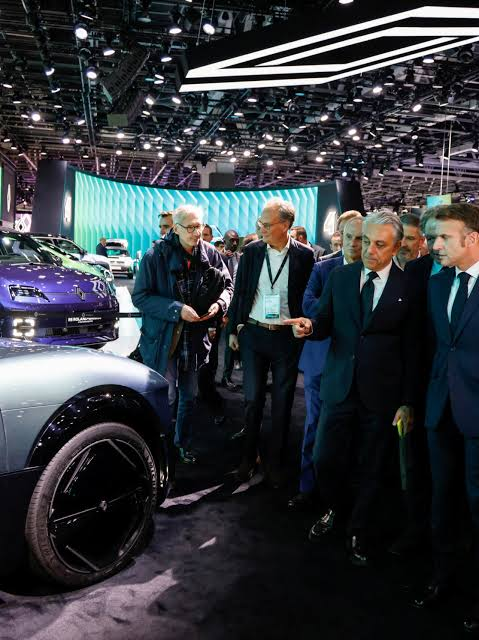
The Paris Motor Show is drawing attention to a defining question for the global automotive industry: who will shape the next generation of electric vehicles for European drivers? A news summary dated October 12, 2026, reports that global automotive brands showcased locally tailored European electric vehicles and advanced design lineups at the major motor show, with Geely and luxury marques among the names highlighted. The reported developments reflect a market where attractive design, competitive pricing, regional manufacturing strategies, and everyday usability increasingly determine which electric cars can win consumer trust. Specific models, technical specifications, and launch announcements should be verified through official company releases as further details become available.
For visitors walking through an international motor show, the appeal of a new vehicle begins long before a test drive. Sculpted bodywork catches the overhead lights, carefully designed interiors invite closer inspection, and digital displays offer a glimpse of how driving may feel in the years ahead. Yet behind the spectacle lies a practical challenge. Automakers must develop vehicles that suit European roads, meet regional regulations, address charging concerns, and offer enough value to persuade households to make a substantial purchase.
Why the Paris Motor Show Matters to the Electric Vehicle Industry
The Paris Motor Show has long provided an important stage for manufacturers to introduce vehicles, present design concepts, and communicate their ambitions to consumers and industry professionals. Its European setting makes it particularly relevant to automakers seeking to understand the preferences of buyers across markets with different driving habits, charging networks, tax policies, and purchasing budgets.
Electric mobility has changed what consumers expect from a major automotive exhibition. Visitors still compare exterior styling, comfort, and performance, but they increasingly ask how far a vehicle can travel on a charge, how quickly its battery can recharge, how much it costs to maintain, and whether a dependable charging point is available near home or work. These considerations can determine whether an appealing display model becomes a realistic purchase.
The reported emphasis on European electric vehicles also highlights the importance of localization. A model designed for one market may need different equipment, software settings, safety features, interior configurations, or powertrain options for another. Automakers that understand regional preferences can make their vehicles more relevant to local customers instead of assuming that a single global design will satisfy everyone.
Geely’s European Ambitions and the Changing Competitive Landscape
Geely has become an important name in the international automotive business through its portfolio of automotive interests and its investments in vehicle technology. Its wider corporate connections include established brands and businesses involved in passenger cars, electrification, and mobility. That breadth gives the group access to capabilities that can support product development across different price categories and customer segments.
European expansion, however, requires more than introducing an electric car with competitive specifications. Buyers often consider brand reputation, service availability, parts supply, resale value, software quality, and the ease of arranging repairs. A manufacturer entering or expanding within a market must demonstrate that its customer support will remain dependable long after the initial excitement surrounding a new model has faded.
The reported presence of Geely among the brands attracting attention at the Paris event fits into a broader contest between established European manufacturers and international competitors. Chinese automotive companies have expanded their electric vehicle capabilities, while European companies continue investing in batteries, vehicle platforms, manufacturing, and software. This competition can give consumers more choices, but it also places pressure on manufacturers to prove that their vehicles deliver lasting quality rather than relying on introductory prices or striking presentation.
Geely’s long term opportunity will depend on its ability to align product development with European expectations. That includes understanding the needs of city drivers, families who travel longer distances, and customers who require practical luggage space or dependable performance in cold weather. Clear warranty terms, transparent battery information, and accessible service networks could prove as influential as headline technology features.
Luxury Brands Put Design, Comfort, and Electric Performance in Focus
Luxury automakers approach electrification with a different set of customer expectations. Premium buyers often look for refined cabin materials, quiet operation, precise handling, advanced driver assistance, and personalized technology. An electric powertrain can support these priorities by delivering smooth acceleration and reducing the noise associated with conventional engines, although the overall driving experience still depends on suspension design, tires, weight distribution, and engineering quality.
At an international motor show, luxury vehicles also serve as statements about brand identity. Exterior proportions, lighting signatures, seating arrangements, and the way digital displays are integrated into the dashboard all contribute to a model’s character. Manufacturers must balance visual distinction with practical considerations such as visibility, physical controls, passenger comfort, and ease of use.
Electric luxury vehicles face a particularly demanding value equation. Large batteries and sophisticated equipment can increase manufacturing costs, while heavier vehicles may consume more energy than smaller alternatives. Buyers therefore have good reason to compare real world driving range, charging performance, cabin space, efficiency, and long term ownership costs instead of focusing only on acceleration figures or screen size.
The reported showcase of advanced design lineups suggests that styling remains central to the competition. However, the strongest designs are those that serve a purpose. Aerodynamic shapes can help reduce energy consumption, carefully arranged interiors can make vehicles more comfortable, and well designed interfaces can reduce distraction. Luxury in an electric car increasingly depends on how naturally these features work together.
Localization Could Be the Key to Winning European Drivers
European automotive markets are not uniform. A household in a dense city may prioritize compact dimensions, easy parking, and access to public charging. A family living outside a major urban area may place greater importance on highway range, luggage capacity, rear seat comfort, and the ability to recharge during longer journeys. Business users may focus on operating costs, fleet management, and vehicle availability.
Localized electric vehicle development can respond to these differences. Manufacturers may adjust equipment packages, infotainment languages, navigation services, heating systems, driver assistance functions, and charging compatibility according to regional requirements. They may also need to account for local road conditions and the availability of public charging infrastructure.
Climate is another important consideration. Cold temperatures can affect battery efficiency and charging behavior, while heating the passenger compartment can increase energy consumption. European buyers who regularly drive in winter conditions benefit from clear information about battery preconditioning, heat pump availability, charging performance in low temperatures, and the expected variation between laboratory range figures and everyday driving.
Localization can also extend to manufacturing and supply chains. Producing vehicles closer to their intended markets may offer advantages in logistics, delivery times, and responsiveness to customer demand. Nevertheless, the economic benefits depend on production volumes, labor costs, component sourcing, regulatory requirements, and the scale of investment. Claims about local production or European manufacturing commitments should be judged against confirmed company announcements rather than inferred from a vehicle’s appearance at an exhibition.
Charging Infrastructure and Battery Technology Remain Essential
Even a well designed electric vehicle can be difficult to own if charging is inconvenient. Drivers with access to home charging may find daily use straightforward, while people living in apartments or older buildings may depend on workplace facilities and public charging stations. The availability, reliability, and price of these services can shape the overall ownership experience as strongly as the vehicle itself.
Charging speed deserves careful examination. A manufacturer may advertise a peak charging rate, but actual performance depends on battery temperature, the charging station, the vehicle’s state of charge, and the charging curve. Buyers should compare the time required to add a meaningful amount of driving range rather than assuming that the highest advertised number will remain constant throughout a charging session.
Battery durability and warranty coverage also matter. Prospective buyers should review the length and conditions of battery warranties, the manufacturer’s policy on battery capacity degradation, and the availability of repair services. Clear information about battery chemistry, thermal management, and software support can help consumers assess the likely cost of ownership over several years.
The European Alternative Fuels Observatory provides information about alternative fuel vehicles and charging infrastructure across Europe. Such resources can help buyers understand the broader market and assess whether public charging provision in their area is likely to support their travel patterns.
How Greater Competition Could Affect Prices and Consumer Choice
Competition among established luxury marques, European manufacturers, and international electric vehicle producers could create meaningful benefits for consumers. Manufacturers have incentives to improve efficiency, provide better equipment, simplify charging, and develop vehicles that appeal to a wider range of budgets. A broader selection of models may also give buyers more flexibility when comparing vehicle size, battery capacity, performance, and comfort.
Price competition alone, however, does not guarantee a better ownership experience. A vehicle with a low purchase price may have higher insurance costs, expensive replacement parts, limited service coverage, or weaker resale demand. Customers should evaluate the total cost of ownership, including financing, energy, maintenance, tires, insurance, depreciation, and any applicable incentives.
Government policy will continue to influence the electric vehicle market. European emissions rules, national purchase incentives, taxation, charging investment, and industrial policies can affect which vehicles are available and how competitively they are priced. These measures vary by country and can change over time, making it essential for buyers to check the rules that apply where they live rather than relying on generalized claims about European incentives.
What Consumers Should Look for Beyond the Showroom
Motor shows are useful for discovering new vehicles, but a polished display cannot replace a careful ownership assessment. Consumers considering an electric vehicle can make better decisions by examining several practical factors before placing an order.
Real world range: Compare independent driving tests and consider motorway speeds, winter temperatures, passenger loads, and heating use.
Charging access: Check whether home, workplace, and public charging options fit normal routines and longer journeys.
Warranty and servicing: Review battery coverage, maintenance requirements, repair access, and the manufacturer’s support network.
Software and safety: Investigate update policies, driver assistance limitations, data privacy controls, and the availability of essential physical controls.
Total ownership costs: Compare financing, insurance, electricity prices, depreciation, and potential repair expenses rather than purchase price alone.
These checks are especially valuable when considering a recently introduced brand or a model with limited local ownership history. An informed purchase should be based on verified specifications, a meaningful test drive, clear contractual terms, and confidence that the vehicle can be serviced throughout its useful life.
The Road Ahead for Europe’s Electric Car Market
The reported showcase at the Paris Motor Show reflects an industry working to balance design ambition with the practical demands of electric mobility. Geely and luxury brands represent different approaches to the same challenge: developing vehicles that attract attention while meeting customer expectations for performance, comfort, reliability, and value.
The event’s broader significance will depend on what follows the exhibition. Confirmed production plans, European pricing, delivery schedules, independent vehicle testing, and evidence of dependable service support will reveal more than a display presentation alone. These details will help establish whether the vehicles on show can compete successfully beyond the exhibition floor.
For European drivers, a wider field of electric vehicle manufacturers could bring more choice and encourage improvements across the industry. Yet the best outcome is not simply a larger number of models. It is a market in which consumers can find safe, efficient, well supported vehicles that suit their budgets and daily lives, while manufacturers compete through genuine engineering progress and responsible customer service.
As electric mobility continues to develop, the Paris Motor Show remains a valuable place to observe the direction of automotive design and competition. The next phase of success will be measured not by how impressive a vehicle looks under exhibition lights, but by how confidently it carries people through ordinary journeys, changing seasons, and years of ownership.