
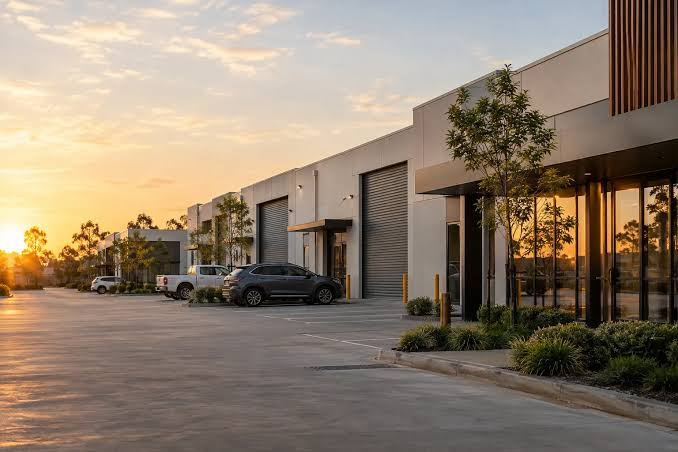
October 27, 2026, finds the global commercial real estate market navigating a difficult combination of elevated borrowing costs, cautious investors, and subdued property transactions. From office towers in major financial centers to logistics facilities serving international supply chains, commercial property owners are confronting a market in which financing remains expensive and buyers are increasingly selective. Industrial real estate continues to demonstrate relative resilience, supported by demand for distribution facilities, warehousing, and modern logistics infrastructure. Yet resilience does not guarantee rising returns. For investors, landlords, lenders, and businesses considering property purchases, the central question is whether current income can justify acquisition prices and financing costs while uncertainty continues to influence investment decisions.
High Interest Rates Continue to Restrain Commercial Property Transactions
Commercial real estate depends heavily on financing. Investors commonly use loans to acquire office buildings, shopping centers, warehouses, hotels, and multifamily properties. When interest rates remain elevated, the cost of servicing those loans rises, leaving less income available to investors after debt payments. This can make an otherwise attractive property difficult to purchase at the seller’s preferred price.
The pressure extends beyond new acquisitions. Owners with loans approaching maturity may need to refinance at rates substantially higher than those attached to their original borrowing. Even when a property continues generating rental income, increased financing expenses can weaken cash flow and complicate refinancing negotiations. Some owners may respond by contributing additional equity, negotiating extensions with lenders, selling assets, or postponing other investments.
Buyers face a related challenge. Higher borrowing costs reduce the amount they can comfortably pay while maintaining an acceptable return. Sellers, however, may be reluctant to accept lower prices, particularly when they purchased assets during periods of cheaper financing or believe that market conditions will improve. This disagreement can delay negotiations and reduce completed transactions.
We should distinguish between a lack of investment interest and a lack of transactions. Investors may continue examining properties, conducting due diligence, and negotiating potential acquisitions without completing deals. When financing assumptions remain uncertain and buyers and sellers disagree over valuations, activity can remain subdued even when available capital has not disappeared.
Stagnant Yields Complicate Property Investment Decisions
One of the most important measures in commercial real estate is the capitalization rate, commonly called the cap rate. It estimates a property’s annual net operating income relative to its market value. When financing costs rise while rental income remains relatively stable, investors often demand higher cap rates to compensate for the additional risk.
For example, consider a commercial property generating $1 million in annual net operating income. At a purchase price of $20 million, its cap rate would be 5 percent. If investors begin demanding a 6 percent cap rate for comparable income, the same annual income would support a property value of approximately $16.67 million, assuming income remains unchanged.
This simplified example illustrates why property valuations can come under pressure even when buildings remain occupied and tenants continue paying rent. The underlying business may be functioning normally, but the financial return available to a new buyer has changed.
Higher required yields can also create tension between investors seeking income and owners hoping to preserve the value of their assets. Sellers may choose to hold properties rather than accept lower offers, while prospective buyers wait for more attractive pricing or better financing conditions. The resulting standoff can limit liquidity across commercial property markets.
However, higher cap rates do not automatically mean that every property is becoming less valuable. Rental growth, occupancy, operating expenses, building quality, location, and future development prospects all influence valuation. Properties with strong tenants and sustainable income may continue to attract buyers, even when the broader investment environment remains challenging.
Industrial Real Estate Shows Resilience, but Risks Remain
Industrial and logistics properties have attracted sustained interest because businesses need physical facilities to manufacture, store, sort, and distribute goods. Warehouses, distribution centers, manufacturing buildings, and specialized logistics facilities support supply chains that connect producers with retailers and consumers.
The expansion of online retail has contributed to demand for strategically located distribution space. Businesses also require facilities that can accommodate modern inventory systems, efficient loading operations, reliable transportation connections, and increasingly sophisticated logistics technology. In some markets, limited availability of suitable buildings has supported occupancy and rental income.
Industrial property also benefits from longer term business decisions. A manufacturer or logistics company may invest heavily in equipment, transport arrangements, and operational systems tied to a particular location. Moving to another facility can be expensive and disruptive, which may encourage tenants to maintain leases when the property continues meeting their requirements.
These factors help explain why industrial real estate can remain attractive during periods of economic uncertainty. Nevertheless, investors should avoid treating the sector as immune to higher interest rates.
New Supply and Financing Costs Can Reduce Returns
Industrial markets can face problems when developers construct more warehouse space than local businesses need. A sudden increase in available buildings may weaken landlords’ bargaining power, slow rent growth, and increase the time required to find tenants. Older facilities may struggle particularly when new properties offer better energy efficiency, higher ceilings, or more convenient access to transportation networks.
Financing costs create another challenge. Industrial properties have often attracted investors willing to accept comparatively low initial yields because they expect stable income and future growth. When government bond yields rise, the difference between property income and relatively lower risk financial investments can become less appealing.
CBRE’s October 2026 analysis of higher interest rates highlights this concern, noting that industrial and multifamily properties face particularly compressed spreads between capitalization rates and the United States ten year Treasury yield. Its outlook suggests that even sectors with supportive operating fundamentals may experience valuation pressure when financing costs rise. Investors can examine the firm’s findings through its commercial real estate interest rate analysis.
For industrial property owners, the practical priority is to assess both the quality of existing rental income and the amount of competing space likely to enter the market. A modern warehouse in a supply constrained location may have a very different risk profile from a speculative development in an area with numerous vacant facilities.
Office and Retail Properties Face Different Challenges
Although industrial assets receive considerable attention, commercial property performance varies substantially by sector and location. Office buildings, shopping centers, and hospitality properties respond to different economic forces, making broad assumptions about the entire market potentially misleading.
Office Buildings Depend on Location and Tenant Quality
The office sector continues to reflect changes in workplace practices and corporate space requirements. Some employers are consolidating offices or adopting flexible work arrangements, while others are seeking modern buildings that encourage collaboration and provide convenient access to transportation and services.
This creates a widening distinction between desirable properties and buildings that struggle to attract tenants. Well located offices with modern facilities, reliable infrastructure, and strong environmental performance may continue to command interest. Older buildings with substantial maintenance requirements or inconvenient locations may face longer vacancy periods and greater spending needs.
High interest rates complicate the situation because office owners must fund renovations and refinancing while managing uncertain rental income. A building with substantial vacancies may require significant investment before it can compete effectively, making the purchase price and financing structure particularly important.
Investors considering office properties should examine lease expiration dates, tenant financial strength, renovation requirements, and realistic occupancy assumptions. A low purchase price alone does not guarantee a good investment if the building requires extensive capital expenditure or cannot attract replacement tenants.
Retail Property Benefits From Selective Consumer Demand
Retail property performance depends on household spending, local demographics, tenant stability, and the strength of physical shopping locations. Grocery anchored centers, neighborhood retail destinations, and properties serving essential services may have more dependable demand than centers relying heavily on discretionary purchases.
Landlords also face higher maintenance, insurance, and financing expenses. When retailers encounter weaker sales or rising operating costs, they may negotiate lease concessions or reduce their physical presence. These pressures can affect property income even when occupancy initially appears stable.
Investors should therefore evaluate retail properties according to their tenant mix, accessibility, local competition, and lease structures. Properties serving recurring consumer needs may offer more dependable income, although no retail format is protected from changing economic conditions.
Global Markets Respond Differently to the Same Interest Rate Pressures
Commercial real estate is an international market, but borrowing costs and property values do not move in identical ways everywhere. National monetary policies, local banking systems, currency movements, taxation, construction costs, and regional economic growth all influence investment conditions.
In the United States, movements in Treasury yields influence the returns investors demand from commercial properties. In the United Kingdom, government bond yields and expectations for the Bank of England’s monetary policy affect property financing and valuation. Across Europe and Asia, investors must also consider local credit conditions, exchange rate exposure, and differences in property demand.
Cross border investors face an additional complication when their income is earned in one currency while financing or investment commitments are denominated in another. Exchange rate fluctuations can change the effective return on a property even when its local rental income remains steady.
Accordingly, a property market experiencing limited transactions does not necessarily indicate that all regions are facing the same degree of weakness. Some cities may benefit from employment growth, infrastructure investment, or limited construction, while others struggle with weaker tenant demand or excessive supply.
The October 2026 commercial real estate market report from the National Association of Realtors provides a useful example of why sector level analysis matters. Its assessment describes differing conditions across office, multifamily, and retail markets, including signs of improvement in some areas despite continued economic uncertainty.
Refinancing Risks Put Property Owners Under Greater Pressure
Debt refinancing is emerging as a major consideration for owners whose loans were arranged when borrowing costs were lower. When an existing loan matures, a lender reassesses the property’s income, valuation, and ability to support the proposed debt. If interest rates have increased or rental performance has weakened, the borrower may qualify for a smaller loan than before.
This can create a funding gap. An owner who cannot refinance the full outstanding balance may need to contribute additional equity, negotiate new terms, sell the property, or pursue another financing arrangement. Each option has financial consequences, particularly if the asset’s market value has declined.
Lenders also have to balance risk management with the potential value of maintaining an existing relationship. Extending a loan may be preferable to forcing a sale at an unfavorable price, but the decision depends on the property’s condition, cash flow, borrower strength, and prospects for recovery.
Investors should monitor debt maturity schedules rather than concentrating solely on headline rental yields. A property generating attractive operating income may still face considerable financial pressure if a large loan payment becomes due before refinancing conditions improve.
What Investors Can Do in a High Rate Environment
Higher borrowing costs do not eliminate every commercial property opportunity. They change the assumptions required to make an investment financially sustainable. Buyers with available capital may find opportunities when sellers need to address debt maturities or reconsider their portfolios, but attractive pricing must be supported by realistic operating forecasts.
We believe investors should focus on several practical considerations when evaluating commercial property under current conditions.
- Stress test financing assumptions. Calculate whether rental income can support debt payments under several interest rate scenarios rather than relying on a single optimistic forecast.
- Examine tenant stability. Review occupancy, lease expiration dates, tenant credit quality, and the likelihood of renewing leases at sustainable rental rates.
- Allow for capital expenditure. Include maintenance, energy efficiency improvements, insurance, taxes, and potential renovation costs when estimating net income.
- Compare properties within the same market. Evaluate competing buildings, expected supply, achievable rents, and local vacancy rather than relying exclusively on national averages.
- Preserve financial flexibility. Avoid assuming that refinancing will always be available on favorable terms or that a property can be sold quickly when cash is needed.
These measures cannot remove market uncertainty, but they can help investors identify risks before committing substantial capital. Professional financial, legal, and property advice may also be appropriate when transactions involve complex financing arrangements or significant cross border exposure.
Outlook for Commercial Real Estate Through the End of 2026
The near term outlook depends heavily on inflation, government bond yields, central bank decisions, credit availability, and the strength of occupier demand. If long term borrowing costs remain elevated, property buyers may continue demanding higher yields, placing pressure on valuations and delaying transactions.
A sustained decline in financing costs could improve affordability and encourage buyers and sellers to reach agreement. However, lower rates alone would not resolve every problem. Properties with weak occupancy, excessive competing supply, or substantial renovation requirements would still need to demonstrate a credible path toward sustainable income.
Industrial and logistics properties may continue to benefit from long term demand for distribution and manufacturing infrastructure, although individual markets will remain sensitive to construction activity and tenant requirements. Office and retail performance is likely to depend increasingly on location, building quality, and the financial health of tenants.
For the wider investment market, the most useful signals will include completed transaction volumes, commercial lending conditions, refinancing activity, rental growth, vacancy rates, and changes in capitalization rates. These indicators will help determine whether subdued trading reflects a temporary disagreement over pricing or a more prolonged adjustment in property values.
The Bottom Line
Global commercial real estate is confronting a difficult investment environment as elevated interest rates increase financing expenses and make property valuations harder to justify. Stagnant yields and limited agreement between buyers and sellers can suppress transaction activity even when buildings continue generating rental income.
Industrial real estate retains important advantages through its role in manufacturing, storage, and distribution. Yet higher borrowing costs and additional warehouse supply can still weaken returns, demonstrating why investors must evaluate individual assets rather than assume that an entire sector will outperform.
For property owners, the priority is to protect cash flow, prepare for refinancing obligations, and maintain buildings that tenants want to occupy. For buyers, disciplined pricing and careful financial analysis may reveal opportunities that were less apparent when capital was cheaper.
The next phase of the market will depend on the relationship between financing costs and underlying property demand. Until borrowing conditions become more predictable and buyers and sellers reach greater agreement on value, commercial real estate transactions may remain constrained. Investors who understand the differences between sectors, locations, and individual assets will be better positioned to navigate the uncertainty ahead.

