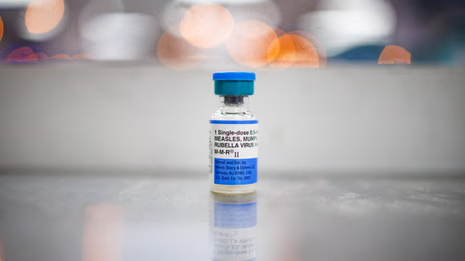
The United States has officially lost its measles elimination status, ending a public health achievement that had stood since 2000. The Pan American Health Organization (PAHO) confirmed on November 17 that measles transmission had become endemic again in the country after the same virus lineage circulated continuously for more than 12 months. The decision is a serious warning about falling vaccination coverage, persistent gaps in community protection and the difficulty of containing a disease that can spread rapidly among people who are not immune.
For families, the announcement is more than a change in a public health classification. It means measles is once again established through sustained transmission within the United States, rather than appearing only in separate outbreaks linked to infections acquired abroad. Health authorities say the setback can be reversed, but doing so will require stronger vaccination efforts, reliable disease surveillance and clear communication with communities.
Why the United States Lost Its Measles Elimination Status
PAHO reached its decision after reviewing epidemiological and laboratory evidence at a regional monitoring commission meeting held from November 10 to 13, 2026. The review found that a single chain of measles transmission, which began in the United States on January 20, 2025, had continued for at least 12 months. That period meets the international criteria for reestablished endemic transmission.
Measles elimination does not mean a country will never record another case. It means that continuous domestic transmission has been interrupted. Countries can still experience infections brought in by international travelers and can face outbreaks, provided health authorities stop those transmission chains before they continue for a full year.
The distinction matters. The United States had maintained its measles elimination status since 2000, despite occasional imported infections and outbreaks. The latest finding shows that transmission was not interrupted within the required period. It does not mean every state or community is experiencing an outbreak, nor does it mean the country has lost the ability to control the disease.
PAHO also confirmed that Bolivia and Mexico lost their measles elimination status following similar findings. The three decisions reflect a broader deterioration in the Americas, where public health authorities are confronting a sharp increase in measles infections and renewed pressure on vaccination programs.
Measles Cases Have Reached a Troubling Level
The status change follows a major rise in reported infections. The United States recorded more than 5,400 confirmed measles cases during 2026, more than twice the total reported in 2025. The country is experiencing its highest annual case count in decades, with outbreaks affecting multiple states and placing particular pressure on communities with low vaccination coverage.
Measles is among the most contagious infectious diseases. One infected person can transmit the virus to as many as 18 people who are susceptible to infection. The virus spreads through the air when an infected person breathes, coughs or sneezes. It can remain infectious in an enclosed space for up to two hours after that person has left.
Early symptoms can resemble an ordinary respiratory illness. Fever, cough, a runny nose and red or watery eyes may appear before the characteristic rash develops. The rash usually begins on the face and spreads across the body. Some patients recover without major complications, but measles can cause pneumonia, brain inflammation, hospitalization and death. Young children, especially those who are too young to receive routine vaccination, face particular risks.
These consequences help explain why health professionals view the loss of elimination status as a serious development even though the designation itself does not determine whether an individual is protected. The central concern is that sustained circulation gives the virus more opportunities to reach people who have no immunity.
Declining Vaccination Coverage Leaves Communities Vulnerable
Vaccination gaps are a major factor behind the resurgence. The measles, mumps and rubella vaccine, commonly known as the MMR vaccine, provides strong protection against measles. Public health experts generally aim for at least 95 percent vaccination coverage in communities to help prevent sustained outbreaks. When coverage falls below that level, the risk of transmission increases, particularly when unvaccinated people live, study or work close together.
U.S. childhood vaccination data show that MMR coverage among kindergarten students fell from 95.2 percent in the 2019 to 2020 school year to 92.7 percent in 2023 to 2024. A national average can also conceal substantial differences between counties, schools and neighborhoods. A community may have much lower coverage than the national figure suggests, leaving children and adults exposed even when vaccination rates appear relatively high overall.
The COVID 19 pandemic disrupted routine childhood immunization in many places. Missed appointments, interrupted health services and delayed school vaccination checks contributed to gaps that have not been fully closed. At the same time, misinformation and declining trust in medical institutions have made conversations about vaccines more difficult for some families.
Not every person who remains unvaccinated has made the same choice. Some people face practical barriers, including limited access to health services, transportation difficulties or incomplete medical records. Others have questions about vaccine safety or are influenced by inaccurate information. Public health campaigns are more likely to succeed when they address these different circumstances with clear explanations, convenient access and respectful conversations.
Health Leaders Warn That the Consequences Extend Beyond the United States
The American setback is part of a wider measles resurgence across the Americas. PAHO reported 58,213 confirmed cases across the region as of November 13, 2026, compared with 12,806 during the same period in 2025. The agency also reported 82 deaths. These figures underline how quickly outbreaks can grow when vaccination coverage and surveillance systems fail to contain transmission.
Medical and public health organizations have warned that the loss of elimination status should prompt sustained action rather than resignation. The College of American Pathologists highlighted the importance of laboratory testing, genetic sequencing and timely diagnosis in tracking the virus and identifying transmission links. These tools help investigators determine whether cases belong to an ongoing chain or represent separate introductions.
The Centers for Disease Control and Prevention and its partners have also pledged to support efforts to stop outbreaks and restore elimination status. In a joint statement issued on November 17, the CDC said it had provided approximately $100 million in additional funding since August to strengthen prevention, surveillance and outbreak response through state and local health departments.
CDC Director Dr. Erica Schwartz stressed that the elimination designation is not what protects the public; vaccination does. That distinction is important. The status change measures whether sustained transmission has returned. Individual and community protection still depends heavily on immunity, timely diagnosis and effective public health action.
What Families Can Do to Reduce Their Risk
The most effective protection against measles is completing the recommended MMR vaccination schedule. In the United States, children generally receive the first dose at 12 to 15 months of age and the second dose at 4 to 6 years. Adults who lack evidence of immunity should discuss their vaccination history and individual needs with a healthcare professional.
People who are unsure whether they or their children received the required doses should check medical records or contact a healthcare provider. Those planning international travel should review vaccination recommendations before departure, since measles continues to circulate in many countries. Infants traveling internationally may need an early additional dose, depending on their age and medical guidance.
Anyone who develops a fever and rash, particularly after a possible exposure, should contact a healthcare provider before visiting a clinic or emergency department. Calling ahead allows medical staff to take precautions and reduce the risk of exposing other patients and healthcare workers. People who may have measles should avoid school, work and public gatherings while following medical and public health advice.
Families should also remember that vaccination protects more than the person receiving the shot. High coverage helps shield infants who are too young for routine vaccination and people who cannot receive certain vaccines for medical reasons. This community protection becomes especially important when a highly contagious infection is circulating.
Can the United States Regain Measles Elimination Status?
Yes. Losing elimination status is not permanent. A country can regain recognition after interrupting endemic transmission and demonstrating that the virus is no longer spreading continuously through a domestic chain. PAHO has pointed to the experience of the Americas, which regained regional measles elimination status in 2024 after transmission was brought under control in countries including Brazil and Venezuela.
For the United States, the path back will depend on sustained vaccination coverage, strong laboratory networks, rapid investigation of suspected cases and cooperation among federal, state, tribal and local health agencies. Public health officials will also need to work with schools, healthcare providers, community organizations and trusted local leaders to reach people who have missed vaccinations.
The announcement on November 18 should therefore be understood as both a warning and an opportunity. The United States has lost a milestone achieved through decades of vaccination and public health work, but the tools to control measles are well established. The immediate priority is to close immunity gaps before more families face preventable illness.
PAHO’s technical guidance on measles in the Americas explains what the loss of elimination status means, how sustained transmission is assessed and what countries can do to regain protection. The CDC joint statement on the United States decision outlines the public health response and the need to expand vaccination access.
Measles elimination was never a guarantee that the virus could not return. It was evidence that consistent vaccination and coordinated public health action had kept transmission under control. Restoring that achievement will require the same commitment again, community by community.