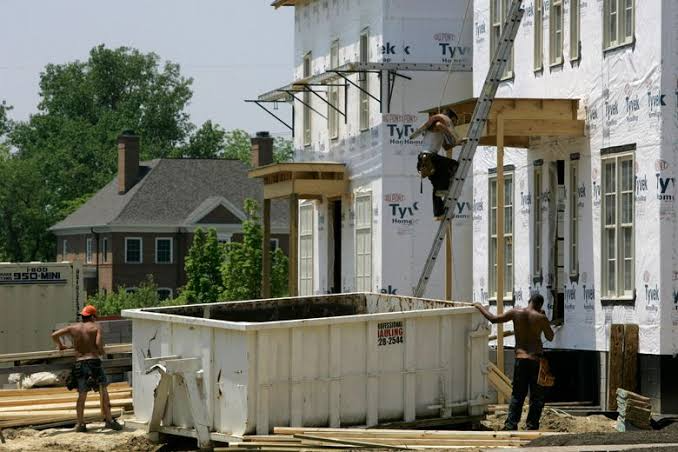
Homebuilding is facing a difficult combination of expensive financing, cautious buyers and growing competition for investment capital. In the United States, residential investment has slipped to about 3% of gross domestic product, while some 30 year jumbo mortgage rates have climbed above 7.5%. At the same time, the rapid expansion of artificial intelligence infrastructure is attracting substantial private investment. Together, these pressures are reshaping the economics of residential construction and raising questions about how quickly the housing supply can grow.
For households, the consequences are tangible. A higher mortgage rate can put a desired home beyond reach, while fewer new projects can limit the supply of homes available to buyers and renters. For builders, the challenge is equally direct: land, labor and materials remain expensive, and financing a development becomes harder when buyers are less willing or able to pay.
Residential Investment Loses Ground in the Economy
Residential construction has long been an important source of economic activity, supporting jobs across building trades, manufacturing, transportation and professional services. Its contribution has weakened, however. An analysis published by RSM on November 19 says residential investment now represents roughly 3% of US GDP, compared with a share of about 6% before the housing market collapse in 2008.
That decline does not mean the country has stopped building homes. It does indicate that housing construction is playing a smaller role in overall economic activity at a time when demand for additional housing remains significant. The contrast is especially striking because the United States continues to face affordability problems and a shortage of homes in many markets.
Residential investment also has a wider economic reach than the construction site itself. A new housing development creates demand for appliances, flooring, windows, wiring, furniture and local services. When projects are postponed, those effects can spread through suppliers and communities. Smaller construction pipelines can also mean fewer opportunities for tradespeople and local contractors.
Mortgage Rates Make New Projects Harder to Sell
Borrowing costs are one of the clearest obstacles facing prospective buyers. Mortgage News Daily reported an average 30 year jumbo mortgage rate of 7.50% on November 18, while its daily reading had reached 7.52% on November 17. Jumbo loans, which exceed standard conforming loan limits, are commonly used by buyers financing higher priced properties. Rates vary by lender, borrower credit, down payment and loan structure, so the published average is a market indicator rather than a guaranteed offer.
Even a modest increase in the interest rate can significantly change a household’s monthly payment, particularly on a large mortgage. Buyers may respond by delaying a purchase, choosing a less expensive property or remaining in their current home. Some households that would otherwise move into newly built homes may decide that the financial trade off is no longer attractive.
For developers, weaker purchasing power creates uncertainty before construction even begins. A builder must estimate whether enough buyers will be able to afford homes when a project is completed months or years later. If sales slow or lenders become more cautious, a project that once appeared financially viable may be delayed, reduced in size or abandoned.
AI Infrastructure Is Competing for Investment Capital
The expansion of artificial intelligence is creating a powerful new destination for corporate and private investment. Data centers, computing equipment, electricity infrastructure and related facilities require substantial spending. The Federal Reserve’s July 2026 Monetary Policy Report described strong business investment connected to AI services, noting that construction spending on data centers had surged since 2022 and that announced plans for additional facilities had grown sharply.
This does not mean every dollar invested in AI would otherwise have funded a housing development. Investors, banks and businesses assess projects according to different risks, expected returns and financing arrangements. Nevertheless, when a fast growing sector offers attractive opportunities, it can compete with other industries for capital, construction capacity, skilled workers and access to land.
Data center development also places demands on resources that matter to homebuilding. Both sectors need engineers, electricians, construction managers, equipment and reliable energy supplies. In areas where large technology projects are expanding quickly, competition for workers and infrastructure can add pressure to already stretched construction budgets.
The result is a broader investment shift. AI infrastructure is becoming a major focus for business spending, while residential construction is contending with higher financing costs and weaker buyer confidence. The two trends are not the only forces shaping the market, but their timing highlights how capital allocation can influence which kinds of buildings move from plans to construction.
New Housing Starts Show a Mixed Picture
Recent construction figures underline the uncertainty. The US Census Bureau and Department of Housing and Urban Development reported that September housing starts were running at a seasonally adjusted annual rate of 1.221 million units, down 5.2% from August and 7.4% from September 2025. Single family starts fell 4.6% from the previous month to an annualized rate of 859,000 units.
Figures released on November 18 showed that overall housing starts rebounded in October, but the improvement was uneven. Reuters reported that single family starts rose 4% from September to an annualized 864,000 units, yet remained 3.2% below their level a year earlier. More concerning for the future pipeline, single family building permits fell 8.7% to 772,000, their lowest level since January 2023.
Permits matter because they provide an indication of construction that may take place in the months ahead. A monthly rise in starts can reflect projects already approved or delayed developments finally moving forward. A decline in permits, by contrast, can signal that builders are becoming less confident about launching the next wave of homes.
Why the Pressure Reaches Buyers and Renters
Slower homebuilding can affect more than people hoping to buy a newly constructed property. When fewer homes enter the market, existing housing supply has less new competition. In areas with strong population growth and limited construction, that can contribute to persistent pressure on prices and rents.
Renters may feel the effects gradually. If apartment projects become more expensive to finance or are postponed, fewer new units may be available when leases turn over and demand increases. The impact varies by city and neighborhood, since local zoning rules, land availability, population trends and existing vacancies all influence rental markets.
First time buyers can be particularly exposed. They often have less equity to use toward a down payment and may be more sensitive to changes in monthly borrowing costs. When mortgage payments rise while home prices remain high, saving for a purchase becomes harder. A shortage of lower priced new homes can narrow their choices further.
What Could Help Homebuilding Recover?
A lasting improvement will likely require progress on several fronts rather than a single policy change. More stable financing conditions could help buyers plan purchases and give developers greater confidence in future sales. However, mortgage rates depend on broader financial conditions, including inflation expectations and Treasury yields, not simply on decisions made by individual homebuilders.
Construction costs also need attention. Expanding the availability of skilled labor, improving permitting processes and allowing a wider range of housing types can help projects move forward. Local governments can influence how quickly land is approved for development, while builders can respond by designing homes that meet demand at more attainable price points.
Investors and lenders will also weigh the long term need for housing against the expected returns from other sectors. AI infrastructure may continue to attract major funding, but housing serves a basic social and economic need. A healthy investment environment should be capable of supporting both productive technology infrastructure and the homes required by growing communities.
The Outlook for Homebuilding in 2027
The near term outlook remains uncertain. Elevated mortgage rates could continue to limit buyer demand, while falling permit numbers suggest that some builders are cautious about future projects. At the same time, the underlying need for housing has not disappeared. Population changes, household formation and limited existing supply can continue to support demand even when financing conditions are difficult.
We should therefore distinguish between a temporary slowdown in construction and a deeper failure to deliver enough homes over time. If projects are delayed for too long, the supply gap can become more difficult to close. When demand eventually strengthens, builders may face a backlog of unmet needs, higher land costs and renewed competition for labor and materials.
The central issue is not whether AI investment should continue or whether mortgage rates will quickly return to lower levels. It is whether the economy can direct enough resources toward essential housing while adapting to new technology demands. For families searching for an affordable place to live, the measure of success will be practical: more homes within reach, manageable monthly payments and a housing market where opportunity is not limited to those with the greatest financial resources.
Sources and Further Reading
Recent market data and analysis are available through the Mortgage News Daily jumbo mortgage rate tracker and the US Census Bureau’s New Residential Construction reports. These resources provide useful context for tracking borrowing costs, housing starts, permits and completions as the market moves into 2027.