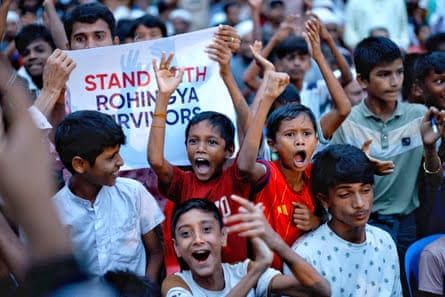
In a landmark decision with profound consequences for international justice, the International Court of Justice has ruled that Myanmar committed genocide against the Rohingya population during its 2017 military operations in northern Rakhine State. Delivered in The Hague on November 19, 2026, the judgment marks the first time the United Nations’ highest court has found a state responsible for committing genocide. For Rohingya survivors who lost relatives, homes and entire communities, the decision represents a long awaited recognition of atrocities that forced hundreds of thousands to flee their homeland.
The court concluded that the actions of Myanmar’s security forces, considered alongside the evidence presented during the proceedings, demonstrated an intention to destroy a substantial part of the Rohingya population. Its findings cover killings, serious physical and psychological harm, sexual violence and measures intended to prevent births within the community. The ruling also establishes obligations for Myanmar to investigate suspected perpetrators, provide reparations and take steps toward the safe return of displaced Rohingya.
A Historic Judgment After Years of Seeking Justice
The case, formally known as The Gambia v. Myanmar, was brought before the International Court of Justice in November 2019. The Gambia, a small West African country, initiated proceedings under the 1948 Convention on the Prevention and Punishment of the Crime of Genocide, arguing that Myanmar had violated its international obligations through the treatment of the Rohingya minority.
The case attracted international attention because it asked the court to determine whether a state itself could be held responsible for genocide. The ICJ had previously examined allegations involving genocide, including the conflict in Bosnia, but had not before found a state responsible for committing the crime itself.
Hearings on the merits took place in January 2026. The court examined arguments, witness accounts and other evidence before reaching its decision. Eleven states intervened in the proceedings, reflecting the wider international interest in how the Genocide Convention should be interpreted and applied.
The judgment was delivered by the 15 member court under the presidency of Judge Yuji Iwasawa. The decision represents a major development in international law because it addresses not only Myanmar’s responsibility for acts committed by its security forces, but also its wider duties to prevent and punish genocide.
What the Court Found About the 2017 Military Operations
The court examined the military clearance operations carried out in northern Rakhine State in 2017. During that campaign, Rohingya villages were attacked, homes were destroyed and civilians fled across the border into Bangladesh. Survivors described killings, sexual violence, family separations and the destruction of places where generations had lived.
In its assessment, the court found that Myanmar’s security forces killed thousands of Rohingya civilians, committed widespread sexual violence, inflicted extreme violence on children and attacked people attempting to escape. The evidence supported an estimate of approximately 10,000 people violently killed during the operations.
The judges also considered the destruction of villages and the conditions imposed on the Rohingya population. These actions were not assessed as isolated incidents. The court examined their scale, methods and broader pattern to determine whether they demonstrated the specific intent required to establish genocide under international law.
Genocide is not established simply by proving that large numbers of people were killed or that serious human rights violations occurred. The law requires evidence of an intention to destroy, in whole or in part, a national, ethnic, racial or religious group. The court concluded that the only reasonable inference from the evidence in this case was an intention to destroy a substantial part of the Rohingya population in northern Rakhine State.
Why the Genocide Finding Matters
The ruling carries particular legal importance because proving genocidal intent is one of the most demanding parts of a genocide case. A state may argue that its security forces were conducting military operations or responding to threats. However, the ICJ found that the scale and nature of the violence against the Rohingya went beyond what could reasonably be explained as punishment or a security response.
The court found that Myanmar breached its obligations under the Genocide Convention by committing acts of genocide. It also found violations connected to the duty to prevent genocide committed by individuals acting alongside security forces, the obligation to punish genocide and the responsibility to enact legislation giving effect to the convention.
There was also a finding that Myanmar failed to meet its obligation to preserve evidence related to the allegations. The court determined that the country had not taken the effective measures required under an earlier order intended to protect material relevant to the case.
However, the judgment did not accept every allegation made by The Gambia. The court found that Myanmar had not directly and publicly incited the commission of genocide by private persons against the Rohingya in northern Rakhine State. This distinction matters because the decision rests on the claims and evidence the judges found established, rather than treating every allegation as proven.
What Myanmar Must Do After the Ruling
The ICJ ordered Myanmar to take concrete steps in response to its violations of the Genocide Convention. These obligations extend beyond acknowledging the judgment. They require action to prevent further violations, investigate suspected perpetrators and address the damage suffered by the Rohingya community.
Among the measures required are:
- Investigations and accountability: Myanmar must take immediate and effective steps to investigate people reasonably suspected of committing acts prohibited by the Genocide Convention and prosecute and punish them where appropriate.
- Legal reforms: The country must enact legislation that gives full effect to its obligations under the convention.
- Prevention: Myanmar must take steps to prevent similar violations and provide assurances and guarantees that such conduct will not be repeated.
- Restitution and return: Measures must support the safe, voluntary and dignified return of displaced Rohingya and the reunification of families.
- Compensation: Myanmar must compensate the Rohingya group and its members for damage caused by the violations.
The court decided that the precise amount and arrangements for compensation would be addressed in a later phase of the proceedings. Myanmar must provide a report within two years describing the restitution measures it has adopted and the amount and arrangements for compensation.
Millions of Lives Remain Affected by Displacement
For the Rohingya, the consequences of the 2017 violence have continued long after the military operations ended. More than 730,000 people fled to Bangladesh during the crisis, joining others who had escaped earlier waves of persecution. Around 1.2 million Rohingya refugees are now living in Bangladesh, many in the vast settlement around Cox’s Bazar.
Life in the camps is marked by uncertainty. Families face limited opportunities for education and employment, dependence on humanitarian assistance and concerns about safety. Many have spent years waiting for conditions that would allow them to return home without fear.
Those who remain in Myanmar also face serious restrictions. Rohingya communities have experienced limits on movement, access to healthcare, education and livelihoods. For many families, the question is not simply whether they can cross a border, but whether they can live with security, dignity and equal rights in the country they consider home.
The court’s reference to safe, voluntary and dignified return is therefore significant. A return process cannot be measured only by the number of people transported across a border. It must also consider security, freedom of movement, access to services, protection against discrimination and the ability to rebuild homes and communities.
Can the International Court Enforce Its Decision?
The ICJ’s judgments are legally binding on the states involved in a case. The November 19 ruling is final and cannot be appealed. Myanmar is therefore under an international legal obligation to comply with the decision.
Yet legal authority and practical enforcement are not the same thing. The court does not have its own police force or the ability to directly arrest officials. If a state refuses to comply with an ICJ judgment, the United Nations Security Council may become involved under the framework of the UN Charter. Political divisions among powerful countries, however, can complicate efforts to secure action.
The distinction between state responsibility and individual criminal responsibility is also important. The ICJ determines legal disputes between states. It does not conduct criminal trials of individual military officers or political leaders. Separate criminal proceedings, including those before the International Criminal Court where jurisdiction exists, address the responsibility of individuals.
The judgment can nevertheless strengthen international efforts to pursue accountability. It provides an authoritative legal assessment of Myanmar’s conduct and places clear obligations on the state. It may also influence how courts, governments and international institutions approach other cases involving allegations of genocide.
International Response and the Road Ahead
United Nations Secretary General António Guterres welcomed the ruling, describing it as a powerful recognition of the Rohingya victims of genocide. He said the judgment reaffirmed that impunity for such crimes must not stand. Human rights advocates also welcomed the decision as an important step for survivors who have spent years seeking recognition and justice.
The decision now places pressure on governments and international organizations to support its implementation. Diplomatic engagement, humanitarian assistance, evidence preservation and continued monitoring will all matter. Countries with influence over Myanmar’s authorities can press for compliance, while humanitarian organizations can help ensure that displaced families are not left without support as legal processes continue.
The international community must also keep the needs of Rohingya people at the center of its response. A historic court decision cannot by itself restore destroyed homes, reunite every separated family or erase years of trauma. Those outcomes require sustained political commitment and practical measures that reach people directly.
A Landmark Decision, but Justice Requires Action
The International Court of Justice’s ruling on November 19, 2026, marks a defining moment for the Rohingya and for the international system created to prevent genocide. By finding Myanmar responsible for committing genocide, the court has established a significant legal precedent and recognized the scale and intent behind the violence inflicted on a vulnerable population.
But the meaning of this judgment will ultimately be measured by what happens next. Investigations must proceed, victims must receive meaningful remedies and displaced families must have a genuine opportunity to return safely if they choose. The Rohingya need more than recognition of what happened to them. They need protection, rights and the chance to rebuild their lives without fear.
The ruling is a powerful statement that states can be held accountable under international law. Turning that statement into lasting justice will require the consistent efforts of Myanmar, the United Nations and governments around the world. For survivors who have waited years to be heard, the decision opens an important new chapter. It must not become the end of the international community’s attention.
Official Case Information
The full proceedings, judgment and official documents are available through the International Court of Justice case file for The Gambia v. Myanmar. The United Nations broadcast of the court’s November 19 judgment also provides a record of the historic sitting in The Hague.