Senegal has officially been restored as the 2025 Africa Cup of Nations champion after winning a major legal appeal that overturns the decision to award the trophy to Morocco. In a unanimous ruling announced on November 24, 2026, the Court of Arbitration for Sport (CAS) confirmed Senegal’s original 1 to 0 victory in the dramatic final played in Rabat in January. The decision brings an extraordinary ten month dispute closer to a conclusion, although Morocco has indicated that it intends to challenge the ruling through further legal channels.
Senegal’s Original Victory Is Restored
The Court of Arbitration for Sport upheld an appeal filed by the Senegalese Football Federation against the Confederation of African Football (CAF) and the Royal Moroccan Football Federation. The ruling sets aside the CAF Appeal Board’s decision from March 17, 2026, which had declared Senegal to have forfeited the final and recorded a 3 to 0 victory for Morocco.
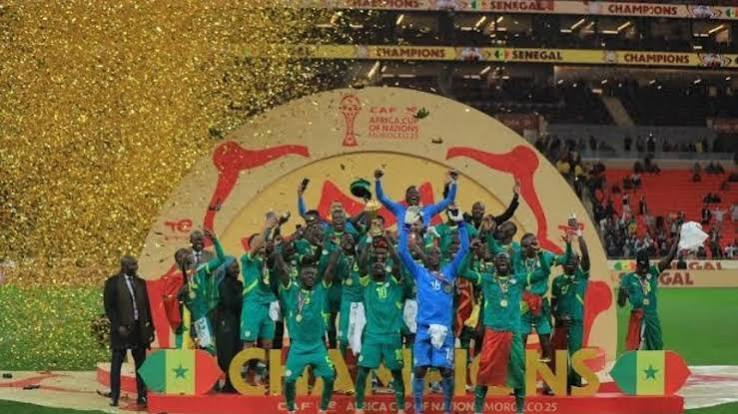
By reinstating the earlier decision of CAF’s Disciplinary Board, the CAS ruling confirms the result achieved on the pitch: Senegal defeated host nation Morocco 1 to 0 after extra time. The decision was unanimous, giving Senegal back a title that its players had originally celebrated before the result became the subject of a prolonged legal dispute.
For Senegalese supporters, the ruling represents more than a change in the official tournament record. It validates the result of a final that had already become one of the most controversial matches in recent African football history. For Morocco, it means losing a championship that the country’s team and supporters had been told they had won through the earlier administrative decision.
What Happened During the Controversial AFCON Final?
The final took place on January 18, 2026, at the Prince Moulay Abdellah Stadium in Rabat. Senegal and Morocco were competing for the continental title in front of a passionate home crowd, with both teams determined to finish the tournament as champions.
The match remained goalless through most of normal time. The controversy began in second half stoppage time when referee Jean Jacques Ndala awarded Morocco a penalty. Senegal’s players strongly protested the decision, arguing against the call at a moment when the championship was still undecided.
In an extraordinary development, Senegal’s players left the pitch in protest. Play was interrupted for approximately 15 minutes as officials attempted to restore order and bring the teams back. The match eventually resumed after the referee allowed play to continue.
Morocco had a major opportunity to secure the title from the penalty spot. However, Brahim Diaz failed to convert his attempt, sending the match into extra time. Senegal then found the decisive breakthrough through Pape Gueye, whose goal gave the West African side a 1 to 0 victory.
The celebrations that followed appeared to settle the championship. Senegal lifted the trophy, while Morocco and its supporters were left disappointed. Yet the dispute over the players’ temporary departure from the pitch meant that the final result would soon face a challenge beyond the stadium.
Why CAF Initially Awarded the Trophy to Morocco
Morocco’s football federation challenged the outcome, arguing that Senegal’s players had breached tournament regulations by leaving the field. The dispute focused on Articles 82 and 84 of the Africa Cup of Nations regulations, which address situations involving a team’s refusal to continue playing and the consequences of forfeiting a match.
On March 17, CAF’s Appeal Board ruled in Morocco’s favour. It declared that Senegal had forfeited the final and recorded the match as a 3 to 0 victory for Morocco. The administrative decision effectively replaced Senegal’s result on the pitch and recognized Morocco as the tournament champion.
Senegal rejected the ruling and took the matter to the Court of Arbitration for Sport. The Senegalese Football Federation sought to have the CAF Appeal Board decision overturned and the original match result restored. The appeal placed the authority of the match referee and the interpretation of tournament regulations at the centre of the dispute.
Why the Court of Arbitration for Sport Ruled in Senegal’s Favour
The central question before CAS was whether Senegal’s temporary walk off meant that the team had forfeited the match under the relevant tournament rules. The court examined the circumstances surrounding the interruption, particularly the referee’s decision to restart the game after both teams returned to the pitch.
CAS concluded that referee Ndala had the authority to decide whether the match should resume or be permanently abandoned. By restarting play, he had determined that the conditions for continuing the final had been met. Both teams were back on the field and had indicated their willingness to play again.
The court also found that Articles 82 and 84 were intended to apply when a team’s conduct caused the referee to abandon a match permanently. That was not what happened in Rabat. The referee resumed the game, and the final continued until Senegal secured its extra time victory.
CAS therefore concluded that the referee had not made an error of law by allowing play to restart. The panel also considered the tense atmosphere surrounding the incident but found no sufficient reason to describe the referee’s judgment as arbitrary or influenced by factors outside the match.
The ruling relied in part on the principle that decisions made by referees during a match should generally remain within the authority of the officials responsible for managing play. This principle, commonly known as the field of play doctrine, limits the circumstances in which sporting tribunals can replace decisions made during a match with their own interpretation.
The official Court of Arbitration for Sport announcement confirmed that the appeal had been upheld and that the CAF Appeal Board decision was set aside. The result of the final was consequently restored in Senegal’s favour.
Morocco Signals Further Legal Action
Although the CAS ruling settles the appeal before the sports tribunal, Morocco has not accepted the outcome without objection. The Royal Moroccan Football Federation has announced its intention to pursue further legal options, raising concerns about the integrity of the proceedings and the conduct of a member of the arbitration panel.
Morocco has alleged that Senegalese Football Federation president Abdoulaye Fall had communication with German arbitrator Ulrich Haas before the decision was announced. Both Haas and Senegal’s federation have denied the allegation. Morocco’s proposed challenge is expected to focus on these concerns rather than simply repeat the sporting arguments already considered by CAS.
A challenge to a CAS award before Switzerland’s Federal Supreme Court is possible, but the grounds for review are limited. Such proceedings generally focus on procedural matters, including questions about the independence or impartiality of arbitrators, rather than offering a complete rehearing of the sporting dispute.
This means that Morocco faces a different legal task from the appeal it previously brought before CAF. The court ruling remains effective unless it is successfully challenged through the available legal process.
CAF Says It Will Implement the Decision
The Confederation of African Football has said that it respects the CAS award and will take the necessary measures to implement it. That response is significant because CAF’s earlier decision had created two competing versions of the tournament outcome: Senegal’s victory on the pitch and Morocco’s subsequent administrative award.
CAF’s commitment to follow the ruling provides a clearer direction for the official tournament record. It also places responsibility on the governing body to ensure that its records, communications and championship recognition reflect the decision of the sports tribunal.
The governing body’s earlier announcement of the March ruling remains part of the dispute’s history. Its official football platform provides the organization’s statements and information about African competitions.
What the Ruling Means for Senegalese and Moroccan Football
For Senegal, the decision confirms the country’s second Africa Cup of Nations championship, following its first title in 2022. It also gives recognition to the team that won the January final through extra time, after months in which the players and supporters faced uncertainty over the status of their achievement.
The result is also a major moment for Senegal’s football administration. The federation pursued the appeal through the international sports arbitration system and secured a unanimous decision overturning CAF’s later ruling. The outcome reinforces the importance of independent dispute resolution when national associations disagree with decisions made by their continental governing body.
For Morocco, the ruling is a painful reversal. The country hosted the tournament and had been formally recognized as champion after CAF’s March decision. Losing that status through an international appeal will inevitably create disappointment among players and supporters, particularly after the controversy surrounding the final unfolded in front of a home crowd.
The dispute also raises wider questions for African football. Tournament regulations must be clear enough for teams, officials and supporters to understand the consequences of misconduct. Referees must be able to manage difficult situations without uncertainty about their authority, while disciplinary bodies must apply competition rules consistently and fairly.
A Championship Dispute That May Not Be Entirely Over
Senegal’s reinstatement closes a significant chapter in one of the most unusual Africa Cup of Nations controversies in recent years. The CAS decision restores the result achieved on the pitch and overturns the administrative ruling that had transferred the title to Morocco. CAF’s commitment to implement the award further strengthens Senegal’s position as the recognized champion.
However, Morocco’s stated intention to pursue additional legal action means that some questions may remain before the dispute is fully settled. Any further challenge will face the narrow review procedures available under Swiss law, rather than a fresh examination of every detail of the final.
For now, the official result is clear. Senegal defeated Morocco 1 to 0 in extra time and has been reinstated as the 2025 Africa Cup of Nations champion. After months of uncertainty, the trophy and the tournament record return to the team that earned the victory on the field in Rabat.